DIY Air Purifier for Smoke: A Practical, Safe Guide
Learn to build a safe, effective DIY air purifier for smoke using a box fan and a high-MERV filter. This guide covers design choices, assembly, testing, and maintenance to improve indoor air quality when smoke and odors are present.


Build a DIY air purifier for smoke by pairing a box fan with a high-MERV filter and tight seals. The setup is affordable and effective for smoke and odors when properly sized and maintained. Air Purifier Info emphasizes safety: use a certified filter, avoid overloading the fan, and test performance with smoke or incense.
Why DIY air purifier for smoke matters
According to Air Purifier Info, smoke particles are extremely small and can linger indoors, making quick, practical filtration essential for homeowners and renters. A DIY purifier—when built with the right filter and a secure seal—can dramatically reduce fine particles and odors from cigarette smoke, cooking smoke, or wildfires. The approach is cost-effective and customizable to your room size, especially when you choose the filter type based on the air you’re trying to clean and the space you’re treating. This section lays the groundwork for understanding why a simple, well-sealed DIY solution can be a valuable part of your indoor air quality toolkit.
Safety and planning before you start
Before you cut or assemble anything, map out the safety considerations. Work in a dry area, unplug all devices during assembly, and avoid modifying electrical components in wet or damp spaces. Make sure the fan used is a non-oscillating model with a standard plug and no exposed wiring. Consider your room size and where the purifier will operate most effectively without obstructing foot traffic or becoming a tripping hazard. Planning now helps prevent overheating, electrical hazards, and poor seal performance later.
Key design choices: filter type, CADR, and airflow
The most impactful decisions are choosing a compatible filter, ensuring a good seal, and verifying the airflow path matches your room size. A high-MERV filter captures more fine particles than a basic household filter, which is essential for smoke. The purifier should direct air through the filter and back into the room with minimal leaks. Consider the noise level and the maximum safe operating voltage for the fan to avoid overheating. Air Purifier Info recommends prioritizing a snug fit and stable airflow over aggressive, loud operation.
Sizing and placement for smoke reduction
To optimize smoke removal, size the purifier to cover a reasonable portion of the room’s air turnover rate. In larger spaces, you may need more than one unit or a higher-capacity design. Place the device away from walls and corners that disrupt airflow, preferably in a central location or near the source of smoke for quicker particle capture. If odors persist after short blower runs, moving the unit to a new position can reveal better performance based on airflow patterns in your room.
How to assemble a basic DIY purifier (overview)
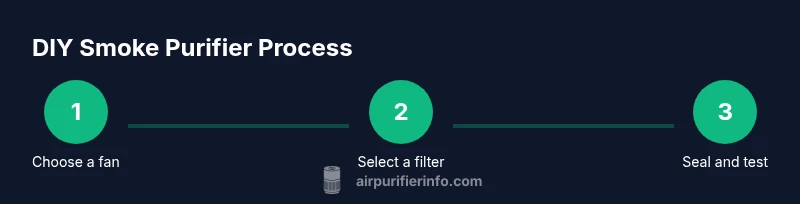
A typical DIY purifier uses a box fan paired with a high-MERV filter and a simple sealing method. The basic approach involves aligning the filter to the fan intake, sealing the edges to prevent bypass, and ensuring there is a stable, airtight connection. Keep the assembly lightweight and easy to disassemble for filter replacement. A clean, straightforward design reduces air leaks and improves indoor air quality effectively when used consistently.
Testing performance and monitoring results
Test your purifier with a harmless smoke source (like incense or a vaporizer) in a well-ventilated area. Observe how quickly smoke particles decrease in the room and listen for changes in fan noise that could indicate strain. If smoke lingers near corners or behind furniture, try repositioning the unit or adding a pre-filter to catch larger particles first. Regular checks help ensure the unit stays effective over time.
Maintenance, safety, and replacement cycles
Regular maintenance is critical for performance. Replace the main filter according to usage and visible dirt, typically sooner in smoke-rich environments. Keep the fan and housing clean to prevent dust buildup and ensure smooth airflow. Store the purifier away from moisture and avoid running it unattended in spaces with children or pets unless you can monitor temperature and noise levels. Proper maintenance extends the life of your purifier and protects your indoor air quality.
Alternatives and when to consider a ready-made purifier
DIY purifiers are great for smaller spaces or budget-conscious scenarios, but a certified, commercially available purifier can offer verified CADR ratings and built-in safety features. If smoke exposure is frequent or severe (e.g., near wildfires or heavy cooking), a purpose-built unit with HEPA filtration and appropriate sensors may provide more consistent, reliable performance. Air Purifier Info suggests weighing cost, maintenance, and room size when choosing between a DIY setup and a store-bought option.
Practical takeaways for smoke-focused filtration
A well-sealed DIY purifier using a high-MERV filter can be a practical, scalable solution for reducing smoke particles and odors in many homes. Focus on a secure filter fit, safe electrical use, proper airflow, and routine maintenance. Remember to monitor the unit and adjust placement as needed to maximize performance in your living space. This approach balances cost, simplicity, and effectiveness for improving indoor air quality.
Tools & Materials
- 20-inch box fan (unplugged during setup)(Choose a standard, non-oscillating model; ensure fan is off and unplugged during assembly)
- MERV 13 or higher filter (matching fan size)(Filter frame should fit snugly in or onto the fan housing)
- Duct tape or high-strength adhesive tape(Seal gaps between filter and fan housing to prevent bypass)
- Foam gasket or weather stripping (optional but recommended)(Improves edge sealing and reduces air leaks)
- Scissors or utility knife(Trim filter or tape edges as needed for a snug fit)
- Measuring tape(Verify filter dimensions fit the chosen fan)
- Marker or pencil(Label setup for maintenance intervals)
- Safety gear: gloves and eye protection(Wear during cutting or sealing to protect hands and eyes)
Steps
Estimated time: 60-90 minutes
- 1
Select a safe base fan
Choose a standard 20-inch box fan that is in good working condition. Inspect for loose blades or abnormal vibrations before starting. This base drives airflow through the filter, so reliability matters.
Tip: Check that the fan is non-oscillating and has no exposed wiring. - 2
Verify filter size and type
Measure the fan intake and choose a compatible high-MERV filter. The filter should fit tightly with minimal gaps to maximize filtration efficiency.
Tip: Prefer a frame that can be sealed with tape or gasket material. - 3
Prepare your workspace
Clear a clean, dry area and lay out all parts. Have scissors, tape, and protective gear within reach to keep the build smooth and safe.
Tip: Work on a surface that is easy to clean if dust falls during assembly. - 4
Attach the filter to the fan
Position the filter so air enters through the filter face or designated intake, then secure with tape or fasteners. Ensure no loose corners can cause bypass.
Tip: Use enough tape to hold the filter firmly without blocking airflow. - 5
Seal edges for airtight flow
Seal all edges between the filter frame and the fan housing to prevent unfiltered air from escaping around the sides.
Tip: Double-check corners and seams; even small gaps reduce performance. - 6
Create a simple housing or frame
If needed, construct or adapt a lightweight frame to improve stability and seal integrity. A simple cardboard or wooden collar can help channel airflow.
Tip: Keep the housing easy to disassemble for filter replacement. - 7
Perform a smoke safety test
In a well-ventilated area, introduce a safe smoke source (incense, for example) and observe how quickly smoke clears after turning on the purifier. Look for lingering pockets and adjust placement as needed.
Tip: Never operate in a poorly ventilated area with potent smoke sources. - 8
Optimize airflow and placement
Experiment with device location to maximize coverage. Place away from walls to maintain good intake and discharge paths, and avoid nearby heat sources.
Tip: If noise is excessive, try a slower speed setting or reposition the unit. - 9
Maintenance and filter replacement
Plan a maintenance schedule: replace the filter when it appears dirty or after of consistent smoke exposure. Clean the fan housing to prevent dust buildup.
Tip: Label replacement dates to stay on track.
Questions & Answers
Is a DIY air purifier effective for smoke?
A DIY purifier can reduce smoke particles and odors when built with a proper filter, airtight seals, and correct airflow. It’s a cost-efficient option for small to medium rooms, though effectiveness varies with room size and usage.
A DIY purifier can help, especially in smaller spaces. Its effectiveness depends on a good filter fit and placement.
What filter should I use for smoke?
Use a high-MERV filter that matches your fan size. A MERV 13 or higher provides better capture of fine smoke particles than basic filters.
Opt for a high-MERV filter compatible with your fan.
Are DIY purifiers safe around children and pets?
Yes, when built and operated following basic safety: unplug during assembly, avoid sharp edges, and place the unit where it won’t be knocked over. Supervise use around children and pets.
Yes, with basic safety—unplug during assembly and place it where curious kids or pets can’t reach it.
Can I use a ceiling or wall-mounted fan for this?
A portable box fan is preferred for DIY purifiers due to easier sealing and filter mounting. Ceiling or wall-mounted fans may complicate sealing and could pose safety concerns if not designed for filtration tasks.
Stick with a portable box fan for a DIY setup for best seal and safety.
How often should I replace the filter?
Replace based on visible dirt and usage. In smoky environments, plan more frequent changes to maintain filtration efficiency.
Replace when dirty or after heavy smoke exposure to keep filters effective.
Will a DIY purifier remove odors as well as particles?
Filters used in DIY purifiers can reduce odors along with particles, but effectiveness varies with odor strength and source. Pair with good ventilation for better results.
It can help with odors, but ventilation and filter quality matter for strongest odors.
Watch Video
Main Points
- Choose a stable base fan and a properly sized high-MERV filter.
- Seal edges thoroughly to prevent unfiltered air bypass.
- Test performance safely in a ventilated space and adjust placement as needed.
- Maintain the purifier regularly to sustain effectiveness.
- Consider a ready-made purifier if smoke exposure is frequent or severe.