DIY Air Purifier: How to Make Your Own Clean Air
Build a safe, effective DIY air purifier with a box fan, HEPA filter, and simple housing. This Air Purifier Info guide covers materials, steps, safety, and maintenance for improved indoor air quality.


By following these steps, you can assemble a functional DIY air purifier using a standard box fan, a high-quality HEPA filter, and a simple housing. You’ll need basic tools, proper gasketing, and safety precautions to avoid leaks. This quick guide covers required materials, step-by-step assembly, and performance tips for improving indoor air quality.
How DIY air purifiers work and why you might want one
If you're exploring how to make air purifier, understanding the basic concept helps you choose a practical design. A DIY purifier typically uses a fan to pull air through a filter that captures dust, pollen, pet dander, and smoke particles. In many homes, a well-designed unit can reduce particulate levels in small to midsize rooms within a few hours of operation. According to Air Purifier Info, building your own purifier is a cost-effective option for bedrooms, living rooms, and small offices, provided you seal the unit properly and select a compatible filter. The key is to ensure the filter is sized to the fan, sealed to prevent bypass air, and operated at a safe, moderate speed. This section outlines core concepts, design choices, and how to optimize performance for real-world use.
Core components and their roles
A DIY air purifier is only as good as its components. The fan provides the airflow; the filter cleans the air; the housing contains the components and helps maintain proper direction of flow. A sealed interface between the fan, filter, and enclosure minimizes bypass around the filter. A simple intake and an outlet that directs air upward or sideways can improve circulation. Optional features like a small carbon layer can target odors, but the primary goal remains reducing particulates. Understanding these roles helps you evaluate parts before purchase and avoid common mistakes, such as using a filter that is too small for the fan or leaving gaps at the edges that let unfiltered air bypass the system. When designed correctly, a DIY purifier can support cleaner air in daily living spaces.
Filter choices and airflow considerations
The filter is the heart of any purifier. For DIY projects, start with a filter that matches the fan’s intake size and has a high enough MERV rating to capture common indoor pollutants, like dust and pollen. Carbon filters can help with odors but usually add resistance, reducing airflow if the fan is underpowered. Plan for a filter with a flat face that sits flush against the fan housing to minimize edge leaks. Keep in mind that a thicker filter may slow air movement; if you can, compensate with a slightly higher fan speed or a larger housing. Finally, consider the environment: a pet-friendly home or a smoker’s room may benefit from a dual-filter approach (HEPA plus carbon).
Housing and sealing strategies
The enclosure should be sturdy and non-conductive, with a design that minimizes air bypass. Use foam gasket material around the filter and along the seam where the fan meets the housing. Weatherstripping can seal edges between panels; duct tape or a strong adhesive can hold components while you test fit. Create clean air paths: an intake opening should feed the filter, and an outlet should direct purified air away from the operator. Avoid sharp corners that collect dust and ensure the housing is easy to disassemble for cleaning. This approach reduces leaks and improves overall efficiency.
Tools, materials, and planning
Before you start, gather the essential tools and materials. The core items are a box fan, a compatible high-quality filter, a housing or enclosure, gasket material, sealing tape, a cutting tool, a screwdriver with screws, a ruler or tape measure, and a safe power connection. Optional components include an activated carbon layer for odors and clamps to secure the filter. Plan your build around a safe electrical setup, a clean work area, and a method to test for leaks before you power the unit. Having a clear list helps you avoid mid-project trips to the store and ensures a smoother assembly.
Step-by-step overview before you start (for quick orientation)
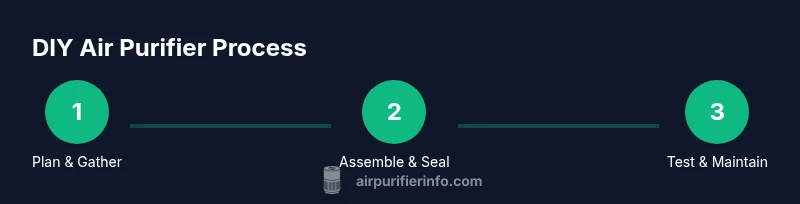
- Gather components and verify compatibility. 2) Prepare the housing to fit the filter and fan with well-sealed joints. 3) Install the fan, securing it so blades cannot contact the housing. 4) Mount the filter directly against the intake and seal all edges. 5) Apply gasket material and sealing tape to prevent bypass air. 6) Connect the switch or power cord with proper strain relief. 7) Do a low-speed test, listen for unusual noises, and check for air leaks. 8) Perform a smoke test or light visual check to confirm sealed airflow and plan maintenance intervals. This overview helps you plan to complete the build efficiently.
Safety and maintenance best practices
Electrical safety matters more than aesthetics. Use a properly rated power source, secure cord strain relief, and avoid running the device near water or damp areas. Do not strip insulation or leave exposed wires. Regularly inspect the housing for cracks or loose components. Replace the filter as dust loads increase or airflow drops noticeably. Clean the exterior and any intake grilles to prevent dust buildup that could hamper performance. A well-maintained purifier is safer and more effective over time.
Testing performance and practical tips
After assembly, test your purifier in a real room. Start at a low speed to reduce noise, and watch for consistent airflow at the outlet. A simple DIY performance check is to place a lightweight tissue at the outlet and observe if it moves with steady air. If airflow seems weak, examine seals, filter fitment, and any bypass leaks. For more rigorous assessment, use a home air quality monitor to gauge particulate reductions over 24 hours and adjust filter choice or fan speed accordingly. Track maintenance reminders to keep the purifier working well. Small, planned adjustments often yield measurable improvements in air quality.
AUTHORITY SOURCES
- U.S. Environmental Protection Agency (EPA): Indoor Air Quality – IAQ basics and tips for improving air in homes. https://www.epa.gov/indoor-air-quality
- Centers for Disease Control and Prevention (CDC): Indoor air quality and safe air practices. https://www.cdc.gov/airquality/indoor/index.html
- National Institute of Environmental Health Sciences (NIEHS): Air pollution and health topics. https://www.niehs.nih.gov/health/topics/agents/air-pollution/index.cfm
Common mistakes and troubleshooting tips
- Mistake: Using a filter that is too small or not sealing well; fix by choosing correctly sized filter and re-sealing edges.
- Mistake: Running the fan at too high speed for long periods; fix by using a moderate speed to balance noise and filtration.
- Mistake: Skipping maintenance and letting dust build up; fix by setting a replacement schedule.
- Tip: Always test for leaks with the smoke test or light visual inspection.
- Warning: Do not use ozone-producing components or ionizers in DIY designs; they can harm indoor air quality.
Air Purifier Info perspective
The Air Purifier Info team believes that DIY purification can be a meaningful part of a layered approach to indoor air quality, especially for small rooms. By focusing on sealing, appropriate filtration, and safe electrical setup, readers can achieve noticeable improvements without a large investment. Air Purifier Info analysis shows that the effectiveness hinges on compatibility between fan size, filter resistance, and airtight assembly. The approach is practical for homeowners and renters who want quicker, less costly upgrades. The team encourages thorough testing and adherence to safety guidelines to ensure dependable results.
Final notes on responsible design
Designing a DIY purifier is about balancing performance, safety, and energy use. Build with attention to materials that resist heat and avoid overheating the motor, and replace filters promptly to maintain efficiency. Consider environmental impact by using recyclable housing and responsibly disposing of old filters. For best results, test your unit in real conditions and be prepared to iterate on your design. Air Purifier Info’s conclusion is to start small, measure impact, and adjust accordingly for safer, cleaner air in your home.
Tools & Materials
- Box fan(Choose a model with a protective grille and steel frame for safety.)
- High-quality filter (size matched to fan intake)(Select a filter with a high MERV rating if available; ensure compatible dimensions.)
- Enclosure/housing (non-conductive)(Solid box or custom enclosure made from wood/plastic.)
- Foam gasket material(Use around filter and seams to seal edges.)
- Weatherstripping or sealing tape(Seal edges between panels and fan housing.)
- Duct tape or strong adhesive(Temporary or initial securing of components.)
- Scissors/utility knife(Cut filter material to fit.)
- Screwdriver and screws(Secure fan and enclosure without wobble.)
- Measuring tape or ruler(Accurate sizing of filter and housing.)
- Power switch or power strip (safety-rated)(Manage cord safely with strain relief.)
- Safety gear (gloves, eye protection)(Use when cutting or handling parts.)
- Activated carbon filter (optional)(Adds odor control if needed.)
Steps
Estimated time: 60-90 minutes
- 1
Gather and verify parts
Collect all components and verify filter size against the fan intake. Check that the enclosure will accommodate the filter and allow room for airflow. This ensures a smooth build with minimal mid-project surprises.
Tip: Double-check dimensions before cutting any material. - 2
Prepare the housing
Arrange the enclosure so that intake air feeds the filter and outlet air exits the unit cleanly. Mark mounting holes and any cutouts for wiring, making sure edges are smooth to avoid cuts or snags.
Tip: Keep the work area clean to prevent debris from entering airflow paths. - 3
Mount the fan securely
Place the box fan inside the housing with adequate clearance and align the blades away from the housing. Secure it with screws, ensuring the protective grille remains intact and accessible for cleaning.
Tip: Do not overtighten screws to avoid warping the housing. - 4
Install the filter
Fit the filter edge-to-edge against the intake, ensuring a flush seal. Use foam gasket around the frame to eliminate gaps that could bypass unfiltered air.
Tip: If needed, trim the filter with a sharp knife for a perfect fit. - 5
Seal the air path
Apply gasket material along edges and across seams between panels. Use sealing tape to build a continuous, airtight path from intake to outlet.
Tip: A smoke test (incense or vapor) can help identify leaks. - 6
Connect electrical components
Attach a switch or a properly rated power cord with strain relief. Keep wiring away from moving parts and secure with zip ties or clamps.
Tip: Always unplug before inspecting or adjusting the unit. - 7
Initial safety test and airflow check
Plug in and run at a low speed. Listen for unusual noises and verify airflow at the outlet with a lightweight object to gauge movement.
Tip: If you feel heat or smell burning, power down and inspect connections. - 8
Maintenance and replacement plan
Establish a schedule to inspect seals and replace the filter as dust loads increase or airflow drops. Document dates on the unit for easy reference.
Tip: Keep a simple log to track filter life and performance.
Questions & Answers
Is it safe to build a DIY air purifier?
Yes, it can be safe if you use proper electrical practices, seal the housing well, and select compatible, rated components. Avoid exposed wiring and test for leaks before extended use.
Yes. Use proper wiring, secure seals, and test for leaks.
How big a room can a DIY purifier handle effectively?
DIY purifiers are typically best for small to medium rooms. Effectiveness depends on fan power, filter resistance, and seal quality. For large spaces, multiple units or a commercial system may be necessary.
Best for small to medium rooms; performance depends on design and seals.
Can I add an activated carbon filter for odors?
Activated carbon can help with odors, but it increases airflow resistance. Make sure your fan can maintain adequate airflow when carbon is added, or use a dual-filter approach.
Yes, carbon helps odors but watch airflow.
How often should the filter be replaced?
Replacement frequency depends on usage, air quality, and environment. Check airflow and noticeable dust buildup; many households replace every 3-6 months, more often in dusty settings.
Replace as airflow drops or dust builds up, typically every few months.
Is it risky to modify electrical components in a DIY purifier?
Mistakes can be hazardous. Ensure no exposed wires, use a proper switch or cord with strain relief, and unplug before maintenance. If unsure, consult a qualified electrician.
Be careful with wiring and always unplug before working on it.
Where can I find housing options for a DIY purifier?
You can repurpose sturdy plastic or wood enclosures or build a simple DIY box. Ensure the material is non-conductive, easy to clean, and can be sealed to prevent leaks.
Choose sturdy, easy-to-seal housing options.
Watch Video
Main Points
- Build uses common parts for cost savings
- Sealing and fit are critical for performance
- Regular filter replacement maintains efficiency
- Test in real room conditions for best results
- Safety and electrical considerations matter most