Is an Air Purifier the Same as an Ozone Machine? A Practical Comparison
This comprehensive comparison explains how air purifiers and ozone machines work, why they are not interchangeable, safety considerations, and how to choose the right device for dust, odors, and allergies at home. It answers, is an air purifier the same as an ozone machine, with practical guidance for homeowners and renters.


Is the question worth asking: is an air purifier the same as an ozone machine?
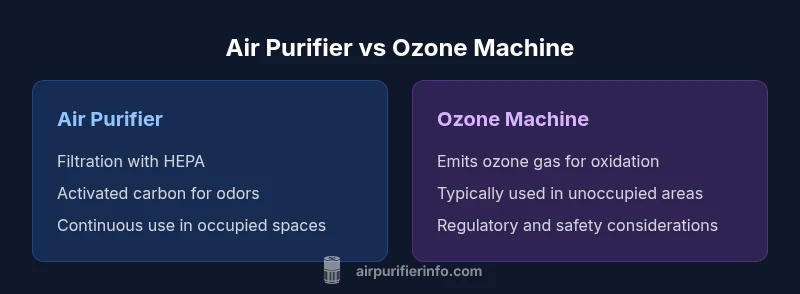
Readers often ask this to understand whether a single device can both clean particles and chemically treat air. According to Air Purifier Info, the best way to frame the question is to separate what each device does from how it affects health and daily routines. An air purifier relies on filtration—HEPA and activated carbon—to remove particles and odors. An ozone machine, on the other hand, generates ozone gas that can react with pollutants, potentially creating secondary byproducts. In practical terms, these are different tools for different problems, with different safety considerations. If your goal is to reduce dust, pet dander, or allergens, a well-chosen purifier provides predictable, ongoing benefits without introducing ozone. If odors or disinfection appeal to you, recognize that ozone devices operate under a different safety framework and in many cases should be used only in unoccupied spaces or under strict controls. The rest of this article compares the two side-by-side and highlights when one option is clearly preferable.
How air purifiers work and what they can realistically achieve
Air purifiers are designed to improve indoor air quality by removing particulates, gases, and odors from the air you breathe. The core component is a filtration system, typically including a true HEPA filter capable of capturing 99.97% of particles down to 0.3 microns in optimal configurations. A secondary activated carbon stage can adsorb volatile organic compounds and some odors, while some models add pre-filters or mild ionization features. The performance of an air purifier depends on the device’s CADR (clean air delivery rate), room size, and proper filter maintenance. Importantly, purifiers do not generate new chemical byproducts in occupied spaces when used as intended. For households dealing with dust, pollen, pet dander, or smoke particulates, a high-quality purifier can meaningfully improve comfort and perceived air quality. The practical take is to match purifier capacity to room dimensions and choose certified units with replaceable filters and clear maintenance schedules. The goal is continuous filtration without introducing new exposure risks.
How ozone machines work and safety implications in homes
Ozone machines operate by producing ozone, a triatomic form of oxygen, which can react with many airborne substances. In controlled settings, ozone can neutralize odors and certain contaminants by chemical reaction, but the process often creates secondary byproducts that may be harmful to human health, especially in occupied spaces. Ozone generation can occur via corona discharge or UV-based systems, and effectiveness varies with pollutant type, concentration, and exposure time. Because ozone is a reactive oxidant, it can irritate the eyes, throat, and lungs, and prolonged exposure can aggravate asthma and other respiratory conditions. Regulators and health agencies generally advise against using indoor ozone generators in spaces where people live, work, or sleep. If ozone-based approaches are considered, they should be confined to unoccupied areas with the space fully sealed and followed by adequate aeration and validation. The core message is clear: ozone machines and air purifiers are not interchangeable tools for the same indoor air quality goals.
Safety and health implications of indoor ozone use
The safety implications of indoor ozone use are central to choosing between these technologies. Even low ozone concentrations can cause coughing, chest tightness, and throat irritation, while sensitive populations—children, the elderly, and those with asthma—are at higher risk. Short-term exposure can trigger symptoms like wheezing and shortness of breath, and long-term exposure may contribute to respiratory issues. Because many residential environments lack precise control over ozone levels and room airtightness varies, the safest approach is to avoid indoor ozone generation entirely for everyday air quality improvements. If a space is occasionally treated with ozone for non-residential purposes, strict protocols—vacating occupants, sealing the area, monitoring, and thorough post-treatment ventilation—are essential. For most homeowners and renters, relying on a certified air purifier with good filtration remains the safer, more predictable path. Air Purifier Info emphasizes safety first, especially in occupied living spaces.
Practical decision framework for homes and renters
When deciding between an air purifier and an ozone machine, start with your primary goal: particle control vs. chemical oxidation. For dust, pollen, pet dander, and general allergens, an air purifier with HEPA filtration and activated carbon for odors is typically the best starting point. Measure room size and verify CADR ratings to ensure adequate coverage; plan for ongoing maintenance and filter costs. If odor control is critical and you’re considering ozone, recognize the safety trade-offs and read local regulations before proceeding. Renters should check building ventilation and landlord policies; even with large units, a purifier generally offers safer, more reliable results. In many cases, a layered approach—using an air purifier plus improved source control (smoke, candles, fragrances) and enhanced ventilation—yields the best outcomes. Air Purifier Info recommends prioritizing purification technology that provides consistent, occupiable air quality without exposing residents to ozone.
Common myths and misconceptions debunked
Myth: An ozone machine can purify air as effectively as a purifier. Reality: ozone can react with contaminants but also creates byproducts and poses health risks indoors. Myth: If ozone can clean, it must be safe. Reality: safety concerns and regulatory guidance discourage indoor ozone generation in occupied spaces. Myth: All purifiers remove odors completely. Reality: performance varies by filter type, room size, and odor strength; activated carbon helps, but some odors require broader strategies. Myth: It’s okay to run ozone devices at low levels. Reality: even low levels can irritate sensitive individuals, and continuous exposure is discouraged by health authorities. Understanding these nuances helps consumers avoid unsafe or ineffective choices.
Authority sources and guidance
For rigorous guidance, consult official sources and independent analyses. This section cites reputable authorities that discuss ozone, indoor air quality, and consumer safety. The Environmental Protection Agency (EPA) offers guidance on indoor ozone and its risks. The CDC and NIOSH provide information about ozone exposure and occupational health considerations. Health-focused institutions like Harvard Health Publishing discuss ozone and air cleaning in consumer contexts. These sources help readers understand regulatory constraints and safety best practices when evaluating air cleaning options.