Is an Air Purifier the Same as a Dehumidifier? A Practical Comparison
Explore whether an air purifier is the same as a dehumidifier. Compare functions, use cases, and costs to choose the right device for dust, humidity, and allergies.


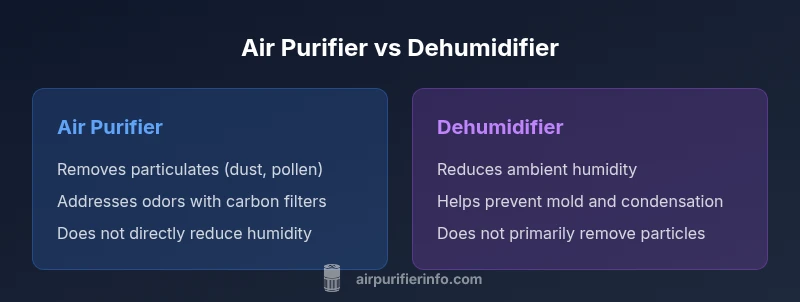
Air purifiers and dehumidifiers serve different purposes and are not the same device. An air purifier cleans particles from the air, while a dehumidifier lowers humidity. If your goal is dust and allergy relief, a purifier helps; if you struggle with damp, a dehumidifier is essential. In some cases, a combined unit may help.
Is an air purifier the same as a dehumidifier? Clarifying the terms
The question is common in consumer discussions: is air purifier the same as dehumidifier? The short answer is no. A purifier is a filtration device designed to remove particles and sometimes gases from the air, improving indoor air quality and reducing irritants. A dehumidifier focuses on moisture, extracting water from the air to lower relative humidity. This fundamental difference affects what problems each device can effectively solve, how you use them, and what you should expect in terms of maintenance, energy use, and upfront cost. For homeowners and renters alike, recognizing this distinction helps you identify the most impactful improvement for your space—dust and allergens on one hand, dampness and mold risk on the other. Throughout this guide, we’ll refer back to the core question: is air purifier the same as dehumidifier? The answer remains straightforward: they are complementary tools, not interchangeable solutions for the same problem.
How air purifiers work: filtration, CADR, and features
Air purifiers pull room air through filters that trap particulates such as dust, pollen, pet dander, and smoke. The efficiency of a purifier is typically described by Clean Air Delivery Rate (CADR) and the filter stages (pre-filter, HEPA, activated carbon, etc.). High CADR values indicate more air cleaned per minute, which matters in larger rooms. Filter replacement frequency depends on usage, air quality, and filter type. For sensitive spaces, look for true HEPA filtration and ozone-free operation. Some purifiers include carbon stages to address odors and volatile organic compounds (VOCs). When sizing a purifier, measure your room area and pick a model that can handle that space with comfortable air changes per hour. In addition to filtration, consider noise levels, smart features, and maintenance costs when evaluating options.
How dehumidifiers work: moisture removal and humidity targets
Dehumidifiers are designed to reduce ambient humidity by pulling moisture from the air, collecting it in a reservoir or via a drain hose. The key spec to understand is the unit’s capacity, typically expressed as pints or liters per day, which indicates how much moisture the machine can remove under certain conditions. Humidity targets are often adjustable—most people find comfort between 40% and 60% relative humidity, with lower levels reducing mold growth and musty odors. Dehumidifiers rely on fans to move air across a cooled coil where moisture condenses and drains away. Maintenance centers on keeping the water bucket clean, ensuring the drain line is clear, and occasionally inspecting coils for buildup. If humidity is the primary issue in your space, a dehumidifier is usually the most direct, durable solution.
Dust, odors, and allergies: where purifiers excel
For people dealing with dust, pollen, pet dander, smoke, or chemical odors, air purifiers offer direct benefits. A purifier’s filtration stages capture fine particles that can trigger allergies or asthma symptoms. In rooms with heavy traffic or poor ventilation, a purifier can significantly reduce airborne irritants and improve perceived air quality. Odor control is enhanced when the purifier uses activated carbon or specialty filters designed for gases. It’s important to match the purifier to room size and choose models with seals that minimize bypass air. For households with pets or smokers, a purifier with a high-efficiency particulate filter and carbon stage can drastically reduce residual odors and irritants.
Humidity control explained: why dehumidifiers matter
Humidity influences comfort, mold growth, and respiratory health. In basements, bathrooms, kitchens, or climates with high humidity, a dehumidifier reduces moisture to prevent condensation and damp spots. Maintaining humidity in the mid-range helps suppress mold spores and dust mite activity. Dehumidifiers also help protect furniture, electronics, and building materials from moisture damage. It’s worth noting that a dehumidifier may be less effective in a very small or poorly sealed space where moisture will rapidly re-enter, so proper sealing and ventilation are part of the solution. For occupants with humidity-linked concerns, monitoring a space with a hygrometer can guide your decision.
Hybrids, two-in-one units, and special cases
Hybrid devices that combine air purification with humidity control exist, but they are less common and can be more expensive than single-function units. When you need both functions in a compact footprint, a two-in-one device might be convenient, yet you may compromise performance in one area. Some dedicated purifiers offer optional gas-phase filtration to address odors, while some dehumidifiers include built-in air filters to reduce large particulate load—though these features are typically supplementary rather than primary. For most users, separating the tasks or choosing a hybrid only after assessing room size, target humidity, and pollutant load leads to better long-term results.
Energy efficiency, noise, and maintenance considerations
Operating costs and upkeep matter over the long term. Purifiers consume energy based on fan speed and CADR, and filters require replacement on a schedule that depends on usage and air quality. Dehumidifiers’ energy use scales with humidity levels, room size, and the capacity required; periodic tank emptying or continuous drainage is part of the routine. Noise can be a factor for both appliances, especially at higher settings or during nighttime use. When comparing models, estimate ongoing costs for filters (purifiers) and potential drainage accessories (dehumidifiers), and consider a unit with a lower noise profile if you’re sensitive to sound.
Room size and placement: how much space is needed and where to put it
Accurate sizing is essential for both devices. For purifiers, choose a unit rated for at least the square footage of the room, ideally with some headroom to ensure effective air changes per hour. For dehumidifiers, select one with enough capacity to manage the space’s moisture load and keep humidity within the target range without making the room feel chilled. Placement matters too: keep units away from walls or furniture to avoid obstructed airflow, and for dehumidifiers, ensure proper drainage and venting if using a continuous drain setup. In shared living spaces, test various locations to find the balance between effectiveness and comfort.
Practical tips for renters and homeowners: setup and daily use
Renters should focus on portable, unobtrusive units and verify that devices do not require permanent installation. Homeowners can explore larger, more energy-efficient options or units with smart controls for seasonal adjustments. In both cases, keep doors and windows closed when running purifiers or dehumidifiers to maximize efficiency. Regular maintenance—filter cleaning or replacement for purifiers, and bucket cleaning plus drainage checks for dehumidifiers—extends device life and keeps performance consistent. Invest time in understanding your space’s air quality and moisture dynamics to determine the right combination of devices.
Decision framework: when to buy a purifier, dehumidifier, or both
A practical decision framework starts with identifying the primary problem: particulates and odors versus humidity and mold risk. If air quality is your main concern, start with a purifier sized to your room. If dampness is the issue, begin with a dehumidifier that can achieve the humidity target in that space. For homes with both problems, evaluate whether a two-in-one device meets your needs or if separate units offer better performance. Consider room use, climate, energy costs, and maintenance commitments in your final choice.
Real-world scenarios and examples: mapping choices to homes
Imagine a living room with visible dust, pet dander, and seasonal allergies; a purifier with true HEPA filtration and a carbon stage could substantially improve comfort. In a basement prone to dampness and musty odors, a dehumidifier calibrated to maintain humidity around 50–60% is typically the best bet. For a bedroom in a humid climate with occasional odors, a purifier with carbon filtration plus a dehumidifier running during humid nights may provide the best overall air quality and comfort. In all cases, start by measuring room size, humidity, and air quality, then tailor a solution that fits your routine and budget.
Maintenance routines and troubleshooting: keeping devices effective
Routine checks help sustain performance. Replace purifier filters as recommended by the manufacturer, clean pre-filters regularly, and inspect carbon filters for odor control effectiveness. For dehumidifiers, empty or drain the reservoir as advised, clean the reservoir to prevent mold growth, and inspect coils for frost buildup in cooler environments. If a unit seems inefficient, verify that filters are clean, the area is properly sealed, and air can circulate freely. A well-maintained device delivers consistent results and extends its lifespan.
Comparison
| Feature | Air Purifier | Dehumidifier |
|---|---|---|
| Primary purpose | Remove airborne particles, odors, and gases | Reduce ambient humidity and dampness |
| Ideal use cases | Dust/odor control, allergies, asthma relief | Mold prevention, condensation, damp spaces |
| Typical energy use | Moderate to high depending on CADR and room size | Moderate to low depending on capacity and humidity target |
| Maintenance tasks | Filter replacements and occasional filter cleaning | Reservoir emptying/drainage, coil cleaning |
| Best for | Spaces needing clean indoor air quality | Spaces dealing with excess moisture and mold risk |
| Cost range (general) | $100-$900 for purifiers | $150-$1000 for dehumidifiers |
What's Good
- Direct improvement of indoor air quality and reduction of irritants
- Wide availability and a broad price range
- Specialized filters can address odors and gases
- Low maintenance relative to some fixtures
What's Bad
- Purifiers do not control humidity or dampness
- Ongoing filter replacement costs
- Effectiveness depends on room size and placement
- Some models may generate unwanted noise at high settings
Air purifiers and dehumidifiers address different problems; use the right tool for the job, or combine for comprehensive control.
Choose a purifier for dust/allergen reduction and odor control. Choose a dehumidifier for humidity management and mold prevention. For environments with both issues, assess whether a single hybrid unit or two separate devices best fits your space and budget.
Questions & Answers
Are air purifiers and dehumidifiers interchangeable?
No. They solve different problems: purifiers clean air, and dehumidifiers control moisture. If you have both dust and dampness, you may need both devices or a hybrid with explicit dual functionality.
No. Purifiers clean air; dehumidifiers remove moisture. If both issues exist, you may need separate units or a dual-function model designed for both tasks.
Can a dehumidifier also purify air?
Some dehumidifiers include basic air filtration, but most do not match dedicated purifiers for particle removal. Rely on a purifier for significant air cleaning unless the dehumidifier is explicitly designed with a true filtration system.
Some dehumidifiers have filters, but they generally don’t clean air as well as purifiers. For clean air, choose a purifier unless the unit specifically combines both features.
How do I decide which device to buy first?
Assess your primary problem: dust/allergens or humidity. If air quality is worse, start with a purifier sized for your room. If humidity is high, start with a dehumidifier. In many homes, both are beneficial.
First decide your main issue—dust or dampness. Start with the device that tackles that problem most effectively, then consider adding the other if needed.
Are hybrids worth the extra cost?
Hybrid units can save space and simplify use, but they often trade peak performance in one area for convenience. If you have distinct needs, separate devices may deliver better long-term results.
Hybrids can be convenient, but they may compromise performance. If you have strong needs in one area, separate devices might be better.
What specs matter most when choosing a purifier?
Look for true HEPA filtration, a high CADR for the room size, and an activated carbon stage for odors. Ensure ozone-free operation and verify filter replacement costs.
For purifiers, focus on true HEPA, CADR suitable for your room, carbon filtration for odors, and ozone-free operation.
Can these devices improve overall energy efficiency?
Yes, by reducing the load from pollutants or moisture, you can operate at lower settings. However, running both devices can raise energy use, so size and efficiency matter.
Both devices can help you run at lower settings, but using both might increase energy use, so pick appropriately sized units.
Main Points
- Purifier targets airborne particulates and odors, not humidity
- Dehumidifier reduces moisture to curb mould and condensation
- Hybrid units exist but may compromise performance; evaluate needs first
- Size devices to room dimensions and monitor humidity/pollutants
- Plan maintenance: replace filters and manage drainage regularly