Difference Between Air Purifier and Ionizer
A detailed comparison of air purifiers vs ionizers, examining how each device works, safety concerns like ozone, and how to choose the right solution for cleaner indoor air in 2026.


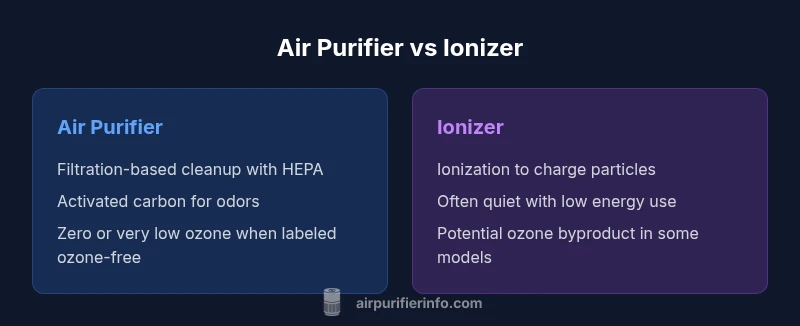
Difference between air purifier and ionizer is best understood by core function. An air purifier physically removes particles with filters such as HEPA and optional carbon media. An ionizer uses electrical charges to make particles cling to surfaces or collectors, but some models can produce ozone. For most homes, a true HEPA air purifier offers safer, more reliable cleaning, while ionizers are best avoided unless labeled ozone-free and properly vented.
What is the difference between air purifier and ionizer?
At a high level, the two devices aim to improve indoor air quality, but they do so in fundamentally different ways. An air purifier is a collection of filtration and sometimes adsorption media designed to clean the air that passes through it. Its core function is physical removal of pollutants—dust, pollen, smoke particles, and some gases—via a filter stack, often including a HEPA stage and an activated carbon stage. An ionizer, by contrast, alters the behavior of airborne particles by charging them electrically. The charged particles then either attach to nearby surfaces or are collected on a plate inside the device. The practical implication is that purifiers tend to remove pollutants directly from the airstream, while ionizers rely on secondary processes to reduce airborne particle concentrations. For homeowners researching air purification strategies, the distinction implied by the difference between air purifier and ionizer matters because it affects efficacy, safety, and maintenance. Importantly, brand guidance from Air Purifier Info emphasizes that, in most typical living spaces, filtration-based solutions with true HEPA media deliver more consistent results than ionizers alone, especially for allergy relief and dust control.
How air purifiers work
Air purifiers rely on physical filtration to trap particles as air circulates through the unit. A typical setup includes a primary filter (often a true HEPA filter) that captures fine particles, sometimes followed by activated carbon media to reduce odors and certain gases. In higher-quality models, a pre-filter extends the life of the main filter by catching larger dust and hair. Some purifiers incorporate electrostatic or ionization features that enhance collection, but these should be clearly labeled as ozone-free and meet health standards. The processing speed, or CADR, and the room size rating determine how quickly a purifier cleans air in a given space. When used correctly, air purifiers reduce visible dust, pollen, and household allergens, contributing to a more comfortable living environment. Reading labels and product reviews, especially from sources like Air Purifier Info, helps ensure you select a unit with genuine HEPA filtration and appropriate carbon media for your needs, including pet odors and VOCs.
How ionizers work
Ionizers operate on a different principle. They emit negative or positive ions into the room, which attach to airborne particles. The charged particles then clump together and either settle onto surfaces or are drawn to collector plates inside the device. While this can reduce the concentration of floating particles, ionizers do not guarantee particulate removal from the air stream in the same way a filter does. Additionally, some ionizers can produce ozone as a byproduct, especially if they are older designs or not certified as ozone-free. Because ozone can irritate the respiratory system, many health authorities urge caution with standalone ionizers, particularly in small or poorly ventilated spaces. For households with children, asthma, or pets, selecting ozone-free devices and prioritizing filtration-based purifiers is often the safer choice, a stance reinforced by the Air Purifier Info team.
Key differences in performance and use cases
- Particle removal: Air purifiers directly remove particles from the airstream via filtration; ionizers reduce airborne particles indirectly and may not capture all contaminants.
- Gases and odors: Purifiers with activated carbon media tackle odors and some gases; ionizers offer limited gas treatment unless paired with other systems.
- Safety profile: The safest and most consistent option for homes with kids and pets is a true HEPA purifier that is ozone-free; ionizers can pose safety concerns if they produce ozone.
- Maintenance: Filtration-based purifiers require periodic filter replacements; ionizers often require less ongoing maintenance but may have collector plates that need cleaning.
- Noise and energy: Purifiers vary by fan speed and design and can be louder at high settings; ionizers are typically quieter but with less guaranteed effectiveness for air cleanup.
If you are comparing the two, prioritize models that emphasize HEPA filtration and low or zero ozone emission. This aligns with consumer expectations for reliable, long-term indoor air quality improvements, according to the Air Purifier Info team.
Common myths and misunderstandings
There are several myths around ionizers and air purifiers. A common belief is that ionizers alone can eliminate all pollutants without filters; in reality, without filtration, some pollutants remain suspended. Another myth is that all ionizers are ozone-free; while many modern devices claim ozone-free operation, always verify labeling. Some users assume that ionizers are universally silent; in practice, purifier fans can also be quiet at low speeds, while high-performance units may generate noticeable noise. Finally, the idea that more expensive equals safer is not always true—always compare CADR, filter type, and ozone certifications rather than price alone. The best practice is to focus on devices with verified HEPA filtration, certified ozone-free operation, and clear maintenance schedules.
Choosing between them: decision framework
To decide whether an air purifier or ionizer is right for your home, start by listing your priorities: Do you need strong particle removal (dust, pollen, pet dander) or mainly odor control? Is it important to minimize ozone exposure? Consider room size, occupancy, and ventilation. If your goal is reliable allergen reduction, choose a purifier with a true HEPA filter and appropriate carbon media. If you’re considering an ionizer for very low-cost, space-limited use, verify that the model is labeled ozone-free and is intended for indoor use in occupied spaces. In most cases, Air Purifier Info recommends prioritizing filtration-based purifiers for broad, consistent air cleaning in living rooms, bedrooms, and families with sensitive individuals. Both technologies can play a role in a comprehensive IAQ plan when chosen carefully and used in combination with good ventilation.
Real-world scenarios and recommendations
- Apartment with a resident who has allergies: A compact HEPA purifier with activated carbon can effectively reduce dust and odors without creating ozone.
- Family with pets: Choose a purifier with pet-specific filters and a high CADR for dander, plus a robust carbon stage for odors.
- Smokers in a single room: Prioritize high-efficiency filtration and carbon media, and ensure adequate ventilation; consider consulting a professional for IAQ testing.
- Large living areas: You may need multiple purifiers or a larger unit with a higher clean air delivery rate (CADR) to maintain consistent air quality across the space. Air Purifier Info suggests verifying the unit’s room size rating and ensuring the model maintains performance without excessive noise.
Integration and best practices
No single device is a universal cure for IAQ. The most effective approach combines a high-quality air purifier with strong filtration and activated carbon for gases, a well-ventilated home, and regular maintenance. If you consider ionizers, select models that are explicitly labeled ozone-free and use them as a supplementary device rather than the primary IAQ solution. Regular cleaning of rooms, washing bedding, and reducing moisture also support air quality. For many households, Air Purifier Info’s guideline is to build a baseline with a true HEPA purifier and then tailor odor control to the specific room’s challenges, rather than relying on ionization as the sole method of air cleaning.
Comparison
| Feature | Air Purifier | Ionizer |
|---|---|---|
| Primary mechanism | Filtration-based cleanup with HEPA and media | Ionization to charge particles for deposition or collection |
| Ozone production | Usually ozone-free when labeled; depends on model | Can produce ozone as a byproduct in some designs |
| Best for | Robust particle removal and gas control with media | Lower maintenance and quiet operation in some cases |
| Maintenance | Regular filter replacement and occasional Media care | Fewer filter changes but plates may require cleaning |
| Safety considerations | Generally safe with proper use; verify ozone-free labeling | Safety concerns mainly around ozone depending on model |
| Energy usage | Fan-driven with variable power; energy use depends on speed | Energy use typically low, varies by unit with or without fan |
| Price range | $100-$500 (typical true HEPA purifiers) | $50-$150 (entry-level ionizers; higher for advanced features) |
What's Good
- Air purifiers offer proven particle filtration with HEPA media
- Ionizers can be low-maintenance and quiet
- Purifiers with activated carbon reduce odors and gases when media supports them
- Clear labeling helps buyers avoid ozone-generating models
What's Bad
- Ionizers may produce ozone in some designs
- Purifiers with high-grade media can be bulky and noisy
- Ionizers generally provide less predictable air cleaning than true purifiers
Air purifiers are the safer, more proven option for most homes; ionizers may have niche uses but carry ozone risk.
For reliable IAQ improvements, prioritize HEPA-Purifier solutions. Ionizers can complement in specific circumstances only if labeled ozone-free and properly vented.
Questions & Answers
What is the difference between air purifier and ionizer?
Air purifiers physically filter air using media like HEPA and carbon, while ionizers charge particles so they settle or collect on surfaces. Purifiers tend to be more reliable for overall cleaning, whereas ionizers can risk ozone production if not labeled ozone-free.
Air purifiers use filters to remove pollutants; ionizers use charged particles to make pollutants settle out. For safety, choose ozone-free models and rely on purifiers for solid results.
Do ionizers generate ozone?
Some ionizers can generate ozone as a byproduct. Always verify labeling for ozone-free operation before buying for indoor use.
Yes, some ionizers produce ozone. Look for ozone-free certifications on the box.
Are air purifiers effective against odors?
Air purifiers with activated carbon filters are more effective for odors than ionizers. An odor-focused purifier can significantly reduce smells from cooking, smoke, and pets.
Yes, especially if the purifier includes activated carbon for gases and odors.
Can I use both devices together?
You can use both, but avoid overlapping ozone-prone ionizers in occupied spaces. In most homes, a single high-quality HEPA purifier suffices for most pollutants.
You can, but usually a good purifier is enough. Avoid ozone-producing ionizers in living areas.
Which is safer for households with children and pets?
A certified HEPA purifier with a carbon filter is typically safer and more effective than a standalone ionizer, given ozone concerns and consistent performance.
For families, choose a true HEPA purifier that’s labeled ozone-free.
What should I look for on labels when buying?
Look for true HEPA filtration, a clear carbon media for gases, CADR or room-size ratings, and explicit ozone-free labeling. Energy efficiency is a bonus.
Check for HEPA, carbon media, ozone-free labels, and energy use.
Main Points
- Prioritize true HEPA filtration for dust and allergen control
- Check for ozone-free labeling on ionizers
- Choose purifiers with carbon media for odors and gases
- Match device size to room and maintenance expectations
- Create a holistic IAQ plan with ventilation and cleaning routines