Is Air Purifier and AC the Same? Key Differences Explained
A data-driven comparison explains how air purifiers differ from air conditioners, when to use each, and how to combine them for better indoor air quality.


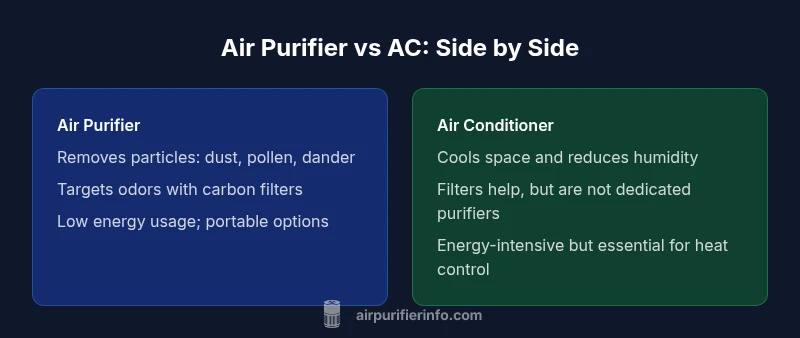
Air purifiers and air conditioners are not the same. An air purifier filters microscopic particles, odors, and some VOCs from indoor air, while an air conditioner cools, circulates, and often dehumidifies air. In homes, many people use both for different needs, or opt for HVAC systems with integrated filtration. The right choice depends on your goals: air quality versus temperature control. This quick distinction helps homeowners optimize comfort and health.
Is Air Purifier and AC the Same: What the Data Shows
The question 'is air purifier and ac same' surfaces repeatedly in homeowner conversations and product FAQs. The short answer is that these devices address different problems, even when used together. According to Air Purifier Info Team, the distinction hinges on purpose: filtration versus cooling. An air purifier pulls air through filters to capture dust, pollen, pet dander, and many odors; it does not lower room temperature. An air conditioner moves heat from indoors to outdoors and typically controls humidity. In practice, most households benefit from using both strategically: rely on the purifier for air quality and on the AC for comfort. The larger point is that they are not interchangeable, but they can be complementary, especially where smoke, dust, or strong odors are concerns.
Core Functions: Filtration vs Cooling
Filtration devices and climate control devices operate on different physical principles. Air purifiers are designed to physically remove particles and some gases from the air using filters and fans. They excel at capturing fine dust, pollen, pet dander, smoke particles, and many odors when equipped with activated carbon. However, they do not actively remove heat or regulate humidity in a meaningful, room-wide sense. Air conditioners rely on a refrigerant cycle to extract heat from indoor air and release it outside. They also influence humidity indirectly, with many models providing some dehumidification as a byproduct of cooling. Understanding this division helps homeowners avoid overestimating what each device can deliver and prevents misinformed expectations about performance.
How They Affect Indoor Air Quality
Indoor air quality hinges on particle load, odors, and humidity. Air purifiers are purpose-built to reduce particulate matter, including PM2.5, dust, pollen, and dander, and many models also target odors and some VOCs with activated carbon and specialized media. High-quality purifiers paired with properly sealed rooms can noticeably reduce irritants for allergy or asthma sufferers. Air conditioners contribute to air quality mainly through ventilation and humidity control; they do not guarantee clean air particles at the same level as purifiers, especially for ultrafine particles or volatile organic compounds. In spaces with smoke or strong smells, a purifier is often a necessary partner to the cooling function of an AC. The key takeaway is that air quality and temperature control are complementary, not interchangeable, goals.
Energy Use, Costs, and Efficiency
Energy efficiency and cost considerations differ between purifiers and ACs. Standalone purifiers typically consume modest power and can operate continuously without a dramatic impact on electricity bills, especially when you choose models with energy-saving features and appropriate CADR ratings for room size. Air conditioners, by contrast, consume more energy due to the work of cooling and dehumidifying. The total cost of ownership includes energy, maintenance, and filter/coil replacements, which vary by model and usage. For households aiming to balance comfort and air quality, a plan that assigns the purifier’s role to daily air cleaning and the AC’s role to seasonal cooling tends to be cost-effective and health-supportive.
Whole-Home vs Standalone Filtration
Many homes rely on central HVAC systems with upgraded filtration (high-MERV or even HEPA-grade filters) to improve air quality on a house-wide basis. Standalone air purifiers offer portability and room-by-room targeting, which can be especially useful in bedrooms, living rooms, or home offices where air quality concerns are highest. Central filtration can protect the entire home, but room-level purifiers help address localized issues such as cooking odors or pet dander in a specific area. When used together, a central system with good filtration plus portable purifiers yields broader, more reliable indoor air quality across seasons.
Room-by-Room Considerations
Room size, occupancy, and activities influence device choices. A small bedroom may benefit from a compact purifier to manage allergens and pet dander while using a minimal fan setting to reduce noise. A living room or open-plan space with higher traffic might require a higher CADR purifier and, if cooling is needed, an appropriately sized AC with humidity management. Kitchens introduce stronger odors and grease particulates, where a purifier with a carbon filter helps, while the AC handles temperature changes. In homes with multiple floors, consider a combination approach: powerful purifiers in sleeping zones and a well-sized AC system for general comfort. Planning ahead helps prevent under- or over-purification and ensures energy is used efficiently.
Maintenance, Lifespan, and Total Cost of Ownership
Annual maintenance costs for purifiers center on filter replacements and occasional cleaning of the unit. Filters should be matched to the purifier’s CADR and the air quality in the room; neglecting filter changes reduces effectiveness. Air conditioners require more diverse maintenance, including filter changes, coil cleaning, and refrigerant checks—costs can vary based on climate and usage. A practical approach is to schedule filter replacements per manufacturer guidance and to have professional checks for the AC system at regular intervals. Tracking both systems’ efficiency over time helps minimize total cost while maximizing air quality and comfort.
Common Myths and Practical Realities
Myth: A purifier can replace an air conditioner in hot weather. Reality: purifiers clean air but do not dramatically alter room temperature; you will still need cooling. Myth: An AC automatically cleans indoor air better than a purifier. Reality: while AC filters help, dedicated purifiers use higher-grade media to remove fine particles and odors more effectively. Myth: Bigger is always better. Reality: Room size and CADR matter; oversized purifiers waste energy and miss optimal air exchange. Understanding these realities helps households pick the right tools for their goals.
A Simple Decision Framework: Do I Need Purifier, AC, or Both?
- Define your primary goal: air quality or comfort. If air quality is paramount (allergens, smoke, odors), start with a purifier. If comfort is critical (heat, humidity), prioritize AC. 2) Assess room size and layout. Choose devices sized for the space to avoid over- or under-treatment. 3) Consider a mixed strategy: use a central HVAC filtration upgrade for whole-home benefits and targeted purifiers for zones with the most activity or the worst air quality. 4) Evaluate energy budgets and maintenance willingness. 5) Plan for seasonal changes—spring pollen and winter heating needs may shift device use. 6) Keep expectations realistic: purifiers improve air quality, ACs create comfort, and together they offer a more resilient indoor environment.
Implementation Checklist: Quick Start for Your Home
- Identify the rooms with the most air quality concerns (bedroom, living room, kitchen).
- Choose at least one purifier with a true HEPA filter and activated carbon if odors are frequent.
- Ensure your AC is appropriately sized for the space and contains an efficient filter upgrade if available.
- Establish a maintenance cadence for both units (filters, coil cleanliness, routine inspections).
- Monitor air quality indicators (dust levels, odors, humidity) and adjust usage as needed.
Conclusion: Practical Takeaway
The core message is simple: air purifiers and ACs solve different problems. An air purifier cleans air; an air conditioner cools and manages humidity. In many homes, both are necessary to achieve optimal indoor air quality and comfort. By understanding their distinct roles and how they interact, homeowners can design an efficient setup that minimizes energy use while maximizing health benefits. Air Purifier Info’s approach is to plan around your primary goal—air quality or comfort—and then layer in complementary devices as needed for a healthier, more comfortable home.
Final Thoughts: Practical Steps to Start Now
Start by assessing the rooms that matter most for health and comfort. Prioritize a purifier in spaces with high pollen, pet dander, or smoke exposure, and ensure your cooling system is well-maintained to support humidity control. If budget allows, consider upgrading central filtration and adding room purifiers for a targeted boost. This balanced approach helps you achieve the best possible indoor air quality without sacrificing comfort.
Comparison
| Feature | Air Purifier | Air Conditioner |
|---|---|---|
| Primary purpose | Air cleaning (particulate and some gases) | Temperature/humidity control |
| Filtration capabilities | HEPA/carbon options available | Standard filters; enhanced filtration possible with upgrades |
| Energy use | Low-to-moderate (portable models) | Medium-to-high (depends on BTU and usage) |
| Noise levels | Low-to-moderate (fan-based) | Medium-to-high (compressor and fans) |
| Best use case | Air quality improvement and allergen reduction | Cooling and humidity management |
| Maintenance costs | Filter replacements and cleanings | Filter replacements; coil maintenance typically needed |
| Cost range | low upfront cost | high upfront cost |
What's Good
- Targets air quality by removing dust, pollen, and odors
- Portable and easy to install in multiple rooms
- Low ongoing energy use compared to full-home cooling
- Can be layered with HVAC filtration for broader coverage
- Excellent for localized air-quality issues (bedrooms, offices)
What's Bad
- Does not cool spaces on its own; a separate cooling solution is needed
- Requires regular filter replacements to maintain performance
- ACs provide cooling but may not remove fine particulates as effectively
- Central HVAC upgrades can be costly and invasive
Air purifiers and ACs serve different but complementary roles in home air care.
For best results, use purifiers to improve indoor air quality and ACs to manage temperature and humidity. If choosing only one, base the decision on your primary goal—air quality or comfort—and plan a path to add the other, as needed.
Questions & Answers
Can an air purifier replace an air conditioner in a room?
No. An air purifier cleans air but does not meaningfully cool a room. If cooling is needed, you’ll rely on an air conditioner in addition to a purifier for best results.
No. Purifiers clean air, but they don’t cool rooms. If you feel hot, you’ll still need cooling from an AC or fan.
Do HVAC systems include built-in air purifiers?
Some HVAC systems include enhanced filtration or integrated purifiers (MERV-13 or HEPA-grade filters). They can improve whole-home air quality, but they may not capture ultrafine particles as efficiently as dedicated purifiers.
Some HVAC systems have better filters or built-in purifiers, which helps the whole home, but you may still want room purifiers for extra cleaning.
What should I consider for a pet-friendly home?
Pets add dander and odors. A purifier with a high-efficiency filter and carbon stage helps reduce allergens and smells, while regular AC maintenance ensures consistent comfort. Pairing both tools is often the best approach.
Pet homes usually benefit from strong purifiers plus good cooling and humidity control.
How often should I replace purifier filters?
Replacement frequency depends on usage and air quality, but many purifiers require new filters every 6-12 months. Always follow the manufacturer’s guidance and monitor performance indicators like reduced airflow or visible dust buildup.
Check the filter every few months and replace as recommended by the maker.
Are there health considerations when using both devices?
Using both devices typically improves indoor air quality and comfort, which can benefit respiratory health. Ensure proper maintenance to avoid mold or stale air and consider ozone-free models if sensitive to emitted by-products.
Using both can help health and comfort, just keep up with maintenance.
Main Points
- Define your goal: air quality vs comfort.
- Purifiers excel at particulates and odors; ACs excel at cooling and humidity.
- Use a combination for comprehensive indoor air quality and comfort.
- Plan room-by-room and consider central filtration for whole-home benefits.