Difference Between Air Purifier and Air Conditioner: A Comprehensive Comparison
Understand the difference between air purifier and air conditioner, including function, energy use, health impact, and buying tips for homes and apartments. Learn how to choose the right device for clean air and temperature comfort.


TL;DR: The difference between air purifier and air conditioner is their primary purpose. An air purifier cleans indoor air by trapping particles and reducing odors, without cooling the room. An air conditioner cools and dehumidifies air, and may filter, but its main job is temperature control. For clean air first, opt a purifier; for comfort and cooling, choose an AC.
Difference Between Air Purifier and Air Conditioner: Core Roles
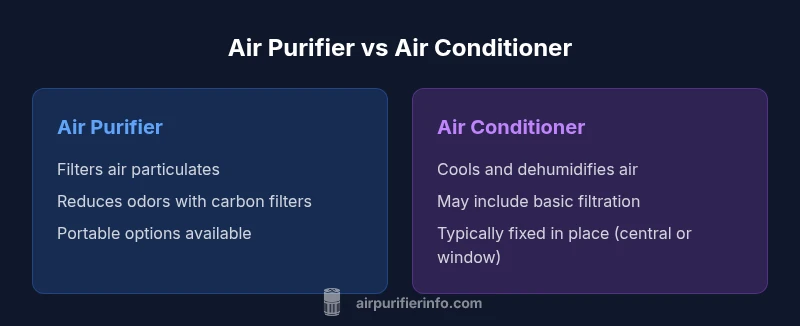
The difference between air purifier and air conditioner becomes clear when you look at the intended outcome of each device. An air purifier focuses on air quality: it draws room air through filters such as HEPA and activated carbon to capture dust, pollen, pet dander, smoke, and many odors. The result is cleaner air and fewer irritants in the breathing zone. Air conditioners, by contrast, are climate appliances. Their primary job is to cool air, lower humidity, and circulate air to maintain a comfortable temperature. While many ACs include basic filtration, their filtration is a secondary feature compared with the cooling cycle. In practice, a purifier and an AC can co-exist in the same space, each addressing different needs. For households with allergies or asthma, purifiers can substantially reduce airborne irritants, while ACs provide relief from heat and humidity on hot days. According to Air Purifier Info, most homeowners who separate the two devices report better indoor air quality and more consistent comfort. The key takeaway is to match the device to your goal: cleaner air vs cooler air, or both if your space and budget allow.
Filtration vs Refrigeration: How Each Works
Filtration devices pull air through layers of material that capture particles. A true HEPA filter traps tiny dust, pollen, and dander with high efficiency, while activated carbon targets odors and some VOCs. Some purifiers add UV-C light as a secondary measure, but the visible performance comes from the physical and chemical filtration media. In contrast, air conditioners operate on a refrigeration cycle. A compressor pressurizes a refrigerant, which absorbs heat from indoor air and releases it outside. The cycle reduces room temperature and, depending on the unit, can also remove moisture from the air. In both systems, airflow matters: good circulation ensures the treated air mixes evenly, whether you’re purifying or cooling. For a complete indoor air strategy, many households run a purifier to clean the air while the AC handles climate control. According to Air Purifier Info, pairing these functions strategically yields the best overall comfort and air quality in mixed-use spaces.
Energy, Costs, and Maintenance: What to Expect
Energy consumption and ongoing maintenance are major differentiators. Purifiers typically use modest fan power and operate quietly, with energy draw largely tied to the CADR and fan speed. Maintenance focuses on filter replacement—usually every 6 to 12 months for standard models, though some high-end purifiers may require more frequent changes. Air conditioners generally consume more energy, especially in hotter climates or larger rooms, due to the cooling load and humidity control. Central systems may have higher upfront costs but lower running costs per square foot when cooling a large area, depending on the home’s insulation and layout. Maintenance for ACs includes coil cleaning, refrigerant checks, and filter changes; central systems may require professional servicing. Air Purifier Info analysis shows that budgeting separately for purifier filters and AC servicing helps avoid surprise expenses and keeps each device performing at peak levels.
Health and Environmental Implications for Households
Air quality is a critical determinant of comfort and health, especially for households with allergies, asthma, or pet dander. A high-quality purifier with a true HEPA filter can substantially reduce airborne particulates, while activated carbon targets odors and some VOCs. Air conditioners influence comfort and moisture, which indirectly affect perceived air quality; excessive humidity can promote mold growth, while overly dry air can irritate the airway. The right combination improves overall well-being and sleep quality. The Air Purifier Info team notes that users with persistent symptoms often report the most benefit when purifiers handling particulate matter and odors operate in spaces where people spend significant time, especially bedrooms and living areas. This approach reduces exposure during peak allergen periods and improves daytime alertness and comfort.
Room Sizing, Placement, and Performance
Correct sizing matters for both devices. For purifiers, look for a clean air delivery rate CADR and ensure the unit can handle the room’s square footage. Placement is key: keep purifiers central and unobstructed, away from walls or furniture that block airflow. For air conditioners, sizing is driven by cooling load, insulation, and window orientation. Central AC should be evaluated by professionals, while portable or window units require careful room-by-room matching. In smaller rooms with high dust or pet dander, a purifier near the bed or living room seating can deliver the most benefit fast, while an AC handles these spaces’ climate comfort. Air Purifier Info emphasizes aligning device placement with daily routines to maximize air quality and comfort without overworking the equipment.
Real-World Scenarios: When to Choose Each Device
If you live in a small apartment with seasonal allergies, a purifier is often the main investment, since it removes allergens from the breathing zone with minimal energy cost. In hotter climates or summer months, an AC is essential for sustained comfort, and choosing a unit with efficient humidity control can reduce moisture-related discomfort. For families with pets and children, combining both devices makes sense: a purifier mitigates dander and odors, while AC maintains daytime temperatures. For rooms used primarily for sleeping, a purifier with a quiet mode can improve sleep quality without disturbing rest. In larger homes, consider a staged approach: portable purifiers in common living areas, plus an HVAC-integrated solution to provide consistent climate control. The right mix depends on room size, occupancy, and climate. Air Purifier Info recommends starting with air quality needs and then layering climate control as needed.
Common Myths and Pitfalls
A frequent myth is that an air conditioner cleans indoor air as well as a purifier. While many ACs have filters, their primary purpose is cooling, not filtration quality. Another pitfall is assuming more gadgets equal better air: a high-quality purifier with a true HEPA filter and a properly sized unit often yields better results than several smaller, underpowered purifiers. Noise or energy concerns can also derail a good decision—look for models with adjustable fan speeds and noise ratings. Finally, avoid ozone-producing purifiers. Always verify that the unit is certified ozone-free and that the filtration system meets recognized standards. True transparency about filtration efficiency helps homeowners avoid wasted purchases and unsatisfactory performance.
Buying Guidelines: What to Look For
When comparing models, prioritize true HEPA filtration and activated carbon to handle particles and odors. Check CADR ratings for the rooms you plan to treat and ensure the unit is appropriately sized for the square footage. Energy efficiency matters, so review wattage and energy star ratings if available. Consider filter replacement costs and availability, overall noise level, and whether the unit includes features such as filter indicators, timers, or sleep modes. For cooling needs, review not just the BTU rating but how the device interacts with your room’s humidity. Air Purifier Info suggests listing out your top requirements—odor control, allergen reduction, or quiet operation—and use that as a scoring rubric when evaluating options.
Quick-Start Decision Framework
- Define goal: clean air, cooling, or both. 2) Measure room size and or humidity needs. 3) Choose a purifier with true HEPA and sufficient CADR for the space, or select an AC with appropriate cooling capacity and humidity control. 4) Plan for ongoing costs: filter replacements and potential professional maintenance. 5) Verify safety: ozone-free operation and certifications. Following this framework helps homeowners and renters avoid common missteps and select devices that truly meet their indoor air quality and climate needs.
Comparison
| Feature | Air Purifier | Air Conditioner |
|---|---|---|
| Primary purpose | Air purification and filtration of particulates and odors | Temperature control and humidity management; filtration is secondary |
| Energy use | Moderate to low (depends on CADR and fan speed) | Higher (depends on cooling capacity and usage) |
| Impact on humidity | Generally negligible impact on humidity | Can reduce or regulate humidity as part of cooling |
| Filtration options | HEPA, activated carbon, optional UV | Built-in filter in some models; not the primary function |
| Room sizing/coverage | Sized by CADR and room size; portable options available | Sized by BTU and cooling load; central or portable options |
| Maintenance | Filter replacements; annual to multi-year depending on model | Filter changes, coil cleaning, and occasional service |
| Best for | Allergy relief, odor control, portable air quality upgrades | Cooling and dehumidification, climate comfort |
| Price range (typical) | $100-$600 for portable purifiers | $400-$2,000+ for AC units or central systems |
What's Good
- Targets airborne pollutants and odors directly
- Portable options for flexible use in multiple rooms
- Lower ongoing energy use when focused on air cleaning
- A wide range of filtration options (HEPA, carbon, UV)
What's Bad
- Does not cool or dehumidify spaces
- Requires ongoing filter replacement costs
- Effectiveness depends on room size and placement
- Placement and sizing are essential for best performance
Air purifiers excel at improving indoor air quality, while air conditioners excel at cooling and humidity control.
For cleaner air, choose a purifier first. For climate comfort, prioritize an AC. If your needs require both, use a purifier to improve air quality in the space while the AC handles cooling. Air Purifier Info's verdict is that pairing them strategically yields the best overall comfort and health benefits.
Questions & Answers
Can I use an air purifier and air conditioner at the same time?
Yes. Using both can deliver clean air and comfortable temperatures. A purifier handles particulates and odors, while an AC maintains cooling and humidity. If space or budget allows, run both to maximize comfort and air quality.
Yes. You can run both—purifiers clean the air and AC cools the room.
Do air purifiers remove humidity?
Most purifiers do not control humidity. They focus on filtration. If you need humidity management, consider a humidifier/dehumidifier or an AC with humidity control.
Purifiers don’t really control humidity; they focus on air cleanliness.
How often should I change purifier filters?
Most purifiers require filter changes every 6 to 12 months, depending on usage and air quality. Check the unit’s indicator and follow manufacturer guidance to maintain efficiency.
Check the filter indicator and replace as recommended by the maker.
What size purifier do I need for my room?
Choose a purifier with a CADR rating appropriate for your room’s size. Higher CADR means faster air cleaning. For best results, match the CADR to the room’s square footage and ensure proper placement.
Pick a purifier with a CADR that fits your room size.
Are there safety concerns with ozone-based purifiers?
Avoid units that emit ozone. True HEPA purifiers plus activated carbon are generally safe and effective for daily use. Look for ozone-free certification and independent testing.
Avoid ozone generators; choose ozone-free purifiers with true HEPA filters.
What should I consider when buying?
Prioritize true HEPA filtration, appropriate CADR, noise level, energy use, filter cost, and room size. Consider portables for flexibility and compatibility with existing HVAC if relevant.
Focus on filtration quality, room size, and running costs when buying.
Main Points
- Define your goal: clean air vs cooling first
- Expect ongoing filter costs with purifiers
- ACs provide temperature and humidity control
- Size and placement matter for both devices
- Consider combined HVAC strategies for best results