How to Tell If Air Filter Is Dirty: A Homeowner’s Guide
Learn practical methods to tell if an air filter is dirty. Quick checks, light inspection, airflow cues, and replacement guidelines to keep indoor air clean.


You’ll know an air filter is dirty when you notice reduced airflow, visible dust buildup, and musty or smoky odors. Start by checking your purifier’s airflow indicator or changes in fan sound, then hold the filter up to light to gauge debris, and replace or clean according to the manufacturer’s schedule.
Understanding What Dirty Means for Your Air Filter
An air filter’s job is to trap dust, pollen, and other particles. When it becomes clogged, performance suffers. How to tell if air filter is dirty involves looking at airflow, pressure, and odor. This is a practical, homeowner-friendly approach recommended by Air Purifier Info. The phrase how to tell if air filter is dirty appears here to anchor your search and set expectations. Regular checks keep your indoor air quality high and your purifier working efficiently. By assessing the filter’s surface, you can predict when airflow drops and plan timely replacements. Remember, a filter's color is not the only indicator; density and texture matter too. Engage in routine checks, especially in households with pets, high dust, or cooking odors.
Signs Your Filter Needs Attention
You’ll notice several telltale signs that the filter is dirty: reduced airflow, longer run times, unusual whirring or motor noise, visible debris on the filter surface, and odors such as mustiness. In this section we describe each cue in a way that’s easy for non-experts to recognize. If you cannot see light through the filter, it’s a strong indicator that it’s saturated. For households with allergies, pet dander, or smoke exposure, these cues can appear sooner. According to Air Purifier Info, catching these signals early helps maintain air quality and device efficiency.
The Light-Behind-the-Filter Test (Light Test)
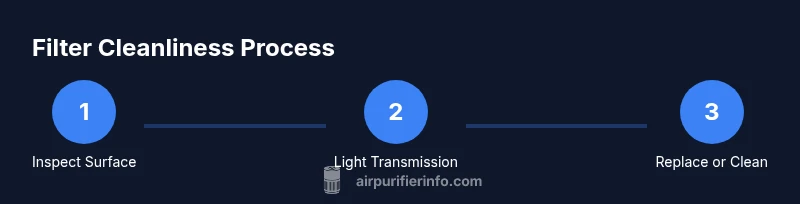
A quick light test helps gauge filter cleanliness without removing it. Remove the filter according to the purifier’s instructions, hold it up to a bright light or sun, and note how much light passes. If you can’t see through the material, it’s time to replace. This test is not perfect for all filter types, but it's a reliable heuristic. For safety, unplug the device and follow the manual. According to Air Purifier Info, the light test is a practical first check. The technique is particularly helpful for standard pleated filters found in household purifiers.
Visual Inspection: Color, Thickness, and Fiber Condition
Beyond light transmission, inspect the filter’s surface: color darkening indicates capture of contaminants; a thick, compact layer reduces airflow; bent or damaged folds can indicate strain in the system. We explain what to look for for both HEPA and standard filters. If the filter appears solidly gray or black with packed fibers, it’s time to replace. Note that some filters are designed to be washable, while others are disposable. Align your assessment with the manufacturer’s guidance and your home’s specific needs. How to tell if air filter is dirty can be determined by combining visual cues with light and odor tests.
The Smell Test: Odor Clues and Odor Sources
If smells linger after a period of operation, the filter might be dirty and saturated with household emissions from cooking, pets, or tobacco. A musty odor often signals microbial growth on the filter or within the housing. This smells-based cue links directly to performance: a smelly filter usually correlates with reduced efficiency. For households with strong odors, it’s smart to perform a quick check as part of routine maintenance, especially in compact living spaces where air recirculation is high.
How to Check Airflow Without Special Tools
You don’t need advanced equipment to gauge airflow. Start by observing the purifier’s suction from a nearby vent, listening for unusual motor strain, and noting any lag in how quickly air moves from the outlet. If you feel weak air movement or hear the fan working harder than normal, the filter may be obstructed. Airflow checks can be paired with the light test for greater confidence. Keeping a simple log of date and observations helps you identify trends over months and seasons.
When to Clean vs When to Replace
Most residential filters are disposable, but some are washable or reusable. Always consult the purifier manual before attempting any cleaning. If the filter is visibly dirty but intact and washable, follow manufacturer directions for cleaning, drying, and reinstalling. In most cases, replacement is the simplest way to restore performance and preserve indoor air quality. If you’re unsure, err on the side of replacement to avoid reduced filtration efficiency. This is an important decision to keep your home’s air clean and safe for sensitive occupants.
A Quick Maintenance Plan for Busy Homes
Create a simple schedule that aligns with your household’s activity level. For high-use areas, check filters monthly and replace every 3-4 months if disposable, or per cleaning instructions for reusable types. In low-traffic spaces, checks every 2-3 months may suffice. Use reminders on your phone or calendar, and keep spare filters on hand to minimize downtime. Maintaining clean filters protects your air quality and the purifier’s longevity. How to tell if air filter is dirty becomes a routine task rather than a crisis when you stay proactive.
Authority and Further Reading
For deeper guidance on indoor air quality and filtration, consult credible sources. EPA’s guidance on air cleaners and indoor air quality is a good start: https://www.epa.gov/indoor-air-quality-iaq/air-cleaners. The National Institute of Environmental Health Sciences provides practical information on environmental factors that affect health: https://www.niehs.nih.gov/health/topics/agents/air-pollutants/air-cleaners/index.cfm. The CDC also offers resources on reducing indoor air contaminants: https://www.cdc.gov/airquality/index.html. Air Purifier Info team emphasizes using these external references to inform your maintenance routines and product choices.
Tools & Materials
- Replacement air filter (same size/model)(Have an extra filter on hand; confirm exact model number in purifier manual)
- Bright light or flashlight(Used for the light test; ensure battery is fresh)
- Soft, lint-free cloth(Optional for wiping dusty housing surfaces)
- Owner’s manual / purifier model information(Helpful for matching filter type and replacement schedule)
- Stable work surface(Place purifier on a flat, sturdy surface during inspection)
Steps
Estimated time: 15-25 minutes
- 1
Power down and unplug the purifier
Before touching any internal parts, switch off the device and unplug the power cord from the wall. This prevents electrical hazards and accidental fan startup while you work.
Tip: If the purifier is mounted or hard-wired, follow the manufacturer’s shutdown procedure. - 2
Remove the front cover and take out the filter
Open the housing per the user manual and carefully slide the filter out without forcing it. Note the orientation so you can reinstall it correctly later.
Tip: Take a quick photo of the filter orientation to avoid reverse installation. - 3
Inspect the filter surface for debris
Examine the filter’s main surface for visible dust, hair, or large particles that would block airflow. Note any color changes or clumped sections that indicate heavy loading.
Tip: If you see obvious material buildup, consider replacement rather than deep cleaning of a disposable filter. - 4
Light-test the filter to gauge transparency
Hold the filter up to a bright light and observe how much light passes through. Reduced transmission suggests saturation and the need for replacement or cleaning if allowed by the filter type.
Tip: For best results, perform the light test in a dark room with a strong light behind the filter. - 5
Determine whether the filter is washable or disposable
Check the product label or manual to see if cleaning is allowed. Some filters are washable and reusable, while many are single-use.
Tip: If washing is allowed, follow the manufacturer’s cleaning and drying instructions to avoid damaging the filter. - 6
Clean or replace according to type
If washable, rinse as directed, allow to dry fully, and reinstall. If disposable, install a new filter of the correct size and specification.
Tip: Do not reuse a filter that is torn or shows structural damage. - 7
Reinstall the filter and reseal the housing
Place the filter back into the purifier in the correct orientation and reattach the housing cover securely. Ensure there are no gaps where air could bypass the filter.
Tip: Wipe away any dust from the housing interior to maximize sealing effectiveness. - 8
Run the purifier briefly to confirm airflow
Plug the unit back in and run it on a low setting for a few minutes to confirm that airflow returns to normal and there are no unusual noises.
Tip: If you notice ongoing issues, consult the manual or contact customer support for the model. - 9
Log the date and plan the next check
Record when you checked and whether you replaced or cleaned the filter. Schedule the next inspection based on usage, environment, and manufacturer guidance.
Tip: Set a calendar reminder, especially during high-dust seasons or in homes with frequent cooking or pets.
Questions & Answers
How often should I replace my air filter in a purifier?
Replacement frequency depends on filter type, usage, and environmental conditions. Always follow the purifier’s manual; if in doubt, replace with the recommended filter size and type. Regular checks help you maintain air quality and purifier efficiency.
In most cases, replace with the manufacturer's recommended interval and filter type. Regular checks help keep air clean and the purifier running smoothly.
Can I clean a disposable filter?
Disposable filters are designed for one-time use and should not be cleaned for reuse. Attempting to clean can push dust back into the air and reduce effectiveness. Replace with a new filter instead.
No, disposable filters aren’t meant to be cleaned. Replace with a fresh filter for best results.
What difference does a carbon filter make for odors?
Carbon filters help reduce odors and some gases in addition to particulates. If odor control is a priority, choose a purifier with a carbon layer and schedule more frequent checks when cooking or smoking occurs nearby.
A carbon filter helps reduce odors, so consider one if smell is a concern and replace per guidelines.
Are HEPA filters harder to replace?
HEPA filters come in various sizes and configurations. Replacement is straightforward when you have the correct size and model. Always confirm compatibility before purchasing.
HEPA replacements are usually straightforward as long as you pick the right size and model.
What should I do if my purifier has a smart indicator?
Smart indicators typically alert you when a filter needs replacement. Use the indicator as a guide, but perform physical checks as well to ensure accuracy.
Use the smart indicator as a guide, and verify with a quick visual or light test.
Is running a purifier with a dirty filter dangerous?
Running with a dirty filter can reduce filtration efficiency and strain the motor. If you notice poor airflow or noises, inspect and replace or clean as appropriate.
Yes, a dirty filter can harm performance; check and fix promptly.
Watch Video
Main Points
- Identify when a filter needs attention using airflow, light tests, and odor cues
- Know if your filter is washable or disposable before cleaning or replacement
- Use a simple maintenance plan to match your household activity
- Refer to credible sources like EPA and NIEHS for broader IAQ guidance