What to Do If You Don t Have an Air Purifier: Alternatives
Practical, step-by-step guidance for improving indoor air quality when you don t have an air purifier. Ventilation, DIY filtration, and safe lifestyle changes explained by Air Purifier Info.


Without an air purifier, you can still significantly improve indoor air quality by focusing on ventilation, source control, and DIY filtration. Start with cross-ventilation, exhaust fans, and reducing pollution sources. Build a simple DIY air cleaner with a box fan and a high‑quality filter, and use existing devices to support cleaner air. Air Purifier Info highlights practical, budget‑friendly options.
Why you might not have an air purifier and what to do instead
If you t have an air purifier, you are not alone. Many homes rely on natural ventilation and simple behavioral changes to manage indoor air quality. According to Air Purifier Info, you can substantially reduce particles and odors by combining source control, improved ventilation, and routine cleaning. This article answers what to do if you don t have an air purifier and shows practical steps you can implement today.
This approach centers on a layered strategy: limit the pollutants you introduce, move air more efficiently through living spaces, and keep surfaces clean to minimize dust. The goal is a visible, measurable difference in air feel and odor, even without a dedicated purifier. Air Purifier Info emphasizes that no single tactic will solve everything, but a thoughtful mix can produce meaningful improvements over days and weeks.
Quick wins: ventilation and source control
The fastest gains come from boosting ventilation and cutting pollution at the source. Open windows on opposite sides to create a cross‑breeze, especially after cooking or cleaning, and run exhaust fans in kitchens and bathrooms. If outdoor air quality is acceptable, keep interior doors open to encourage circulation across rooms. Source control is equally important: switch to lower‑emission cleaners, avoid smoking indoors, and replace scented candles with unscented alternatives. Air Purifier Info recommends starting with the largest contributors in your home—kitchens, smoking areas, and pet zones—and then extending clean air to other rooms.
In apartment buildings or densely populated homes, use portable fans to direct outdoor air into main living areas while pushing stale air toward a balcony or window. Maintain a routine of removing clutter that traps dust and dark spots, which helps reduce settled dust and the amount you’ll need to clean later.
DIY filtration you can deploy today
A simple DIY air cleaner can dramatically improve air exchange without a purchased purifier. Create a basic setup by placing a high‑quality furnace filter (ideally MERV 13 or a close equivalent) in front of a standard box fan. Secure the edges with tape so air cannot bypass the filter. Place the device in a high‑traffic area or near a dustier room and run it on medium speed for several hours daily. This creates an effective portable filtration solution that catches a sizable portion of airborne particles.
To maximize safety and effectiveness, make sure the DIY unit sits on a stable surface, never runs unattended near children or pets, and is kept away from moisture. If you notice reduced airflow or unusual noises, turn it off and inspect the filter fit and duct edges. Air Purifier Info notes that even improvised filtration works best when combined with other measures, such as ventilation and cleaning.
Leveraging existing devices for filtration
Your home’s devices can contribute to cleaner air with a few adjustments. Run your HVAC or portable fans with clean, properly fitted filters and ensure ducts are sealed to minimize leaks. Vacuum floors and upholstery with a HEPA‑filtered cleaner to capture dust and allergens rather than recirculating them. Humidify or dehumidify spaces to keep relative humidity in the comfortable range (roughly 40–60%), as very dry or very humid air can irritate mucous membranes and worsen perceived air quality. These steps reduce particle counts and help you feel steadier air throughout the day.
Targeted space strategies: bedroom, kitchen, living room
Prioritize the rooms where you spend the most time. In bedrooms, use low‑noise ventilation and a thorough cleaning routine to reduce dust while you sleep. In kitchens, employ exhaust fans during cooking and consider closing the door to the rest of the home to prevent kitchen pollutants from spreading. In living rooms, place DIY filtration devices or ensure cross‑ventilation is effective to keep the main gathering area comfortable. By tailoring actions to each space, you can maximize the impact of your efforts without an air purifier.
Monitoring air quality without a purifier
If you don t have an air purifier, tracking air quality helps you gauge how well your strategies work. Simple indicators—dust on surfaces, smell after cooking, and visible condensation—offer quick feedback. Consider low‑cost air quality monitors that track particulates (PM) and CO2 levels to gauge ventilation effectiveness. Air Purifier Info analysis shows that monitoring helps you optimize when to ventilate, how long to run filtration devices, and when to adjust humidity controls. Use notes of daily activities (cooking, cleaning, pet times) to correlate air quality with events in your home.
When to consider buying a real purifier and how to choose
There are times when a dedicated purifier becomes a worthwhile investment: when you or a household member has allergies, asthma, or sensitivity to odors, or when you cannot achieve acceptable air quality with ventilation and DIY methods alone. If you decide to buy, look for a purifier with a suitable room size rating (CADR), a verified energy‑efficiency rating, and replacement filter availability. Air Purifier Info recommends comparing several models, focusing on real‑world performance, noise levels, and maintenance costs rather than price alone.
Choosing a purifier should also consider room layout and activity level. For bedrooms or small living rooms, a compact unit with quiet operation is ideal. For larger living spaces, a purifier with higher CADR and well‑sealed filters will perform better. Remember that purifiers are most effective when used as part of a comprehensive air‑quality strategy, not as a last resort.
Timeframe, expectations, and maintenance
Improvements from mitigation strategies can accumulate over days to weeks. You may notice reduced cooking and pet odors within a few hours of ventilation changes, with Dust and allergen levels trending downward over several days. Maintaining air quality requires consistent practice: keep filters clean, maintain ventilation schedules, and continue surface cleaning routines. The Air Purifier Info team emphasizes that patience and consistency matter; even modest, persistent actions yield meaningful benefits over time.
Tools & Materials
- Box fan(20x20 inch or similar; stable surface; use on flat, dry floor)
- MERV 13 furnace air filter (or higher)(Size must match the box fan; cut to fit if needed)
- Duct tape or strong tape(Seal edges to prevent bypass around the filter)
- Vacuum cleaner with HEPA filter(Essential for removing settled dust and allergens)
- Microfiber cloths(For effective surface cleaning and dust capture)
- Humidifier or dehumidifier(Helps maintain optimal humidity for comfort and air quality)
- Low-cost air quality monitor (optional)(Tracks particulates and CO2 to assess ventilation)
Steps
Estimated time: 2-3 hours
- 1
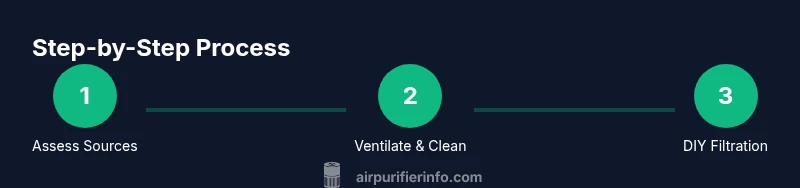
Assess pollutant sources and space priorities
Survey each major room for obvious pollution sources (kitchen fumes, pet dander, dusty fabrics). Note the times of day when air quality seems to worsen and identify the rooms you spend the most time in. Establish an order for applying changes so you tackle the highest impact areas first.
Tip: Write quick notes on sources and assign a priority score to each room. - 2
Create cross-ventilation when outdoor air is clean
Open windows on opposite sides to encourage a steady cross-breeze. Use a door or a fan to direct air flow from clean to less clean areas. Limit ventilation when outdoor air quality is poor.
Tip: Check outdoor air quality apps or local alerts before opening multiple windows. - 3
Assemble a DIY air cleaner
Mount a high‑quality filter in front of a box fan so air passes through the filter. Seal edges with tape and place the unit in a doorway or near a high‑activity area to maximize airflow through the room.
Tip: Ensure cords are tucked away and the unit is kept away from moisture. - 4
Leverage existing devices for filtration
Run your HVAC or portable fans with fresh filters installed and verify the ducts are sealed. Vacuum floors and soft furnishings with a HEPA filter; replace or refresh filters regularly. Maintain moderate humidity for comfort and to limit mold growth.
Tip: Perform a quick duct inspection to find obvious gaps and seal them if visible. - 5
Target key spaces with tailored strategies
In bedrooms, prioritize quiet ventilation and dust reduction. In kitchens, use exhaust fans during cooking and keep doors open to other rooms when possible. In living areas, consider portable filtration aids near seating zones.
Tip: Move the DIY cleaner closer to where you spend the most time. - 6
Monitor progress without a purifier
Use simple cues like odors, visible dust, and condensation to gauge improvement. If you have a monitor, track PM and CO2 levels to see how ventilation changes affect air quality over time.
Tip: Keep a daily log of activities that correlate with air changes. - 7
Decide if/when to buy a purifier
If symptoms persist or you need targeted relief (allergies, asthma), compare models by room size and CADR, then pick a device that fits your space and budget. Remember, a purifier works best when used with other measures.
Tip: Choose a purifier with replacement filter availability and reasonable running costs. - 8
Maintain and re-evaluate
Keep surfaces clean, recheck filters, and re‑assess ventilation schedules every few weeks. Small adjustments can yield ongoing improvements, even without a purifier.
Tip: Set a monthly reminder to clean, filter, and recalibrate your approach.
Questions & Answers
Is it safe to use DIY filtration as a substitute for a commercial air purifier?
DIY filtration can be a safe and effective stopgap when done correctly, with proper filter selection and secure assembly. Always monitor for overheating or blockages and avoid unsafe configurations around children or pets.
Yes, with care. Make sure the DIY setup is stable, sealed at the edges, and never near heat sources. Monitor for any signs of overheating.
Will opening windows worsen indoor air quality on polluted days?
On days with high outdoor pollution, it’s better to limit window opening and rely on ventilation during cleaner periods, such as early morning or after rain. Use exhaust fans and indoor cleaning routines to minimize indoor pollutants when outdoors are risky.
During heavy pollution, minimize open windows. Ventilate when outdoor air is cleaner, and use fans to direct air efficiently indoors.
Do houseplants meaningfully improve air quality without a purifier?
Houseplants can contribute small, local improvements, but they are not a substitute for mechanical filtration or proper ventilation. They are best used as a complement to other strategies, not a primary solution for pollutant removal.
Plants help a little, but they won’t replace filters or ventilation. Use them for ambiance and minor odor control alongside other methods.
How long before I see changes without a purifier?
You may notice improvements within hours for odors and draft comfort, with more gradual reductions in dust and particulates over days to weeks. Consistency is key; repeat the actions regularly.
Expect early wins within hours, with bigger improvements over days. Stay consistent with ventilation and cleaning.
What is a safe budget approach for improving air quality without a purifier?
Start with low-cost steps such as ventilation and cleaning, then add a DIY filtration option if needed. If symptoms persist, plan for one reliable purifier later, prioritizing room size and maintenance costs.
Begin with ventilation and cleaning. Add DIY filtration if helpful, and consider a purifier later if needed.
What pollutants can be reduced without a purifier?
Dust, odors, and some VOCs can be reduced through cleaning, ventilation, and source control. Pollutants that rely on filtration or chemical reactions may still require a purifier for significant reduction.
You can cut dust and odors with cleaning and ventilation, but some pollutants may need a purifier for bigger reductions.
Watch Video
Main Points
- Ventilation and source control are your first lines of defense.
- DIY filtration can substantially cut particulate matter.
- Use existing devices wisely to support air quality.
- Monitor progress to guide ongoing changes.
- Consider a purifier when DIY methods no longer meet needs.