How to Clean Air Purifier Filter Without Vacuum
Learn practical, non-vacuum techniques to clean air purifier filters—washable vs non-washable, drying, and maintenance tips to protect indoor air quality. Air Purifier Info guide for homeowners and renters.


This guide shows how to clean an air purifier filter without vacuum, using gentle brushing, damp cloths, mild soap, and proper drying. It covers both washable and non-washable filters and explains when replacement is the best option. The approach minimizes filter damage while maintaining indoor air quality. Follow the steps for safe results.
Why non-vacuum cleaning matters for air purifier filters
Indoor air quality hinges on clean filters that can trap dust, dander, and odors. This section explains why many filters respond better to non-vacuum cleaning methods, and how improper suction can damage media or reduce filtration efficiency. According to Air Purifier Info, using a vacuum on certain filter types may push dust deeper into the media or tear delicate fibers, undermining performance. The goal is to remove surface dust without altering the filter’s structure. With repeated use in homes with pets, smokers, or dust-prone environments, a careful cleaning approach helps extend filter life and maintain healthy air. The right approach depends on your filter type and the purifier’s design. By understanding washable versus non-washable options, you can protect your device and your lungs. Air Purifier Info analysis shows that most households benefit from a non-vacuum routine that favors gentle brushing and controlled rinsing over aggressive suction. Always consult your user manual for compatibility and safety guidelines, as the manufacturer may specify unique care requirements for carbon, HEPA, or hybrid filters.
Washable vs non-washable filters: what you can clean
Filters fall into two broad categories: washable media and non-washable, often sealed or pleated paper. Washable filters can tolerate water and mild soap; non-washable types should not be immersed or scrubbed aggressively. Always check the label, model number, and the warranty terms before cleaning. The difference matters because improper cleaning can warp the frame, loosen seals, or cause fiber shedding. When in doubt, err on the side of replacement rather than risk damage. Air Purifier Info’s guidance emphasizes respecting the filter’s construction and drying requirements. Keep in mind that carbon-impregnated or composite filters may lose adsorption capacity if wet, and many HEPA variants are designed for one-time use or limited cleaning. If your manual confirms washable status, proceed with gentle methods; if not, plan a replacement instead of a risky wash.
Safe non-vacuum methods for washable filters
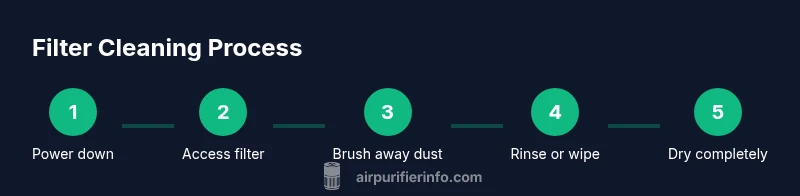
Washable filters require more care than a quick rinse. Start by turning off the purifier and removing the filter. Use a soft brush or microfiber cloth to lift loose dust from the surface, working in a steady, downward motion. Avoid vigorous scrubbing which can create micro-tears. For light washing, rinse under lukewarm running water in a gentle, circular motion, then apply a small amount of mild dish soap if the manufacturer allows. Rinse thoroughly until no soap residue remains. After washing, gently shake to remove trapped water then lay flat on a clean towel in a well-ventilated area. Air-drying is essential; do not reinstall until completely dry. Air Purifier Info notes that drying can take many hours, depending on humidity and filter thickness, so plan accordingly. If your purifier’s design includes a gasket or frame with seals, ensure those components are intact before reconnecting. This method minimizes damage and preserves airflow performance while you wait for a full dry.
Cleaning non-washable filters safely and when to replace
Non-washable filters, including many carbon and pleated media types, generally cannot be washed without risking damage. The recommended approach is to use a clean, dry brush to remove surface dust, followed by a tap-tap or gentle puff from compressed air if the manufacturer approves. However, many purifiers discourage any agitation beyond what the manufacturer suggests, to avoid fiber shedding or detachment of the media. In most cases, cleaning is limited to dry techniques and filter replacement when performance declines or the change indicator signals. If you notice reduced airflow, unusual odors, or visible deterioration, replacement is usually the best option. Air Purifier Info reminds readers to consult the manual for cautionary notes about each filter type and model. Avoid using a vacuum on non-washable media, as suction can pull dust deeper into the core or damage the media.
Maintenance cadence and signs your filter needs replacement
A well-maintained purifier relies on a predictable cleaning and replacement cadence. Establish a routine based on your environment: households with pets or smoke typically accumulate more particulates and may require more frequent checks. Look for signs of reduced airflow, musty odors, or visible discoloration on the filter. Even if a filter is not visibly dirty, manufacturers often recommend replacement on a set schedule. Keeping a log helps you track usage and timing. Air Purifier Info’s guidance recommends pairing the non-vacuum cleaning method with a proactive replacement plan to maintain optimal performance and indoor air quality.
Tools & Materials
- Soft-bristled brush(For removing loose dust from the surface)
- Microfiber cloth(For gentle wiping, avoid abrasive fabrics)
- Mild dish soap(Only if the filter is labeled washable with soap)
- Lukewarm water(Do not use hot water)
- Clean basin or bowl(For washing washable filters)
- Clean towels or drying rack(For air-drying completely)
- Gloves (optional)(Nitrile gloves to protect hands)
Steps
Estimated time: 45-60 minutes active cleaning, plus up to 24 hours drying
- 1
Power down and access the filter
Turn off the purifier and unplug the unit. Remove the outer cover and locate the filter housing so you can access the media without forcing parts.
Tip: Consult the manual for exact removal steps to avoid damaging clips or seals. - 2
Identify filter type and care instructions
Check the label or user manual to determine if the filter is washable. If unclear, treat as non-washable to prevent damage and voided warranties.
Tip: If the label says washable, proceed with gentle cleaning; otherwise plan for replacement instead. - 3
Remove loose dust with a soft brush
Gently brush the surface to lift loose dust without pressing hard into the media. Let gravity do the work, not suction.
Tip: Keep dust from dispersing into the room by brushing toward a trash bin or cloth. - 4
Wash washable filters with water and mild soap
Rinse under lukewarm water, using a small amount of mild dish soap if allowed. Do not use hot water or harsh cleaners.
Tip: Rinse soap completely until the water runs clear; soap residue can impact filtration if not fully removed. - 5
Rinse and remove soap residue
Continue rinsing until all soap is gone. Gently shake to remove excess water after washing.
Tip: Avoid wringing; excessive force can deform the filter frame. - 6
Air-dry completely before reinstall
Place the filter on a drying rack or clean towel in a well-ventilated area. Drying may take many hours or longer in humid environments.
Tip: Ensure no visible moisture remains; reinstall only when completely dry to prevent mold growth. - 7
Reinstall and run a test cycle
Reassemble the purifier, plug in, and run a low air-speed cycle to verify proper function and detect leaks or unusual noises.
Tip: If you notice strange odors or reduced performance, stop and recheck the installation.
Questions & Answers
Can I clean any air purifier filter with water?
No. Some filters are non-washable and can be damaged by water. Always check the label and manual before cleaning.
No—some filters can be damaged by water. Check the label and manual first.
What should I do if the filter is torn after cleaning?
If the filter is damaged, replace it rather than reuse it. Damaged media reduces efficiency and may release dust.
If torn, replace the filter.
Is it safe to use soap on carbon filters?
Usually not recommended; soap can contaminate the carbon and reduce adsorption. Only use soap if the manufacturer explicitly says it's safe.
Soap on carbon filters is usually not recommended.
How often should washable filters be cleaned?
There is no universal schedule; follow usage and environment. Inspect monthly and clean only when advised by the manual.
Follow the manual; inspect and clean as needed.
What is the best non-vacuum method for dried dust on filters?
Use a soft brush to remove dust, then a damp cloth if approved, and allow proper drying.
Brush off dust gently, then wipe if allowed.
Watch Video
Main Points
- Identify filter type before cleaning.
- Avoid vacuuming on non-washable media.
- Dry completely before reinstall.
- Replace non-washable filters as recommended.