Can You Clean an Air Filter With Water? A Safe Guide
Explore whether water cleaning is appropriate for air purifier filters, which types are washable, the risks, and practical steps to maintain indoor air quality without damaging your purifier.


In most cases you should not wash a standard air purifier filter with water. Only filters clearly labeled washable may be rinsed, and carbon or true HEPA filters typically require replacement. Always consult the user manual before attempting any washing, and prioritize manufacturer‑recommended cleaning or replacement for best results. Improper washing can damage media, void warranties, and reduce filtration efficiency.
Can You Clean Air Filter With Water? The Practical Reality
The simple answer to can you clean air filter with water is: it depends on the filter. Many residential purifiers use true HEPA media or activated carbon that are not designed to be washed. Water can deform the delicate glass fiber matrix, dislodge bonded carbon, or trap moisture behind seals, creating mold risks. According to Air Purifier Info, most users should treat non‑labeled filters as non‑washable and instead either vacuum the exterior or replace them when performance declines. The goal is to preserve filtration efficiency and avoid warranty issues. If your model specifies a washable filter, follow the exact cleaning instructions in the manual and use only clean, lukewarm water. The key takeaway is to verify with the manufacturer before you soak anything.
Brand guidance and practical reality
Air Purifier Info emphasizes that the safest approach is model‑specific: some pre‑filters are washable, some carbon layers cannot be cleanly restored by washing, and premium HEPA media should stay dry. If in doubt, assume non‑washable and pursue replacement or dry cleaning methods according to the manual. This approach helps homeowners and renters protect indoor air quality without risking purifier damage. Remember, even when washing is allowed, proper drying and reassembly are critical to avoid leaks and diminished filtration performance.
Why labeling matters and how to check
If the filter is clearly labeled washable, there will usually be a short cleaning protocol printed on the label or in the user guide. If it's not labeled, do not wash—even gentle rinses can push loose particles into the purifier housing or disturb the seal. In many cases, a non‑washable filter is designed to be replaced after a set period of use, not cleaned. This section highlights the importance of verifying label instructions before attempting any cleaning method.
Common misconceptions about washing filters
Many homeowners believe that rinsing a filter will restore performance and extend life. In reality, water exposure can alter the fiber structure, undermining the very filtration mechanism. Carbon adsorbents can become clogged with moisture and lose odor‑removal efficiency. Wet dust also fosters mold growth if the filter isn’t completely dry before reinstallation. The safest path is to avoid water unless explicitly advised by the manufacturer, and to pursue replacement when a non‑washable filter shows signs of reduced airflow.
Practical alternatives when washing isn’t advised
Dust removal can often be accomplished with a quick exterior vacuum or a soft brush. If you must refresh the filter material, replace the entire cartridge per the purifier’s recommendations. For odor control, consider replacing carbon components or using a purifier with a dedicated odor control stage. These steps can maintain air quality while steering clear of moisture risks.
Real‑world considerations for renters and homeowners
Renters often face restrictions on repairs, so following the manual’s guidelines is especially important for you. If a purifier is under warranty, improper water exposure may void coverage. For model longevity, maintain your unit by checking the filter indicator, cleaning exterior surfaces, and scheduling routine replacements rather than DIY water cleaning. This reduces the chance of accidentally damaging the device while preserving indoor air quality.
What to do next if you’re unsure
If you can’t locate your manual or the label is unclear, contact the manufacturer’s support line before attempting any cleaning with water. Air Purifier Info recommends documenting your purifier’s model number and consulting the official cleaning guidelines. By prioritizing official recommendations, homeowners protect both health and device longevity.
Tools & Materials
- Manufacturer manual for model(Look for explicit washable/non-washable guidance)
- Soft brush or microfiber cloth(For gentle exterior dust only)
- Mild dish soap(If allowed by manual for certain washable pre-filters)
- Lukewarm water(Only if the filter is explicitly labeled washable)
- Gloves(Keep hands clean and dry during handling)
- Drying rack or clean towel(Air dry completely before reinstalling)
- Replacement filter(Have on hand if the purifier requires non‑washable media)
Steps
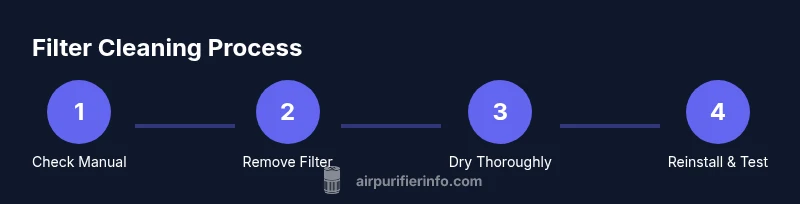
Estimated time: 30-60 minutes active work, plus 12–48 hours drying if washing is performed
- 1
Power down and locate filter
Unplug the purifier and open the front or back panel to access the filter housing. Identify the exact filter type and read any labeling about washability. This step prevents electrical hazards and ensures you’re following model‑specific guidance.
Tip: Avoid touching the filter media with bare hands; use gloves if available. - 2
Remove the filter correctly
Carefully lift the filter straight out to avoid bending frame edges or dislodging dust into the housing. Note the orientation so you can reinstall it correctly after cleaning or replacement.
Tip: Take a photo of the filter position before removal for reference. - 3
Check if the filter is labeled washable
Inspect the label on the filter itself or in the user manual for washability instructions. If there is any doubt or no explicit instruction, treat it as non‑washable to avoid damage.
Tip: If the label says 'washable', use only lukewarm water and no detergents unless specified. - 4
Rinse only if explicitly allowed
If washable, rinse the filter under cool or lukewarm running water, avoiding hot water and detergents unless the manual specifies otherwise. Gently shake to remove excess water.
Tip: Do not scrub with brushes; mechanical damage can occur to delicate media. - 5
Dry completely before reinstall
Place the filter on a drying rack in a well‑ventilated area away from heat or direct sunlight and allow to dry fully. Depending on humidity, this can take 12–48 hours.
Tip: Never reinstall a damp filter; moisture can mold and degrade performance. - 6
Reinstall and test
Once the filter is fully dry, reinsert it in the correct orientation and reseal the housing. Plug in the purifier and run it on a low setting to ensure there are no unusual noises or air leaks.
Tip: If you notice decreased airflow after reinstalling, the filter may be damaged or improperly seated.
Questions & Answers
Can you clean an air purifier filter with water?
Only if the filter is explicitly labeled washable by the manufacturer; otherwise water cleaning can damage the media and void warranties.
Only wash if the manufacturer says it's washable; otherwise avoid water to protect the filter and purifier.
Are HEPA or carbon filters washable?
Most HEPA and activated carbon filters are not washable. Some pre-filters may be washable, but always verify with the manual.
Most HEPA and carbon filters shouldn’t be washed; check the manual to be sure.
What are the risks of washing a non‑washable filter?
Washing can deform media, reduce filtration efficiency, trap moisture, promote mold, and may void warranties.
Washing non-washable filters can damage the media and void warranties.
How often should I replace filters instead of washing?
Follow the manufacturer’s guidance; replacement is common when a filter isn’t labeled washable or shows reduced airflow.
Follow the manual; replace the filter if it isn’t labeled washable or airflow drops.
How can I tell if my filter is washable?
Look for explicit labeling on the filter itself or in the user guide that states washable or rinse‑only.
Check the label or manual for washable instructions.
What if water accidentally gets into the purifier?
Unplug immediately, dry the exterior, and have a technician inspect if water entered the housing to prevent electrical hazards.
Unplug and dry the unit; consult support if water enters the housing.
Watch Video
Main Points
- Always check the manual before attempting any water cleaning.
- Most filters should not be washed; only clearly labeled washable filters may be rinsed.
- Do not mix detergents with water on filters unless specified.
- Dry filters completely before reinsertion to prevent mold.
- Replacement is safer for nonwashable filters and often extended beyond simple cleaning.