How Much Air Filter Do You Need in 2026? A Practical Guide
Learn how to estimate how much air filter you need for your space, factoring room size, purifier CADR, and usage. This practical guide from Air Purifier Info covers replacement intervals, costs, and tips.


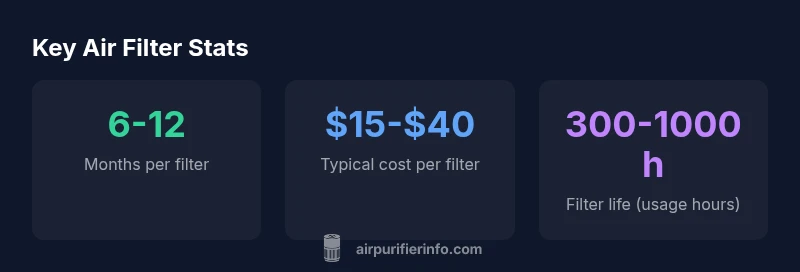
According to Air Purifier Info, the typical starting point for how much air filter you need is tied to your purifier's replacement interval and your room size. For most households, expect filter changes every 6-12 months; heavier use or odor-rich spaces may require more frequent changes. Plan for 2-4 spare filters per year and check fit with your model.
Why how much air filter matters
According to Air Purifier Info, understanding how much air filter you need is essential to balance indoor air quality with operating costs. The amount of filter material and its replacement cadence influence both particle removal efficiency and energy use. Homeowners and renters should think of filter needs as a function of three factors: room size and air changes per hour, the purifier's CADR (Clean Air Delivery Rate), and the specific pollutants you’re targeting. By aligning these factors, you’ll avoid under-filtering (poor air quality) and over-filtering (unnecessary cost and energy use).
How to calculate the right amount of air filter for your space
To estimate how much air filter you need, start with your room's volume and your purifier's CADR. A common target is 4-6 air changes per hour (ACH) for living spaces. Example: a 2400 cubic foot room with a purifier that delivers 200 CFM can achieve roughly 8 ACH, which is more than enough for most households. If your space is larger or you have smoke/odors, you may need higher CADR or an additional purifier. Excel-style math helps: ACH = (CADR in CFM × 60) / RoomVolume; adjust target ACH accordingly.
Filter types and their impact on replacement needs
Not all filters are created equal. HEPA filters remove fine particles efficiently but may cost more and require longer replacement intervals if used lightly. Activated carbon filters excel at odors and gases but typically require more frequent changes in smoky homes. Pre-filters extend the life of the main filter but usually don’t significantly improve particle removal. When planning how much air filter you need, consider a combination that matches your pollutant profile and budget.
How to estimate replacement frequency by usage
Your usage pattern dramatically changes replacement cadence. A family with pets and allergies in a high-traffic living room will typically replace filters more often than a single occupant in a seldom-used bedroom. If you smoke indoors or cook with strong odors, expect to replace filters closer to the 6-month end of the range. Conversely, light daily use with clean air sources can comfortably land near 9-12 months.
Cost considerations: budgeting for replacement filters
Plan for filter costs by itemizing the expected types: HEPA main filters, carbon/polish filters, and occasional prefilters. Typical HEPA main filters cost $15-$30, carbon filters $20-$40, and prefilters $5-$15. Annual budgets vary: a small apartment purifier may cost $40-$60 per year, while larger rooms with multiple filters could run $100-$150+. Buying in packs or choosing models with longer-life filters can reduce per-month costs.
Buying smarter: when to replace vs clean
Some purifiers offer washable prefilters or carbon sheets that can extend life with careful cleaning. However, washable components typically provide only marginal gains and still need eventual replacement. Follow the manufacturer’s guidance: replace the main HEPA filter on schedule, refresh carbon elements as recommended, and clean prefilters to delay replacement. This balanced approach minimizes environmental impact and keeps indoor air clean.
Measuring performance: signs you may need more filtration
If you notice persistent dust, odors, or seasonal allergies despite regular changes, you may need more filtration. Signs include reduced airflow, louder operation, or a stale smell around the purifier. A simple test is to temporarily raise the purifier’s speed or add a second unit for a few days and compare air quality indicators. The goal is consistent air quality, not just running the device at full blast.
Real-world examples and quick scenarios
A family of four in a dusty suburban home uses a mid-size purifier: replacement every 9 months on average, cost about $25 per filter, total annual cost around $100. A smoker-adjacent apartment uses a purifier with a carbon filter and HEPA stage: replacements every 4-6 months, cost $35-$60 per filter, annual spend near $180. A couple in a small apartment with pets may change filters every 6-8 months, spending $60-$100 yearly.
Practical steps to optimize your filter usage
- Check the manufacturer’s replacement schedule and the filter warranty. - Track usage and air quality indicators to adjust cadence. - Keep a small stock of diverse filters for rapid replacement. - Use a light, no-frills routine to monitor odor and dust between changes. - Clean prefilters regularly to maximize main-filter life. - Set calendar reminders for changes to avoid missing intervals.
Replacement intervals and costs by purifier size
| Model Type | Estimated Filter Life | Typical Replacement Cost | Notes |
|---|---|---|---|
| Compact purifier | 6-12 months | $15-$25 | Good for small rooms and desks |
| Mid-size purifier | 9-14 months | $25-$40 | Balanced cost and performance |
| Whole-room purifier | 12-18 months | $40-$70 | Best for larger spaces or odors |
Questions & Answers
How often should I replace air purifier filters?
Most purifiers require filter replacement every 6-12 months, depending on model and usage. Indicators and odor can signal sooner changes. Always follow the manufacturer's schedule.
Most purifiers need replacement every 6-12 months. Check the indicator and odors to know if you should change sooner.
Can I extend filter life by running the purifier on lower speed?
Lower speeds reduce filtration rate, which can slightly extend filter life but also reduce air cleaning. Use appropriate speed for air quality needs and monitor indicators.
Running on low speed can extend life a bit, but it may reduce cleaning. Use a level that keeps air quality good.
Is it cheaper to buy generic filters or brand-name ones?
Generic filters can be cheaper, but ensure compatibility, rating, and fit. Verify return policies and avoid counterfeit filters for safety.
Generic filters may save money if they fit your model and meet the spec. Check ratings and fit.
Do all purifiers use the same size filters?
No. Filter sizes vary by model. Always check the exact model’s filter size before purchasing replacements.
Not all purifiers use the same filter size. Check your model’s specs before buying.
What signs indicate a clogged filter?
Reduced airflow, louder operation, and persistent odors can indicate a clogged filter. Use the device's indicator as a guide.
Look for less airflow or louder noise and use the indicator to know when to replace.
How does room size affect how much air filter I need?
Larger rooms require higher CADR or longer-life filters and may need multiple purifiers to achieve recommended air changes per hour.
Big rooms need more filtration or multiple purifiers to keep air clean.
“Smart filtration balances indoor air quality with operating costs. The right cadence comes from matching room size, pollutant load, and purifier capability.”
Main Points
- Plan for 6-12 month filter changes
- Budget $15-$40 per filter
- Choose CADR to meet ACH targets
- Use prefilters to extend main filter life
- Keep 2-4 spare filters per year
- Match filter type to pollutants (dust, odors, pets)
- Monitor signs of reduced performance
- Consider multi-unit setups for large spaces
- Set reminders to maintain consistent air quality