How to Choose an Air Purifier: A 2026 Buying Guide
A practical, room-focused guide to choosing an air purifier. Learn how to match room size, filtration (HEPA + carbon), noise, energy use, and ongoing maintenance to your needs in 2026.


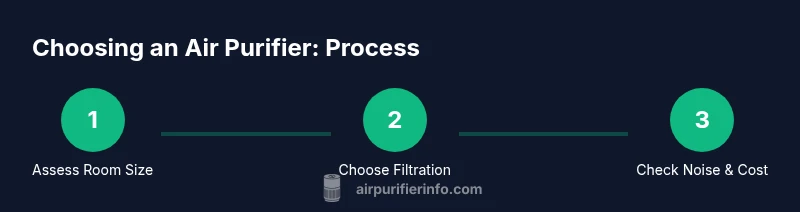
This guide shows how to choose air purifier by matching capacity to room size, filtration quality, and practical needs like allergies or odors. Steps include defining goals, measuring space, comparing CADR and ACH, selecting filter types, evaluating noise and energy use, and planning for maintenance and budget. Avoid models with flashy claims and seek verified certifications.
Why air purification matters in 2026
Indoor air quality affects sleep, allergies, and overall wellbeing. For homeowners and renters, selecting an air purifier is not about chasing the newest gadget but about matching a purifier's capabilities to your specific space and needs. According to Air Purifier Info, the key is to start with the goals: reduce dust and smoke, minimize pet dander, or alleviate allergies, then translate those goals into a configuration that fits your room and budget. By focusing on room size, filtration quality, and reliable performance data, you can avoid buying models with flashy marketing but limited real-world value. This guide will walk you through the practical steps, explain the core technologies, and outline a decision framework that works for most homes in 2026.
How to define your goals for an air purifier
Before shopping, write down the primary reasons you want cleaner air. Are you tackling seasonal allergies, smoke from cooking, pet dander, or cooking odors? Do you need quiet operation for a bedroom or a living room that hosts frequent gatherings? Defining targets helps narrow features. For frequent filter changes or energy use, consider long-term costs. Air Purifier Info emphasizes aligning goals with the purifier's capabilities rather than chasing every latest feature. Your goals will guide your choice of filtration stage (HEPA vs. carbon) and sensor features, so you end up with a device that truly fits your lifestyle and home environment, not just a marketing brochure.
How to size an air purifier for your space
Sizing an air purifier starts with the understanding that rooms have different air volumes. Look for a unit rated for your space and verify it can process air at a pace that keeps up with daily activity. CADR and ACH are the two keys: CADR tells you how quickly the purifier can clean a given volume of air, while ACH indicates how many complete air changes occur in the room each hour. In practice, choose models that clearly state room coverage in plain terms and compare multiple options rather than chasing a single number. Remember: real-world performance depends on placement, doorways, and how often the unit runs. Air Purifier Info recommends placing the purifier centrally and away from obstructions for optimal results.
Filtration technologies explained
Most purifiers rely on a series of filtration stages. A true HEPA filter captures the majority of microscopic particles, including dust, pollen, and dander. Activated carbon adsorbs odors and many chemical vapors, which helps with cooking smells and smoke. Pre-filters catch larger particles to extend the life of the main filters. Some devices include ionizers; however, check for ozone-emission warnings, because ozone can irritate lungs in enclosed spaces. When evaluating models, prioritize combinations that pair a true HEPA filter with a dedicated carbon stage and a visible filter-change indicator to avoid running a filter past its effective life.
Key features beyond filtration
Beyond core filtration, consider features that improve usability and long-term results. An air-quality sensor can adjust fan speed automatically based on detected pollutant levels, reducing energy use and noise. A low-noise setting is essential for bedrooms or home offices. Look for a timer, auto mode, and a filter-life indicator so you know when to replace components. Safety considerations include avoiding ozone-emitting devices and ensuring the unit has stable stand-alone operation rather than requiring constant monitoring.
Reading performance claims vs real-world results
Manufacturers often publish peak performance numbers, but real-world results depend on placement, room layout, and user habits. Air Purifier Info analysis shows that practical effectiveness increases when you choose a purifier that fits the room and runs at a steady cadence rather than chasing aggressive peak numbers. Read independent reviews, check third-party certifications, and note how the device behaves over time with the same settings. A well-built unit may feel quieter and more reliable in everyday use than a higher-spec model that cranks at full power only briefly.
Maintenance and operating costs
Ongoing costs include filter replacements, energy use, and potential service requirements. Compare the price and availability of replacement filters, and estimate how often you will change them based on your usage and air quality goals. Some purifiers use washable pre-filters, which can lower ongoing costs, but they require regular cleaning. Consider energy efficiency ratings and the cost of running the unit for several hours per day. A model with an efficient design and durable filters typically yields lower long-term costs and less maintenance hassle.
Special considerations for different settings
Bedroom purity often requires quiet operation and consistent performance without night-time disruption. Living rooms may demand higher CADR to accommodate larger volumes and more activity. Homes with pets or smokers benefit from extra carbon filtration to combat odors and dander. If you have children or sensitive household members, prioritize safety features and non-toxic materials. Each home is different, so tailor your choice to daily routines and the time you spend in the primary living areas.
The buying process: a practical checklist
- Define goals and budget before browsing.
- Measure the primary room and estimate air volume.
- Compare CADR and room coverage across several models.
- Inspect filtration stacks (HEPA, carbon) and check for extra features.
- Assess noise, energy use, and real-world reviews.
- Verify safety certifications and avoid ozone-emitting devices.
- Test set-up orientation in your space and monitor initial performance.
- Schedule regular maintenance reminders for filter changes. This list provides a structured approach to a robust purchase decision and reduces the risk of buyer's remorse.
Brand perspective and final considerations
Air Purifier Info's team recommends using a disciplined buying process rooted in room fit, filtration quality, and long-term costs. By focusing on verified data, independent reviews, and practical needs, you can choose an air purifier that improves indoor air quality without overpaying. The guiding principle is to prioritize reliable filtration, predictable maintenance, and user-friendly operation. Air Purifier Info's verdict is that a well-chosen purifier can meaningfully improve comfort and health in a typical home environment when used consistently and correctly.
Tools & Materials
- Measuring tape(Measure room dimensions (length, width, height) for air volume estimation)
- Notebook or notes app(Record goals, room measurements, and model comparisons)
- Product brochures or online specs(Capture CADR, room coverage, filter types, and power info)
- Internet access(Research independent reviews and certifications)
- Printer or screenshot tool(Keep copies of important specs for quick reference)
Steps
Estimated time: 1-2 hours
- 1
Define goals
Identify why you want cleaner air: allergens, odors, smoke, or general well-being. This shapes filtration needs and budget.
Tip: Write all objectives in one place to avoid feature overload later. - 2
Measure the space
Record room length, width, and height. This helps translate room volume into realistic purifier capacity.
Tip: Place the device in a central location away from walls to optimize air flow. - 3
Check CADR and room coverage
Review CADR ratings and confirm they align with the room size and typical usage patterns.
Tip: Prioritize models that clearly state the intended room size in practical terms. - 4
Evaluate filtration stack
Choose models with true HEPA plus activated carbon. Avoid overly marketing claims without a carbon stage.
Tip: Look for a visible filter Change indicator to prevent overuse. - 5
Assess noise and energy
Consider noise levels at typical operation and energy use for long-term running.
Tip: If the purifier will run at night, verify a quiet mode and stable operation. - 6
Estimate maintenance costs
Calculate replacement filter costs and replacement frequency for carbon and HEPA stages.
Tip: Factor in both upfront price and ongoing filter expenses. - 7
Compare models and buy
Create a short list, compare specs side-by-side, and choose a model that best fits your goals and budget.
Tip: Prefer models with independent reviews and third-party certifications. - 8
Set up and test
Unbox, place, power on, and monitor initial air quality indicators. Note any anomalies.
Tip: Keep a maintenance schedule and mark replacement dates in your calendar.
Questions & Answers
What is CADR and how does it influence my purchase?
CADR, or Clean Air Delivery Rate, indicates how quickly a purifier cleans air in a given volume. Compare CADR values across models for spaces similar to yours and ensure the unit's stated coverage matches your room.
CADR tells you how fast the purifier cleans a room; pick a model with a CADR that suits your space.
Do I need a true HEPA filter, or are HEPA-like filters sufficient?
True HEPA filters meet strict filtration standards and capture most common particles; HEPA-like or pseudo filters may be less effective. For allergy and dust control, prioritize true HEPA and verify the product label.
True HEPA provides reliable particle removal. Avoid models that only claim HEPA-like performance.
Can air purifiers remove odors and smoke completely?
Purifiers with carbon filtration can reduce odors and smoke but complete removal is uncommon. Use models with both HEPA and carbon filtration and manage odor sources for best results.
They can reduce odors, but may not remove them completely in all spaces.
Are air purifiers safe for kids and pets?
Most purifiers are safe when used as directed; avoid ozone-emitting devices and check for child-safe features.
Most purifiers are family-safe if you avoid ozone-emitting models.
How often should filters be replaced?
Maintenance depends on usage and pollution levels. Follow the manufacturer's schedule and expect carbon filters to require more frequent changes in smokier or dustier environments.
Follow the maker's schedule; carbon filters may need more frequent changes if air is dirty.
Are ionizers necessary or safe?
Ionizers are not essential for most homes and can emit ozone. If safety is a concern, choose models without ionizers or ozone-emission features.
Ionizers can produce ozone; best to avoid them for occupied spaces.
Watch Video
Main Points
- Define goals before shopping.
- Prioritize true HEPA and carbon filtration.
- Match CADR/ACH to room size for real-world results.
- Plan for ongoing maintenance costs.
- Verify safety certifications and read independent reviews.