How Often to Change Air Purifier Filter: A Practical Guide
Learn how often to change air purifier filter, what factors influence timing, signs of a clogged filter, and a practical replacement schedule for different homes.


Why how often to change air purifier filter matters
According to Air Purifier Info, the filter is the frontline for removing dust, allergens, odors, and smoke from indoor air. A clogged or degraded filter reduces airflow, decreases filtration efficiency, and can drive up energy use as the purifier struggles to circulate air. For homeowners and renters, understanding the timing helps protect allergy control, comfort, and overall indoor air quality. The right replacement cadence preserves peak performance, maintains consistent clean air, and minimizes the spread of dust and pollutants through living spaces. When you know how often to change air purifier filter, you can plan maintenance around seasons with high pollen counts, pet shedding cycles, or home renovation dust.
Factors that influence replacement frequency
Replacement timing is not one-size-fits-all. Several factors drive how often you should swap filters:
- Usage load: A purifier running 24/7 in a busy household will accumulate contaminants faster than a unit used sporadically.
- Room size and air changes per hour (ACH): Larger rooms or poorly ventilated spaces demand more frequent filtration to maintain air quality targets.
- Filter type and quality: HEPA filters, activated carbon, and pre-filters have different lifespans. Some units use washable pre-filters that can extend service life when cleaned regularly.
- Presence of pets or allergens: Homes with dogs, cats, or people with allergies typically experience quicker filter soiling.
- Environmental conditions: High indoor dust, smoke, or cooking odors accelerate clogging. In seeded pollen seasons, expect higher replacement needs.
These factors combine to influence a practical cadence. Rather than relying on a single number, match your replacement plan to real-world cues and the purifier’s indicators. Air Purifier Info’s analysis in 2026 reinforces that adaptive schedules outperform rigid annual timelines, especially in variable households.
How to tell when it's time to replace
Several practical cues indicate a filter is due for replacement:
- Airflow feels weaker: A noticeable drop in the purifier’s ability to push out clean air signals a clogged filter.
- Audible or odor indicators: A louder fan, unusual musty smells, or lingering cooking odors suggest the filter is no longer capable of absorbing contaminants effectively.
- Filter indicator lights: Many purifiers include an LED or app notification indicating “replace filter.” Trust these cues and replace promptly when alerted.
- Visual check: If you can see visible dirt, pet hair, or dust accumulation beyond the pre-filter, it’s time to replace or wash (per manufacturer).
Filter types and their recommended intervals
Different filter configurations require distinct replacement cadences:
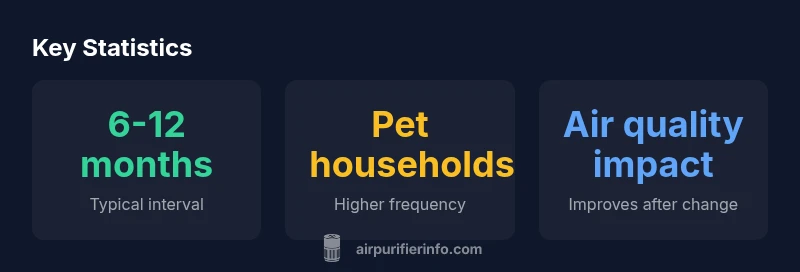
- Disposable HEPA filters: Commonly replaced every 6-12 months in typical homes; more frequent changes may be needed in dusty or high-usage environments.
- Activated carbon filters: Often paired with HEPA to absorb odors and gases; carbon filters can saturate faster if cooking, smoking, or or volatile organic compounds are present.
- Washable filters: Some purifiers offer washable pre-filters or HEPA equivalents. Cleaning can extend overall life, but washing frequency depends on usage and manufacturer instructions. Always follow the device manual to avoid damage.
- Combined filter packs: Multi-stage units may require more frequent changes for the carbon layer while keeping the HEPA portion within its typical lifespan.
In short, the exact cadence depends on the combination above and real-world conditions. Use the manufacturer’s guidance as your baseline, then tailor based on air quality and observed performance.
Practical maintenance tips to extend filter life
You can maximize filter life with thoughtful maintenance:
- Run routines that keep dust minimal: Use entryway mats, vacuum regularly, and clean surfaces to reduce airborne particulates.
- Clean pre-filters when recommended: Many units include a washable or replaceable pre-filter that traps large particles; cleaning it restores airflow.
- Check seals and housing: Ensure the filter sits correctly and that there are no gaps around the frame which could bypass filtration.
- Place purifiers strategically: Position units to optimize circulation in high-traffic zones, reducing the burden on any single purifier.
- Consider simultaneous replacements: If you have multiple purifiers, coordinate replacements to maintain consistent air quality across spaces.
A proactive approach reduces clogging, maintains efficiency, and minimizes the risk of degraded indoor air quality during peak seasons.
Replacement scheduling by usage scenario
To help you personalize plans, consider these common scenarios:
- Small apartment or studio: Likely 6-12 months, but check monthly if smoke, cooking, or dust is frequent.
- Family with pets: Expect more frequent changes, possibly every 3-6 months to manage pet dander and hair accumulation.
- Allergy-prone households: A shorter cadence, around 1-3 months during peak allergy seasons, with adjustments as symptoms improve.
- Smoky or wildfire-prone regions: Carbon filters may saturate quickly; evaluate filter life every 1-3 months during heavy smoke periods.
These scenarios provide practical starting points. Use them to tailor your schedule while monitoring airflow and odors.
How to replace the filter safely (brief)
When it’s time to swap the filter, power off the unit and unplug it. Open the filter compartment, remove the old filter carefully to avoid dispersing dust, and install the new one per the manufacturer’s orientation guide. Reset any filter-life indicator if required. After replacement, run the purifier on a low-speed setting for a few minutes to ensure proper seating and airflow before returning to normal operation.