When to Change Air Filter in House: A Practical Guide
A practical guide for homeowners and renters on determining replacement intervals, recognizing signs, and maintaining indoor air quality by changing the home air filter.


To improve indoor air quality, you should change the air filter in your house on a regular schedule. In general, replace filters every 1–3 months, but adjust the interval based on system usage, pets, and dust levels. Always start with your HVAC manufacturer's recommendation and inspect the filter monthly during peak seasons.
Why changing the air filter matters
Your home's indoor air quality depends on clean, unobstructed filtration. If you’re asking when to change air filter in house, you’ll want a practical schedule you can follow, not guesswork. The air filter traps dust, pollen, pet dander, and other particles before they circulate through your vents. A dirty filter reduces airflow, makes your HVAC work harder, and can worsen allergies or asthma over time. Regular replacement helps your system run efficiently, lowers energy use, and keeps your living spaces healthier. According to Air Purifier Info, a proactive approach to filter maintenance aligns with better IAQ and longer equipment life.
How to determine your replacement interval
Manufacturer recommendations are the starting point. If you have the manual, look for the filter replacement interval and the filter size. In many homes, a 1–3 month schedule is typical for standard, daily-use systems. But this interval is flexible: systems in dusty climates, with pets, or in homes where the HVAC runs most of the day will need more frequent changes. During the first year, monitor a few cycles and adjust. A quick check is to inspect the filter every month; if it’s visibly dirty or discolored, it's time to replace. This method keeps you aligned with real conditions rather than relying on generic timings.
Signs you need to change the filter sooner
Not all filters look dirty from the outside; often the change is indicated by performance symptoms. Watch for reduced airflow from vents, higher energy bills, musty smells, or increased dust settling on surfaces. If your home has heavy pet dander or you smoke indoors, your filter may get dirty after a shorter period. Regular checks are essential to catch these signs early.
Factors that affect replacement frequency
Your environment and system type influence how often you should replace. Pet dander, cooking smoke, and frequent use of the HVAC during dry seasons accelerate filter loading. Central HVAC systems with higher-efficiency filters can maintain air quality longer but may require more specialized replacements. Homes with poor filtration or dusty climates may need monthly changes at times.
How to choose the right filter for your needs
Filters come in several thicknesses and filtration levels. A common residential choice is a pleated filter rated with MERV 8–11; higher MERVs trap more particles but can slightly slow airflow if the system isn’t sized for them. Check your equipment’s label or manual for compatible MERV ratings and filter size. Always replace with the same size and install with the airflow arrows pointing in the correct direction.
Seasonal maintenance plan for changing filters
Pair filter checks with a broader seasonal maintenance routine. In spring and fall, set reminders to inspect and replace, and align this with other system checks (duct cleanliness, seal integrity, and thermostat settings). Keep a running log of filter sizes, MERV ratings, and replacement dates to refine your schedule over time. For allergy-prone homes, time changes to coincide with peak pollen seasons to maximize indoor air quality gains.
Practical steps to replace the filter safely
- Turn off the HVAC system to prevent unfiltered air from circulating while you work. 2) Locate and access the filter compartment, which is usually near the return air duct or the furnace. 3) Remove the old filter, noting its orientation and size. 4) Inspect the old filter for dirt and debris to gauge whether replacement was overdue. 5) Insert the new filter with the airflow arrows facing the correct direction and reseal the panel. 6) Turn the system back on and listen for proper airflow; 7) If your unit has a filter-change indicator, reset it. 8) Clean up surrounding dust and dispose of the old filter properly. 9) Document the replacement date in a log for future reference. 10) Check for any air leaks around the panel after reassembly.
Common mistakes to avoid
- Installing a filter backward or using a filter that’s too large for the slot. - Neglecting to replace the filter after a long period of neglect. - Failing to turn off power before opening the panel. - Using a filter with a higher MERV than recommended by the manufacturer, which can reduce airflow. - Skipping a filter check during peak seasons when air quality demands are higher.
How to document and track changes
Create a simple replacement log: date, filter size, MERV rating, and any notes about air quality or system performance. Keep a copy with your HVAC manual or digital notebook. Review the log every season and adjust your schedule if you notice changes in airflow or allergen levels. A consistent record helps you avoid guessing and ensures a steady approach to IAQ.
Quick-start sample schedule for typical households
- Pets and dust-heavy homes: check every 1 month during high-dust months, otherwise every 6–8 weeks. - Average homes: inspect monthly; replace every 2–3 months. - Smokers or homes with indoor cooking: consider monthly changes or even biweekly during heavy usage. - New installations or new HVAC systems: follow manufacturer guidance for the first year, then reassess.
Final tips for improving indoor air quality
Pair filter changes with regular system cleaning, dust control, and humidity management to maximize IAQ. Consider combining with a portable air purifier for rooms where occupants spend most of their time. Remember, consistent replacement is more impactful than a one-time upgrade.
Tools & Materials
- Replacement air filter (correct size for your HVAC)(Check size on the existing filter frame or in the manual; typical residential sizes include common 1-inch, 2-inch, or 4-inch thick pleated filters.)
- Screwdriver (Philips #2 or flathead, as needed)(Only if your filter panel is secured with screws; many units use a simple clip or door.)
- Gloves(Keep hands clean and reduce contact with dust.)
- Flashlight(Helpful for inspecting tight or dimly lit compartments.)
- Trash bag or bin(Dispose of the old filter properly and keep work area tidy.)
- Notebook or digital log(Record replacement dates and filter details for tracking.)
Steps
Estimated time: 15-25 minutes
- 1
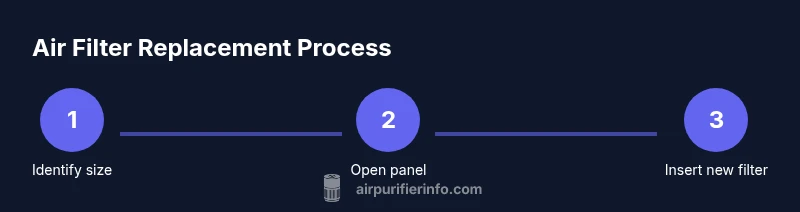
Identify correct filter size
Check the existing filter frame or your HVAC manual to confirm the exact size and type required. This ensures a proper seal and optimal airflow.
Tip: Ask a store associate to verify if you’re unsure about the size. - 2
Power down the system
Turn off the thermostat and the HVAC unit to prevent unfiltered air from circulating while you work.
Tip: If your system has a power switch, use it to ensure it’s completely off. - 3
Open the filter access
Open the return air panel or filter compartment. Some units have clips; others use screws.
Tip: Keep the panel supported to avoid dropping dust. - 4
Remove the old filter
Carefully slide out the old filter, noting its orientation and any obvious dirt patterns.
Tip: Take a quick look at the dirt load to gauge how overdue the change was. - 5
Inspect the filter and surroundings
Check the frame and seal area for dust buildup or damage; clean the slot if needed before inserting the new filter.
Tip: A dusty slot can prevent a good seal and air leakage. - 6
Insert the new filter with correct orientation
Place the new filter in the slot so that the airflow arrows point toward the system.
Tip: If in doubt, compare with the old filter’s orientation. - 7
Secure the panel
Close and secure the access panel or door and ensure it’s firmly in place.
Tip: Avoid overtightening screws which can damage the enclosure. - 8
Reset indicators and recalibrate if needed
If your system has an indicator or smart controller, reset it to reflect the new filter change.
Tip: A reset helps you keep accurate future replacement timelines. - 9
Test airflow
Turn the system back on and listen for normal airflow; check vents for even distribution.
Tip: If airflow seems restricted, recheck filter seating. - 10
Document the replacement
Log the date, size, and MERV rating of the new filter for future planning.
Tip: Use a consistent format to simplify future audits.
Questions & Answers
How often should I replace my HVAC air filter in a typical home?
Most homes benefit from replacing the filter every 1–3 months. If you have pets, smoke indoors, or live in a dusty area, you may need to replace more often. Always base the schedule on observed dirt and system performance.
Typically, replace your filter every one to three months, adjusting for pets, smoke, and dust.
Can I reuse a disposable air filter?
No. Disposable filters are designed for single use and should be replaced when dirty or clogged. Reusing them reduces filtration efficiency and can strain the HVAC system.
No, disposable filters should be replaced once dirty.
What does MERV mean and does it matter for home use?
MERV indicates filtration efficiency. For most homes, a filter in the 8–11 range provides good particle capture without overly restricting airflow. Always check the system’s compatibility before upgrading.
A moderate MERV, like 8 to 11, is usually appropriate for homes.
Do room air purifiers affect how often I change filters?
Yes. Portable purifiers have their own replaceable filters and should be maintained on their own schedule in addition to your central HVAC filter.
Yes, check room purifier filters separately from your central system.
How can I tell if the filter is installed correctly?
Ensure the airflow arrows on the filter point toward the system, the filter sits snugly in the frame, and there are no gaps around the seal.
Make sure arrows point the right way and the filter sits flush.
Should multi-stage HVAC systems follow a different replacement schedule?
Multi-stage systems may use different filter types; follow the manufacturer’s guidance for each stage. Higher-efficiency filters can require more frequent changes if airflow is restricted.
Follow the manufacturer’s guidance for your multi-stage setup.
Watch Video
Main Points
- Set a realistic replacement cadence and adjust for usage.
- Match filter size and MERV rating to manufacturer guidance.
- Pet ownership and dust levels often shorten the interval.
- Maintain a replacement log to fine-tune timing.
- Always install with correct orientation and reset any indicators.