Air purifier versus air filter: An analytical comparison for indoor air quality
An evidence-based comparison of air purifier versus air filter to help homeowners and renters choose the best path to cleaner air for dust odors and allergies.


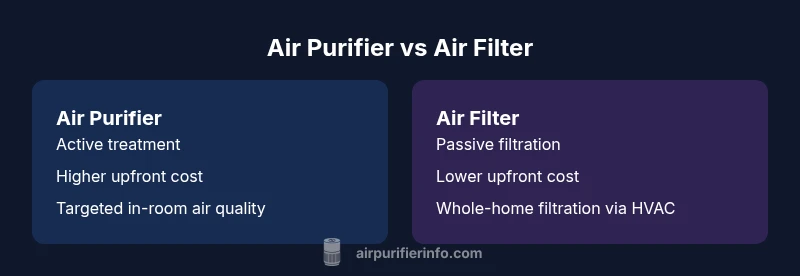
Air purifiers actively clean indoor air by moving and treating it, while air filters passively trap particles as air moves through a system. In short, air purifier versus air filter describes two approaches: active treatment vs passive filtration, with different implications for performance, maintenance, and costs for homeowners and renters seeking clearer guidance.
What the terms mean: air purifier versus air filter
In a world of indoor air quality, the phrase air purifier versus air filter points to two distinct technologies. An air purifier is a standalone device or system that actively processes air, typically moving it through a filtration or treatment stage to reduce contaminants in real time. An air filter, by contrast, is a passive component installed in a ventilation system or a portable unit that traps particles as air passes by. For homeowners and renters, distinguishing these approaches matters because it influences room coverage, maintenance, and ongoing operating costs. According to Air Purifier Info, understanding the core distinction helps set realistic expectations about what each option can and cannot do, especially when concerns include dust, odors, and allergens in the home.
How air purifiers work: mechanisms and configurations
Air purifiers rely on a combination of physical filtration and genetic design to treat air. Most units use high-efficiency filters such as HEPA to capture particles as small as 0.3 microns, with activated carbon or other media to tackle odors and VOCs. Some purifiers incorporate ionization or electrostatic precipitation to attract particles, though these features vary in effectiveness and may raise maintenance considerations. Placement and room size play a major role: larger rooms demand higher CADR (clean air delivery rate) and sometimes multiple units. The Air Purifier Info team notes that performance is highly model-specific, so owners should compare CADR-to-room-size ratios rather than relying on headline specs alone. Active purification means you can influence real-time air quality in living spaces, but you should balance noise, energy usage, and filter replacement schedules when choosing a model.
How air filters work: HVAC integration and standalone options
Air filters operate passively, shaping air quality by removing particles as air moves through them. In HVAC systems, higher-MERV filters catch a broader range of particles but may require fan speed adjustments or improved airflow to avoid straining the unit. Portable air filters (a subset of filters) provide room-focused filtration and are commonly used as an affordable first step for improving dust control. Filter performance hinges on MERV rating, pleat density, and media quality, which determine the size and variety of particles captured. For many households, filters offer consistent, low-maintenance filtration without the need for electricity beyond the HVAC system itself. When comparing air purifier versus air filter, consider whether you need localized control or whole-home filtration integrated into the existing ductwork.
Key performance concepts: CADR, MERV, ACH, energy, and noise
Two core ideas often drive decision-making: rate and reach. For purifiers, CADR (clean air delivery rate) measures how quickly a unit can remove smoke, dust, and pollen from a room, while ACH (air changes per hour) reflects how many times air in a space is exchanged in an hour. Air filters rely on MERV ratings to indicate filtration efficiency for various particle sizes. In both cases, higher performance often means higher energy consumption and more frequent maintenance. Noise is another practical concern: fans and purifiers generate sound that can affect comfort, especially in bedrooms or study rooms. When evaluating air purifier versus air filter, weigh CADR and MERV head-to-head against energy use, noise levels, and replacement costs over time.
Room-by-room use-case scenarios: where to prioritize each option
In sleep spaces, a purifier with quiet operation can offer real-time air improvement while you rest, helping with allergies and odors from pets or cooking. In living rooms and open-plan areas, devices with higher CADR and robust carbon filters can deliver noticeable improvements in perceived air freshness. For homes with central HVAC, upgrading filters can be an efficient baseline for overall air quality, particularly if the system runs continuously. In tight spaces or rental units with limited capacity for additional devices, combining a couple of compact purifiers in zones with the most activity can be a practical strategy. The key is to align the technology with room size, occupancy, and specific air quality concerns such as dust, VOCs, or pet odors.
Maintenance, cost, and lifecycle considerations
Air purifiers involve upfront cost, ongoing electricity use, and recurring filter changes or cartridge replacements. The frequency of maintenance depends on usage, air quality, and media type; most purifiers require filter replacement every 6–12 months, with some carbon stages needing more frequent attention if odors or VOCs are a concern. Air filters—especially in HVAC systems—tend to have lower ongoing costs but may require more frequent trackable changes during high-dust seasons. When comparing air purifier versus air filter across the lifecycle, compute the total cost of ownership (purchase price + maintenance + energy). A balanced decision often favors using a purifier for targeted rooms and relying on high-MERV HVAC filters for broader, cost-effective filtration.
Noise, comfort, and installation considerations
Noise levels influence user experience and perceived air quality. Purifiers can be louder at higher fan speeds, so selecting a model with low-noise operation is critical for bedrooms or study spaces. Installation is simpler for portable purifiers and may be a one-time plug-and-play setup, while HVAC filters require compatibility with existing ducts and may involve professional service if upgrading a central system. The right choice depends on your tolerance for noise, the practicality of installation in the given space, and how much you value real-time air treatment versus a passive, centralized filtration approach. In many cases, homeowners opt for a mixed approach: strategic purifiers in problem areas plus higher-rated HVAC filters.
Real-world decision checklist: how to decide quickly
Use this checklist to guide a decision between air purifier versus air filter. First, map rooms by occupancy and reported air quality concerns (dust, odors, allergies). Next, estimate budget constraints and willingness to manage maintenance tasks. Then, consider whether you want immediate air-quality improvements in specific zones (favor purifiers) or a cost-conscious, whole-home strategy (favor HVAC filters). Finally, verify space and energy considerations to ensure the selected solution won’t create new discomforts. If in doubt, start with a single room purifier to gauge impact and reassess.
Authoritative sources and best practices (references)
For further guidance on air cleaning technologies, consult official sources such as the EPA’s pages on air-cleaning technologies and indoor air quality. These resources discuss the relative strengths and limitations of different approaches and offer practical steps for homeowners. When evaluating air purifier versus air filter, refer to reputable standards and best practices to ensure you select devices and filters that meet your room size, contamination profile, and maintenance capabilities. Always verify product specifications against recognized guidelines to avoid overestimating performance.
Practical takeaway: how to move forward with confidence
Armed with a clear understanding of air purifier versus air filter, you can tailor a solution to your home’s unique needs. Prioritize real-time air improvement in high-traffic zones with portable purifiers, and deploy higher-MERV filters in your HVAC system for long-term baseline filtration. Balance upfront costs, ongoing energy use, and maintenance frequency to optimize total cost of ownership. Remember that indoor air quality is a system issue: the best outcomes often come from combining targeted purifiers with strong, well-maintained filtration in the central system.
Comparison
| Feature | air purifier | air filter |
|---|---|---|
| Filtration/treatment method | Active treatment and filtration (HEPA, carbon, etc.) | Passive filtration within HVAC or portable filter media |
| Room coverage and path | Room-scale purification with standalone units or integrated purifiers | Whole-home filtration via HVAC pathways or room filters |
| Maintenance frequency | Filter changes or cartridge replacements per model | Regular HVAC filter changes; standalone filters require periodic replacement |
| Upfront cost range | Moderate to high for purifiers | Lower upfront for HVAC or portable filters |
| Best for | Odor/VOC control, localized air treatment, allergies in specific rooms | Baseline filtration, cost efficiency, and whole-home air quality |
| Energy use and comfort | Electricity use varies; can add to monthly bills; consider noise | Minimal incremental energy use beyond HVAC operation; generally quiet when fans are not running high |
What's Good
- Active treatment offers real-time improvements in chosen spaces
- Purifiers can target odors and VOCs with dedicated media
- Portable units provide flexible placement and room-specific control
- HVAC filters deliver steady, low-cost filtration across the home
What's Bad
- Higher upfront cost and ongoing energy use for purifiers
- Maintenance costs from frequent filter replacements and carbon media
- Purifiers may not treat entire home as effectively as centralized filtration
- Some features (ionizers) may add complexity without clear benefits
Air purifiers excel in targeted, real-time air treatment; air filters excel in cost-effective, whole-home filtration when used with HVAC.
Choose a purifier for room-specific air quality improvements and odor control. Choose HVAC filters for baseline, centralized filtration and lower long-term costs. A combined approach often yields the best overall indoor air quality.
Questions & Answers
What is the main difference between air purifiers and air filters?
Air purifiers actively treat air in a room, combining filtration with active airflow to reduce contaminants in real time. Air filters passively remove particles as air moves through a filtration media, typically within HVAC systems or standalone devices.
The key difference is real-time treatment versus passive filtration. Purifiers actively clean the air in a space, while filters remove particles as air moves through them.
Can air filters remove odors or VOCs?
Yes, but it depends on the media. Odor and VOC removal require activated carbon or specialty media within filters or purifiers. Not all filters are designed for odors, so check the media specification for VOC capabilities.
Some filters and purifiers include carbon or other media to tackle odors and VOCs; verify the media before buying.
Do I need both for optimal air quality?
Many homes benefit from a combination: purifiers in high-traffic rooms for immediate air improvements and upgraded HVAC filters for baseline, whole-house filtration. The decision depends on budget, room layout, and existing HVAC performance.
Often a mix works best: purifiers for problem areas and strong HVAC filters for overall filtration.
Which is better for dust or allergies?
For dust and allergies, a purifier with a true HEPA filter in bedrooms or living areas is typically more effective than a stand-alone filter in a central system, due to its targeted, high-efficiency filtration.
If dust and allergies are your main concern, focus on a room purifier with HEPA filtration for best results.
How should I size a purifier for a room?
Measure the room and select a purifier with a CADR that matches or exceeds the room size. A higher CADR generally means faster purification, but ensure the unit fits the space and can operate quietly.
Choose a purifier with a CADR appropriate for your room size and prioritize quieter performance for bedrooms.
How often should I replace filters?
Replacement frequency depends on usage and media. HEPA and carbon media typically need changes every 6–12 months, while HVAC filters vary by MERV rating and household dust levels. Always follow the manufacturer’s schedule.
Check the filter and media schedule from the manufacturer and replace when recommended.
Main Points
- Prioritize real-time air treatment for problem rooms with a purifier.
- Use HVAC filters for consistent, whole-home filtration and cost efficiency.
- Match device capacity to room size and usage patterns.
- Account for maintenance costs and energy usage in total cost of ownership.
- Consider odor and VOC removal when odors or fumes are a concern.