Difference Between Air Purifier and Fan: An Analytical Guide
A thorough, evidence-based comparison of air purifiers and fans, explaining how each device affects indoor air quality, comfort, costs, and safety for homeowners and renters in 2026.


An air purifier actively cleans indoor air by filtering particles and often gases, while a fan simply circulates air to create comfort. For allergies, smoke, or VOC reduction, an air purifier is usually more effective. A fan is cheaper upfront, uses less energy, and adds airflow, but does not remove pollutants.
Difference Between Air Purifier and Fan: Core Distinctions
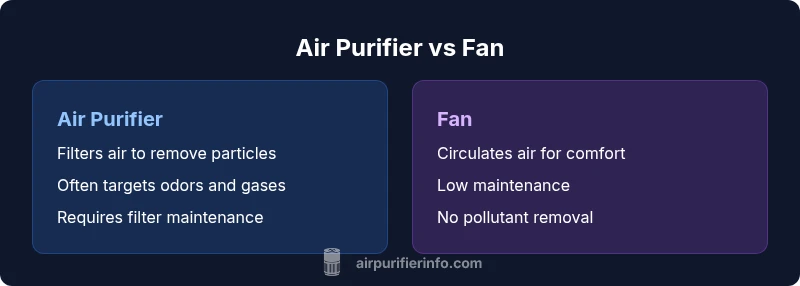
At its core, the difference between air purifier and fan is not about aesthetics but function. An air purifier is designed to remove contaminants from indoor air, often using filters and sometimes activated carbon to capture particles, odors, and gases. A fan, by contrast, does not actively remove pollutants; it moves surrounding air to improve perceived comfort and reduce stuffiness. For homeowners and renters focused on measurable air quality outcomes, understanding this distinction matters. According to Air Purifier Info, many buyers underestimate how much air quality depends on filtration rather than air movement alone. If your goal is to reduce dust and pollen, a purifier with a high-efficiency filter can deliver tangible benefits over simply running a fan. If you’re primarily seeking relief from heat or humidity, a fan may be the more economical solution but will not lower pollutant levels on its own. The practical takeaway is that these devices serve different roles, even though both influence how a room feels. When comparing options, consumers should align their choice with the primary objective: pollutant removal versus airflow and comfort. Throughout this article we will unpack how air purifiers filter, how fans circulate, and how to decide which tool fits your home or apartment. The goal is a clear, evidence-based framework you can apply during a buying decision. Consider also the space size, existing air quality concerns (dust, smoke from cooking, pet dander), and how you want to balance ongoing costs with benefits. While a purifier could require changes in placement and routine maintenance, a fan is often easier to live with day-to-day. The term 'difference between air purifier and fan' is not just a marketing distinction—it reflects how each device handles air quality, comfort, and energy use over time. In practice, many households adopt both: a purifier for air cleanliness and a fan for cooling or air mixing during extreme heat. This hybrid approach can maximize comfort while protecting health, especially in homes with allergies or small children.
How the Two Devices Shape Your Indoor Environment
The distinction between air purifier and fan becomes especially clear when you compare their core outputs. Purifiers are designed to reduce airborne contaminants; fans are designed to optimize airflow. This matters for environments with high dust, cooking odors, pet dander, or smoke. An air purifier's impact is often measurable, based on filter efficiency, room size, and placement. A fan’s impact is largely experiential—cooling, air circulation, and perceived freshness. Homeowners who care about results—dust in the air, odors, or allergy symptoms—should weigh the pollutant-removal capability against the cost and ongoing maintenance of filtration. An effective approach is to use a purifier where air quality is a concern and rely on a fan for comfort when temperatures rise. For many spaces, a combination of both devices delivers the best balance of health benefits and comfort. Remember that room layout, ceiling height, and ventilation influence performance of either device. A poor setup can undermine both options, regardless of price or brand.
How Air Purifiers Specifically Filter and Purify Air
Air purifiers function by drawing air through one or more filtration stages. A typical setup includes a pre-filter to capture larger particles, a high-efficiency particulate air (HEPA) filter to trap very small particles, and often an activated carbon or specialty filter to adsorb odors and gases such as VOCs. Some models add supplementary features like UV-C light or ionization, though ionizers can have safety trade-offs if not properly designed. The performance of an air purifier is commonly described using CADR (Clean Air Delivery Rate) and ACH (air changes per hour), which help users estimate how rapidly a unit cleans a given room size. Key considerations include filtration type (true HEPA vs. pseudo-HEPA), filter replacement frequency, and the presence of sealed housings to minimize bypass leaks. Placement matters: keep units away from walls, avoid obstructing airflow, and position purifiers in rooms where pollutants originate or accumulate. In practice, an air purifier is most effective when it targets the main sources of pollution—cooking odors, pet dander, dust accumulation, and tobacco smoke—while maintaining a comfortable overall environment.
How Fans Keep Rooms Comfortable, Not Clean
Fans do not filter the air; they move it. This movement can reduce perceived stuffiness, promote evaporative cooling, and help circulate air around a room. Ceiling fans, desk fans, and tower fans each have unique airflow patterns that affect how air blends with existing ventilation. The limitations are clear: while fans can improve comfort and help distribute cool air, they do not remove dust, allergens, or VOCs. In some cases, running a fan alongside an air purifier can help with temperature regulation and airflow across a space, but the purifier remains the only device that actively reduces pollutant levels. When evaluating a fan, consider blade design, motor quality, noise level, and the room’s dimensions. A high-quality fan paired with proper ventilation can be a valuable component of a simple, low-energy comfort strategy, especially in warmer climates or smaller rooms where overheating is a concern.
Use Cases: When to Choose Each Tool
Choosing between air purifier and fan—or deciding to use both—depends on your goals. If you primarily want to reduce dust, pollen, smoke, odors, and VOCs, an air purifier with true HEPA filtration and activated carbon is the better tool. If your aim is to improve comfort, particularly during heat waves, a fan can provide immediate relief without filter maintenance. For households with allergies, asthma, or pet dander, prioritizing an air purifier can yield noticeable improvements in air quality. Cooking odors or smoke in a kitchen or living area can also be addressed with purifiers having carbon filters. In very warm or humid spaces, a fan can work in concert with an air purifier to improve overall comfort while the purifier handles air quality. For renters with limited control over HVAC, a portable purifier can be a practical solution, while a fan can be a flexible supplement to manage temperature and air flow. The best strategy often involves a hybrid approach tailored to room size, pollutant sources, and daily routines.
Performance Metrics: CADR, ACH, Energy, and Noise
Understanding performance metrics helps you compare devices objectively. CADR (Clean Air Delivery Rate) measures how quickly a purifier cleans air of particular particle sizes and is a key indicator of efficiency. ACH (air changes per hour) relates to how many times a room’s air is replaced in an hour, given the purifier’s CADR and the room volume. Energy consumption varies by model and usage; purifiers with larger filters and higher CADR typically consume more electricity, though many modern units emphasize energy efficiency. Noise levels, typically measured in decibels (dB), influence comfort, especially in bedrooms or workspaces. When evaluating options, seek purifiers with higher CADR when rooms are dustier or smoke-prone, while also considering whether the unit’s noise level remains acceptable for your typical activities. For fans, the metrics shift toward airflow rate (CFM), motor quality, and noise at different speeds. A quiet high-CFM fan can offer comfort without significant disruption, yet it does not improve air quality. The interplay of CADR, ACH, energy use, and noise defines the practical value of a purifier or fan in real-world scenarios.
Costs, Maintenance, and Longevity
Cost considerations influence long-term value more than upfront price alone. Air purifiers vary widely in upfront cost, often ranging from a few hundred dollars depending on CADR, filter quality, and features. Ongoing costs include regular filter replacements or cleanings, which can add substantially over time. Some models require annual maintenance, while others might need more frequent changes in high-particle environments. By contrast, fans tend to have lower upfront prices and minimal ongoing maintenance—typically just occasional lubrication or blade cleaning. However, fans do not remove pollutants, so any perceived benefit is tied to comfort rather than air quality. When budgeting, consider not only the initial purchase but also the cumulative cost of replacement filters for purifiers and the potential energy savings from a well-matched system. In spaces with persistent pollutant sources, investing in a higher-quality purifier with durable filters may yield superior long-term value, even if the initial price is higher. Air Purifier Info analysis shows that total cost of ownership often correlates with room size, filtration efficiency, and replacement interval.
Safety, Placement, and Health Considerations
Safety considerations are essential when choosing between an air purifier and a fan. True HEPA filtration is generally safe and effective for removing particulates, while activated carbon targets odors and gases; ensure filters are certified and properly installed. Some devices advertise ozone-generating features or ionizers, which can pose health concerns in occupied spaces if not designed and used correctly. Always follow manufacturer guidance on placement: keep units away from walls or furniture to ensure proper airflow, avoid obstructing intake or exhaust, and situate purifiers where pollutant sources are most active. For households with children or pets, select models with child-safe features and stable bases. If you have asthma or chemical sensitivities, choose purifiers without ozone-generating capabilities and opt for certified HEPA filtration. When used responsibly, air purifiers can meaningfully reduce exposure to common indoor pollutants, while fans should be used with awareness of their limitations in pollutant removal. Regular maintenance—filter checks and replacements—supports sustained safety and efficacy.
How to Choose: A Practical Decision Framework
To decide between an air purifier and a fan, start with a clear objective. If the goal is measurable air quality improvement, prioritize a purifier with true HEPA filtration and an activated carbon stage, sized for your room. If the aim is immediate comfort and airflow, a fan can deliver quick relief, particularly in warm climates. Step two is to assess room size and layout: purifiers are most effective when placed where air can circulate without obstruction and close to pollutant sources. Step three considers maintenance capacity: can you commit to regular filter changes? If not, a simple fan might be a better fit, with the understanding that pollutants will remain. Step four weighs energy costs: energy-efficient purifiers can be cost-effective in the long term, but high-CADR units may require more power. Step five evaluates noise tolerance: some purifiers can be audible at higher settings, while premium fans can be quieter at comfortable speeds. Finally, verify the quality and certification of any unit you consider, especially for health-related goals. The decision framework helps you tailor your choice to your living situation, budget, and health priorities.
Real-World Scenarios and Checklists
- Scenario A: You have seasonal allergies and dusty indoor air. Action: Prioritize an air purifier with a true HEPA filter and carbon stage; place it near the primary dust source. Create a routine for filter replacement and cleaning. - Scenario B: You live in a hot apartment with limited ventilation. Action: Use a fan for cooling and consider a purifier to address odors from cooking or pet dander. - Scenario C: You manage a pet-friendly home with persistent odors. Action: Combine a purifier with carbon filtration and a fan to optimize comfort while maintaining air quality. - Checklist: Room size, pollutant sources, budget, maintenance capacity, noise tolerance, placement strategy, and safety certifications. These scenarios illustrate how the two devices complement each other and how to structure a practical buying plan.
Authority Sources and Research Notes
Air Purifier Info analysis highlights the importance of filtration in improving indoor air quality, especially in environments with dust, pollen, or VOC emissions. For formal references, consider peer-reviewed reviews on HEPA filtration, indoor air quality guidelines from public health agencies, and consumer safety standards. When evaluating sources, look for guidance that connects measurable air quality improvements to real-world outcomes, such as reductions in reported allergy symptoms or improvements in indoor air quality indices. This approach helps ensure your decision is grounded in evidence rather than marketing claims.
Comparison
| Feature | Air Purifier | Fan |
|---|---|---|
| Primary function | Filters air to remove particulates and gases | Circulates air to improve comfort |
| Best use case | Allergen reduction, odor control, VOC reduction | Immediate cooling and air movement |
| Energy use | Moderate to high (depends on CADR and filter load) | Low to moderate |
| Maintenance | Filter replacement and occasional cleaning | Minimal maintenance; occasional cleaning |
| Placement considerations | Near pollutant sources; avoid obstructed airflow | Best in open spaces with good ventilation |
What's Good
- Improves indoor air quality for dust, smoke, and odors
- Helps with allergy and asthma symptom relief
- Addresses VOCs with activated carbon filtration
- Can be integrated into a broader air quality strategy
What's Bad
- Higher upfront and ongoing costs due to filters
- No cooling effect like a fan; relies on air changes
- Requires regular maintenance and proper placement
- Some models may generate ozone or produce noise
Air purifiers are the better choice for air quality; fans offer comfort.
If your priority is pollutant removal and health benefits, choose an air purifier with true HEPA filtration. If you mainly want immediate cooling and airflow, a fan suffices. In many homes, combining both yields the best balance of air quality and comfort.
Questions & Answers
What is the main difference between air purifiers and fans?
Air purifiers actively remove pollutants from the air using filtration, while fans only circulate air to improve comfort. Purifiers target dust, pollen, smoke, and gases; fans do not remove pollutants.
Air purifiers remove pollutants; fans move air for comfort. Purifiers clean the air, fans cool and circulate.
Can a fan replace an air purifier?
No. A fan can improve comfort by circulating air but cannot reliably remove pollutants. For cleaner air, an air purifier is needed, ideally used alongside a fan for comfort in hot conditions.
A fan helps with cooling but does not clean the air. Use an air purifier if air quality is a concern.
Do air purifiers cool a room?
Air purifiers do not cool rooms like air conditioners or fans. They remove pollutants while circulating air, but cooling requires dedicated cooling devices or ventilation strategies.
Purifiers clean air, they don't cool rooms by themselves.
How do I choose the right air purifier for my room?
Measure the room, check the purifier's CADR for the target pollutants, ensure true HEPA filtration, and consider filter maintenance costs. Higher CADR suits larger rooms with more pollutants.
Know your room size, pick a purifier with the right CADR, and consider ongoing filter costs.
How often should I replace purifier filters?
Replacement frequency depends on usage and environment. In dusty homes or high-smoke areas, filters may need replacement more frequently. Follow the manufacturer's guidance and monitor airflow to judge when to change.
Check the filter indicator and replace as recommended by the maker.
Are ozone-free models safer for households with kids?
Yes. Choose ozone-free purifiers and avoid units that rely on ionizers or ozone-generating technologies. Look for certifications and reviews that confirm safety for homes with children.
Choose ozone-free purifiers to avoid potential risks for kids.
Main Points
- Identify goal: air quality vs. comfort
- Prioritize true HEPA filtration for pollutant removal
- Balance upfront costs with filter replacement needs
- Use a hybrid setup where appropriate for best outcomes
- Place devices with airflow in mind to maximize effectiveness