Air Purifier for 3000 Square Feet: The Complete Sizing Guide
Learn to size and set up an air purifier for 3000 square feet, including CADR, ACH targets, placement, and multi-unit strategies for better indoor air quality.


By the end of this guide, you’ll know how to select an air purifier that can effectively cover 3000 square feet, determine the required CADR and ACH, and design a multi-unit setup if a single purifier isn’t enough. According to Air Purifier Info Team, sizing for large spaces depends on CADR relative to area and floor plan, plus placement and maintenance considerations.
Understanding Coverage for 3000 Square Feet
When you think about an air purifier for 3000 square feet, the temptation is to pick the largest single unit and call it a day. Real-world spaces, however, rarely behave like a single box. Ceiling height, open-plan layouts, hallways, doors, and furniture partitions all influence how clean air circulates. Coverage isn’t a single fixed area metric; it’s a balance between how much air a purifier can clean per hour (the CADR) and how effectively that air moves through the space. For a practical approach, break the home into zones: a high-traffic living area, a quieter bedroom wing, and any auxiliary spaces like a home office or studio. In some homes, one unit can serve a large central zone, while separate bedrooms or baby spaces may need their own purifier. According to Air Purifier Info, the most reliable way to cover 3000 square feet is to match CADR to the bulk of the area you intend to purify and to plan potential multi-unit configurations based on the floor plan. Keep in mind that airflow is affected by doors opening and closing, HVAC registers, and outdoor air exchange; these factors can create pockets where air quality varies. The goal is consistent air cleaning power across the main living zones to reduce dust, odors, and allergens.
Key Specifications: CADR, ACH, and Filters
Understanding CADR (clean air delivery rate), air changes per hour (ACH), and filter types is essential when sizing an air purifier for 3000 square feet. CADR is a measure of how quickly a purifier can clean smoke, dust, and pollen, expressed as a rate of air cleaned per hour. ACH describes how many times the room’s air is replaced within a given period. For large spaces, you’ll want a model with a higher CADR relative to the room’s volume and the ability to sustain multiple air changes per hour across the main zones. In addition to CADR, consider the filter stack: a true HEPA filter captures fine particles, while a pre-filter helps extend the life of the main filter by catching larger debris. Some purifiers offer more advanced options, such as activated carbon for odors or specialty filters for pollutants like VOCs. When evaluating options, compare the efficiency, maintenance intervals, and the cost of replacements. Air Purifier Info emphasizes looking beyond a single, oversized unit and considering how multiple units or staggered placements can provide more uniform air quality across diverse spaces.
Placement and Layout for Large Open Spaces
Effective air purification in a large space begins with strategic placement. Avoid placing purifiers directly behind furniture, inside tight corners, or next to walls that block airflow. In open-plan areas, position units so their intake and exhaust faces promote cross-flow, allowing clean air to circulate towards seating areas and work zones. If you have a central living area connected to a kitchen or dining space, aim for a setup that creates a gentle airflow loop rather than competing currents from multiple vents. For two-story homes, place units on each level in zones that convert between living and sleeping spaces. If there are stairwells or high-traffic routes, consider adjusting positions to minimize stale pockets near doors and hallways. Finally, keep units away from windows or doors that admit outdoor air or strong drafts, which can defeat filtration efficiency. A well-planned layout helps you achieve steadier air quality in every major zone, reducing dust and odors across the home.
Multi-Unit Setups: When One Unit Isn’t Enough
In many large homes or open-plan layouts, a single purifier won’t reliably reach every corner of 3000 square feet. A multi-unit approach can be more effective, economical, and flexible. Use a zoning strategy: place one unit in the central living area and add others to bedrooms, home offices, or darker corners with limited airflow. When several units run together, you’ll benefit from overlapping clean air plumes that reduce hot spots. If you are renting or living in a multi-room apartment, consider compact, easily movable purifiers that can be repositioned as your layout changes. Balance clutter and airflow by keeping clear space around each unit—at least a few inches on all sides. If power and noise are concerns, choose models with adjustable fan speeds or timers so you can tailor coverage for different times of day. Air Purifier Info notes that multi-unit configurations often provide more consistent air quality than attempting to push a huge volume of air through a single machine.
Energy Use, Noise, and Filter Maintenance
Large purifiers and multi-unit setups can consume more energy and generate more noise, especially if you run them at high speeds continuously. To balance performance with comfort, compare energy ratings and noise levels across models. In bedrooms or study areas, you may opt for lower noise settings while keeping higher speeds for daytime cleaning. Pre-filters should be cleaned or replaced regularly to maintain efficiency, and HEPA filters require periodic replacement based on usage and air quality. Consider purifiers with filter-change indicators and easy-to-replace cartridges. For households with pets, smoking, or strong odors, you may need upgraded carbon or specialty filters to handle VOCs and odors without constantly running at maximum power. Planning maintenance around weekly routines can help maintain consistent air quality without surprising downtime.
How to Compare Models: a Practical Checklist
To find the right air purifier for a 3000 square feet space, use a practical checklist that focuses on room coverage, CADR, and total cost of ownership. Start by comparing CADR ratings against the intended zones and ensuring the unit can deliver sufficient air changes in the largest area. Look for true HEPA filtration and a durable carbon component for odors and VOCs. Check energy efficiency, filter life, and replacement costs, as well as noise at typical operating speeds. A device with smart features, such as schedules, air quality sensors, and remote control, can help you optimize performance without manual adjustments. Finally, read independent reviews and verify warranty terms. Air Purifier Info highlights balancing upfront costs with ongoing maintenance to achieve long-term indoor air quality.
Practical Scenarios: Apartments vs. Townhomes vs. Large Homes
In an apartment or small townhome, a single high-quality purifier placed centrally may suffice for common areas, but you should still assess bedroom coverage separately. For large townhomes or open-concept homes, plan multiple units to cover kitchen-dining-living zones and sleeping areas. In very large homes, consider a distributed approach—placing units on each level and in key zones where occupants spend most of their time. Even with multiple purifiers, you’ll want to align them to promote a unified air-cleaning strategy rather than isolated pockets of fresh air. Review your space’s activities, such as cooking or pet time, and adjust placement accordingly to minimize cross-flow disruption and maximize overall air quality. The result should be steady, pleasant air quality across the home with manageable energy usage and minimal noise.
Common Mistakes and How to Avoid Them
Avoid assuming a single unit will magically cleanse all air or relying solely on ACH without considering CADR, filtration quality, or room layout. Don’t place purifiers behind furniture or near windows where drafts can undermine effectiveness. Skipping maintenance or using low-quality filters can reduce performance quickly. Finally, avoid over-purchasing with too many units; instead, phase installations based on observed air quality improvements and occupant comfort. A thoughtful, measured approach ensures you get the best results without overspending. Air Purifier Info emphasizes testing and adjusting placement to maintain consistent air quality across all main zones.
Tools & Materials
- Tape measure(to measure room dimensions and ceiling height)
- Notebook or digital note tool(to document dimensions, CADR targets, and zone layout)
- Pen or pencil(for quick sketches and measurements)
- Floor plan or blueprint (optional)(helps visualize zones and placement)
- Calculator (or smartphone app)(to estimate combined CADR needs for multi-unit setups)
Steps
Estimated time: 2-4 hours
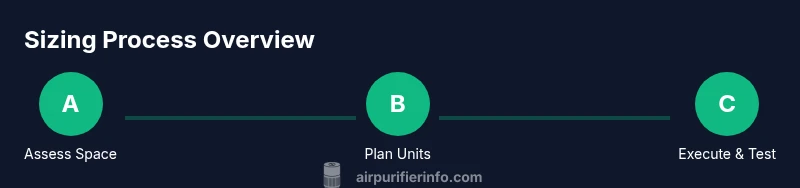
- 1
Survey space and define zones
Take measurements of the main living areas, bedrooms, and any auxiliary spaces. Map out zones where occupants spend most time and identify obvious airflow paths. This helps determine which zones need purification priority.
Tip: Use a floor plan to annotate zone boundaries and doorways that affect airflow. - 2
Assess CADR needs conceptually
Understand that CADR indicates how much air the purifier can clean per hour. For large spaces, prioritize units with high CADR relative to the space and/or plan multiple units for staggered coverage.
Tip: Don’t chase a single, oversized unit; consider multi-unit configurations for uniform cleaning. - 3
Plan unit placement
Choose central locations within each zone to maximize air distribution. Avoid placing units behind furniture, directly against walls, or near drafts from windows or vents.
Tip: Leave several inches of clearance on all sides for optimal airflow. - 4
Decide on a multi-unit setup
If one unit cannot effectively cover all zones, plan a layout with two or more purifiers targeting different areas. Coordinate speeds to balance noise and cleaning power.
Tip: stagger speeds to minimize competing airflow between units. - 5
Implement and test the layout
Run the purifiers in their intended zones and observe air quality improvements. Use simple indicators (odor, dust, visible particles) to gauge performance over a day or two.
Tip: Allow 24-48 hours for initial stabilization before making major changes. - 6
Establish maintenance routine
Create a schedule for filter inspections, clean pre-filters, and replace HEPA/carbon filters per manufacturer guidance. Keep a log to track replacements and performance.
Tip: Use a reminder system to avoid missed maintenance milestones.
Questions & Answers
Can a single air purifier cover 3000 square feet?
Usually not; many spaces require multiple units or very high CADR models to achieve uniform air quality.
Usually not; large spaces often need multiple units or very high CADR models.
What is CADR and why does it matter for large spaces?
CADR measures how quickly a purifier cleans air. For large spaces, higher CADR helps ensure sufficient air changes across zones.
CADR tells you how fast air is cleaned; for big spaces, you want higher CADR relative to the area.
How many units do I need for an open-concept home?
Often more than one unit is needed to ensure even coverage across zones. Start with a central unit and add another for remote areas.
Two or more units are usually better for open spaces to cover all zones.
How should I position purifiers in a two-story home?
Place units on each floor in major zones, prioritizing living areas on the first floor and sleeping areas on the second. Align paths so airflow moves between zones.
Put a purifier on each floor in key zones and keep airflow flowing between them.
Are HEPA filters necessary for large spaces?
HEPA filters are highly effective for fine particles; many large-space purifiers use HEPA. Consider carbon if odors or VOCs are a concern.
HEPA is usually a good choice for large spaces, especially if odors or smoke are present.
How often should filters be replaced in large homes?
Replacement intervals depend on usage, air quality, and filter type. Use manufacturer guidelines and change when you notice diminished performance.
Check the filter life indicators and replace as recommended by the maker.
Watch Video
Main Points
- Measure space accurately before buying.
- Prefer higher CADR relative to area or use multiple units.
- Place units to optimize airflow and avoid obstructions.
- Regularly replace filters and monitor energy use.
- The Air Purifier Info Team recommends multi-unit strategies for large spaces.