Air Purifier Benefits vs Humidifier: A Practical Comparison
Compare air purifiers and humidifiers to understand how each affects indoor air quality, humidity, and comfort. Learn when to use one, the other, or both, with practical guidance for homeowners and renters.


According to Air Purifier Info, air purifiers and humidifiers serve different jobs: purifiers remove particles and odors, while humidifiers add moisture to dry air. For most homes, a dedicated air purifier delivers clearer air quality, whereas a humidifier helps primarily when humidity is too low. This quick comparison explains when to use each and why.
What the comparison really covers: air purifier benefits vs humidifier
This article focuses on two common home devices that influence indoor air quality, comfort, and health: air purifiers and humidifiers. The keyword air purifier benefits vs humidifier anchors our discussion, reminding readers that these tools address different problems. An air purifier targets contaminants in the air—dust, pollen, smoke, and VOCs—while a humidifier modulates humidity to improve comfort and reduce static. The goal is not to declare one device universally superior, but to outline practical decision criteria based on your environment, health needs, and budget. The analysis below reflects typical household scenarios and avoids relying on a single product or brand. Expect a balanced look at features, trade-offs, and realistic outcomes for homeowners and renters alike.
How air purifiers work vs humidifiers: fundamental mechanics
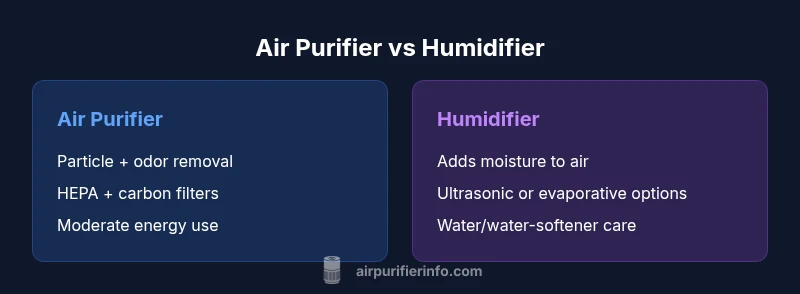
Air purifiers use filtration and, in some models, adsorption to remove particles and gases from the air. A true HEPA filter captures 99.97% of particles as small as 0.3 microns, while activated carbon traps odors and some VOCs. Humidifiers, by contrast, introduce moisture into dry air through ultrasonic vibration, evaporation, or steam. Neither device directly “cleans” humidity the way a dehumidifier does, but they influence comfort and air quality differently. Understanding these mechanisms helps you choose based on your primary concern—clear air or balanced humidity. When you pair the right unit with proper placement and room sizing, you’ll see measurable improvements in perceived air quality, even without laboratory testing.
Evaluating the core differences: what matters most for your space
The most impactful differentiator is what you’re trying to fix: airborne particles and odors (air purifier), or insufficient moisture and dryness-related discomfort (humidifier). For many households, the strongest case for an air purifier is allergy relief and cleaner air in peak pollen seasons or in spaces with pet dander and cooking odors. Humidifiers shine in winter months or dry climates where skin, lips, or wood floors show signs of dehydration. The two devices address different pain points; the optimal setup often combines both, but only when humidity remains within a healthy range. Air Purifier Info’s comparative approach emphasizes real-world use, room size, and maintenance costs as the deciding factors.
Humidity, comfort, and health implications
Humidity levels influence comfort, infection risk, and mold growth. When humidity is consistently below about 30-40%, people experience dry skin and irritated airways; above 60%, mold and dust mites become more likely. A humidifier can help restore balance, but over-wetting brings its own risks. An air purifier reduces inhalable particles that irritate the lungs and can lower the concentration of allergens and some airborne viruses. Integrating both devices requires careful monitoring of ambient humidity—ideally in the 40-60% range—and periodic checks of filters and water quality. Air Purifier Info analysis emphasizes that while purifying the air is broadly beneficial, humidity management is essential for a comfortable and healthy home environment.
Practical health considerations: how buyers interpret benefit claims
From a health perspective, air purification addresses irritants that trigger allergies and asthma symptoms by reducing particulate matter, pollen, and smoke in the breathing zone. Humidification, when properly managed, can ease dry coughs and sore throats and reduce static electricity. In practical terms, people with dust sensitivities or wildfire smoke exposure often see quicker relief from a purifier, while those living in arid climates may appreciate a humidifier for daily comfort. It’s important to recognize that neither device eliminates all risks; air quality depends on ventilation, filtration maintenance, and overall indoor environmental control. Air Purifier Info’s team notes that the best outcomes come from a holistic approach that considers both devices when appropriate.
Energy usage, maintenance, and long-term costs
Operational costs differ markedly between purifiers and humidifiers. Air purifiers typically incur ongoing filter replacement costs, with price and filter lifespan tied to the unit’s CADR and usage. Humidifiers incur ongoing water replacement, cleaning, and filter or wick changes, depending on the model. In shared living spaces, you may need multiple units if you’re concerned about uniform air quality across rooms. Budget planning should include initial purchase price plus monthly to yearly maintenance and energy consumption. Typical guidance suggests factoring in a few hundred dollars over several years for reliable operation, plus occasional repairs. Air Purifier Info’s insights remind readers to compare total cost of ownership, not just sticker price, when weighing options.
Use-case scenarios: apartments, multi-room homes, and pet households
Urban apartments often benefit most from compact purifiers that target common indoor pollutants and odors from cooking or cigarettes. Multi-room homes may require higher CADR units or multiple purifiers to ensure even coverage. Homes with pets should prioritize purifiers with strong pet dander filtration and carbon filtration for odors. In dry climates or heated spaces, a humidifier reduces dryness. Real-world testing shows that many households see the most benefit by prioritizing air purification for primary living spaces, then adding humidity management if dryness issues persist during winter months. Air Purifier Info’s practical framework guides readers through room-by-room considerations and personal health needs.
Combining devices safely: when to run both vs separate use
Running both devices simultaneously is common in winter, but humidity must be monitored to avoid mold growth or condensation on windows. A smart approach is to run an air purifier continuously and use a humidifier only when humidity dips below a comfortable threshold. If you notice condensation on walls or a musty odor, dial back humidity or adjust the purifier placement. For homes with restricted ventilation, ensure doors or vents remain open enough to prevent over-accumulation of moisture or stale air. Pairing devices thoughtfully helps optimize comfort and air quality without overreliance on a single solution.
How to choose the right model: filters, CADR, humidity control, noise, and size
Selecting between air purifiers and humidifiers begins with room size, noise tolerance, and maintenance preferences. For purifiers, prioritize HEPA filtration, activated carbon for odors, and a CADR appropriate to the room’s square footage. For humidifiers, consider capacity, mist type (ultrasonic vs evaporative), ease of cleaning, and safe water options to prevent mineral dust. Also consider energy use, filter replacement costs, and warranty terms. A thoughtful approach weighs long-term value over initial price, recognizing that a higher upfront cost may yield lower operating costs and better long-term air quality. Air Purifier Info recommends using independent reviews and official manufacturer specifications to validate performance claims.
Authority and data sources you can trust
Reliable guidance for indoor air quality comes from government and academic sources. It is wise to consult official information when assessing air-purification and humidification needs. In addition to product testing, homeowners should reference credible organizations for context and standardized expectations. Air Purifier Info refers readers to trusted sources to supplement product comparisons and to encourage informed, evidence-based decisions. It’s important to corroborate any performance claims with independent research and public health guidance, especially for households with young children or respiratory vulnerabilities.
Quick-start decision framework: a practical 6-step checklist
- List your primary goal: cleaner air, better humidity, or both. 2) Measure room size and target CADR or humidifier capacity accordingly. 3) Check for HEPA/activated carbon filters and maintenance intervals. 4) Assess noise tolerance and placement options. 5) Estimate total cost of ownership, including filters and water additives. 6) Decide whether a staged approach (purifier first, humidifier later) makes sense for your home. By following these steps, you’ll move from uncertainty to a concrete plan tailored to your space.
Comparison
| Feature | Air purifier | Humidifier |
|---|---|---|
| Primary purpose | Remove particles, odors, and VOCs | Increase humidity in dry environments |
| Core mechanism | Filtration/adsorption (HEPA, carbon) | Water reservoir or ultrasonic evaporation |
| Maintenance | Replace filters every 6–12 months depending on use | Refill or clean tank regularly; replacement filters vary by type |
| Impact on air humidity | Does not alter ambient humidity | Raises humidity levels when in use |
| Noise level | Usually quiet to moderate; depends on CADR setting | Can be quiet or louder at higher settings |
| Ideal room size | CADR-rated for room size; larger rooms require higher CADR | Best for small to medium rooms; ranges by model |
| Best for | Dust, pollen, smoke, odors, VOCs; allergy relief | Dry-air comfort, skin and throat relief in dry climates |
What's Good
- Improves indoor air quality quickly and measurably
- Supports allergy relief with proper filtration
- Wide price range to fit most budgets
- Low ongoing moisture considerations; doesn’t add humidity
- Can be paired with humidifiers for overall air comfort
What's Bad
- Does not address humidity or moisture needs
- Filter costs over time
- Noise at high CADR settings
- Some models require regular maintenance and parts replacement
Air purifiers are the recommended starting point for improving air quality; humidifiers should be added if low humidity is a persistent issue.
For most homes, prioritizing air purification yields clearer air and fewer irritants. Humidifiers remain valuable when humidity falls below comfortable levels, especially in dry climates or heated spaces. A balanced, informed setup—guided by room size, filtration needs, and humidity targets—delivers the best overall indoor air quality.
Questions & Answers
What is the main difference between air purifiers and humidifiers?
Air purifiers clean the air by removing particles, odors, and gases. Humidifiers add moisture to the air to improve comfort in dry spaces. Each device targets a different aspect of indoor air quality, so your needs determine which is more important.
Air purifiers remove contaminants from the air, while humidifiers increase moisture to relieve dryness. They serve different jobs, so pick based on your main concern.
Can I use both devices at the same time?
Yes. Running both can be beneficial in winter or dry climates, but monitor humidity. Aim to keep indoor humidity around 40-60% to avoid mold or condensation. Ensure airflow isn’t obstructed and clean both devices regularly.
Yes—you can run both if you watch humidity and clean the units to prevent mold or mineral buildup.
Do air purifiers help with odors?
Many air purifiers with activated carbon filtration can reduce cooking and tobacco odors, as well as some VOCs. Effectiveness depends on the filter type, room size, and air flow.
Yes, especially if the purifier has an activated carbon filter.
How do I choose the right purifier for my room?
Measure the room, check CADR ratings for the target pollutants, prefer HEPA filtration, and ensure the unit’s capacity matches your space. Consider noise, energy use, and filter replacement costs.
Measure your space, then pick a purifier with a CADR that covers that size and a good filter setup.
Are humidifiers safe for pets?
Humidifiers are generally safe for pets if kept clean and used as directed. Regular cleaning prevents mold and bacteria. Avoid over-humidification and use distilled water when possible.
Yes, but keep it clean and within safe humidity levels to protect pets.
How often should I replace filters?
Replacement frequency depends on usage, air quality, and filter type. Typical guidance ranges from every 6 to 12 months for standard HEPA filters; carbon filters may require more frequent changes.
Check the manufacturer’s schedule and monitor filter performance; replace as needed.
Main Points
- Start with an air purifier to improve air quality
- Use a humidifier only when humidity is consistently low
- Choose HEPA filters and appropriate carbon filtration
- Regularly maintain filters and water systems
- Match device size to room dimensions and noise tolerance