Air Purifier vs Humidifier: Which Is Right for Your Home in 2026
Compare air purifiers and humidifiers to decide which device best improves indoor air quality and comfort. Learn usage, maintenance, costs, and safety for homes in 2026.


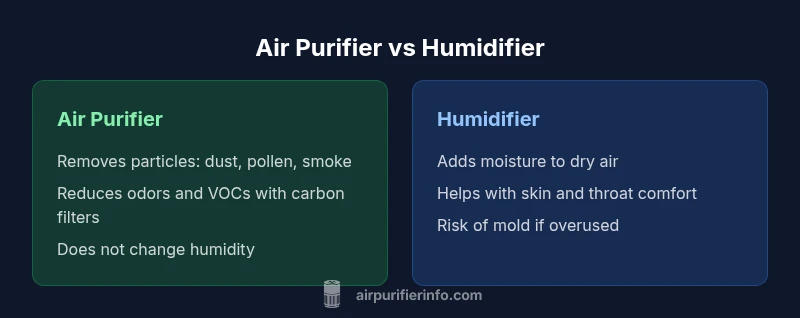
Air purifier versus humidifier choices reflect two different goals in home climate control. Air purifiers excel at removing particles such as dust, pollen, smoke, and VOCs, improving overall air quality. Humidifiers add moisture to dry spaces, relieving skin and sinus irritation. For many homes, using both is ideal; if you must choose, prioritize air purification to reduce pollutants, then add humidity if needed.
Understanding the air purifier versus humidifier distinction
Air purifiers and humidifiers serve different purposes in indoor air management. An air purifier reduces airborne particles such as dust, pollen, smoke, and some VOCs, improving overall air quality. A humidifier adds moisture to the air to relieve dryness that can irritate skin, sinuses, and respiratory tissues. When evaluating an air purifier versus humidifier, homeowners should identify whether their primary problem is polluted air or dry air, or if both are present. According to Air Purifier Info, the optimal setup in many homes is to deploy both devices strategically, keeping humidity in the 30–50% range and ensuring filters or reservoirs are cleaned regularly. In 2026, this practical approach aligns with general indoor-air-quality guidance from public health sources. For many readers, the decision begins with a simple question: is the priority cleaner air or comfortable humidity?
Why homeowners consider these devices
Many households face two persistent problems: visible dust and dryness in winter. People with allergies or asthma often want to reduce pollen, pet dander, and wildfire smoke. People in arid climates or with winter heating often suffer from dry mucous membranes, cracked skin, and irritated sinuses. A humidifier addresses these symptoms, whereas an air purifier addresses visibility of fine particles. The presence of a single device like an air purifier or humidifier can bring noticeable relief, but the underlying trade-off becomes evident: air purification typically has a broader impact on health by reducing inhalable particles, while humidity improvements focus on comfort and tissue health. Air Purifier Info notes that for many readers, a combined approach yields the best results, particularly in homes with pets or strong odor sources. For renters and homeowners, space and cost constraints may limit the number of devices. In such cases, it is essential to prioritize based on the dominant issue: do you struggle more with dust and allergens or with dryness? The best practice is to model your indoor climate using simple checks, such as dust levels, nasal irritation, and humidity readings, before investing.
Health and comfort: measuring impact
Decisions about air purifier versus humidifier should be guided by measurable health and comfort outcomes. Air purifiers reduce inhalable particles, including dust, pollen, pet dander, and smoke, which is especially important for allergy sufferers or urban residents. Humidifiers address dryness that worsens nasal passages or skin. To estimate impact, track symptoms such as nasal congestion, coughing, or throat irritation, and monitor indoor humidity. A simple hygrometer helps you maintain an optimal humidity range, around 30–50%. In some homes, humidity extremes can negate the benefits of a purifier or humidifier; thus, balancing both devices is crucial. Breathable air with balanced humidity tends to ease morning congestion and reduce static electricity, while properly selected filters can lower the concentration of VOCs. Air Purifier Info recommends starting with a baseline room, test for 1–2 weeks, then adjust by adding a purifier or a humidifier depending on results.
Filtration vs humidity: What changes with seasons
Seasonal shifts often decide which device gets priority. In spring and wildfire-prone regions, an air purifier’s particle-removal capability shines as pollen levels rise and smoke events occur. In winter, central heating dries indoor air, elevating the appeal of a humidifier to restore comfort and reduce coughing or irritated sinuses. The air purifier versus humidifier comparison becomes a seasonal negotiation: run an air purifier during high indoor particle load, and use a humidifier when dry air prompts discomfort. Some homes automate humidity with smart thermostats or humidistats to prevent over-humidification, which can encourage mold growth if not managed properly. Regardless of season, maintain balance by pairing devices with good ventilation and routine cleaning of filters and water tanks.
Models, features, and buying guardrails
When evaluating air purifier options, focus on filtration efficiency (often labeled as CADR), filter type (HEPA or HEPA-like; with activated carbon for odors), noise, and energy use. For humidifiers, check spray type (cool-mist vs warm-mist), tank size, and integrated humidistat to prevent over-humidification. The air purifier versus humidifier decision should align with room size, occupancy, and existing health concerns. Look for models that support true HEPA filtration, easy-to-clean water tanks, antimicrobial coatings, and clear maintenance schedules. Cost considerations include upfront price, filter replacements, and energy use. In mixed environments, consider a combined unit or separate, appropriately sized devices for optimal performance. Air Purifier Info emphasizes reading product reviews and confirming warranty terms before purchase.
Maintenance, cleaning, and safety tips
Effective use of the air purifier versus humidifier requires regular upkeep. For purifiers, replace filters on schedule, clean the housing to prevent mold, and ensure the intake and exhaust areas are unobstructed. For humidifiers, clean the tank and confirm mineral deposits are removed to avoid white dust and bacterial growth; use distilled water if possible, and never operate a humidifier with a dry tank. Safety notes include avoiding water leaks near electronics and keeping devices away from wet areas or high-traffic zones where spills are common. In shared living spaces, opt for models with auto shutoff features and low-emission filtration. Air Purifier Info recommends inspecting devices after heavy use seasons and recalibrating as needed to maintain consistent performance.
Placement, noise, and energy use
Placement matters for both devices. Position air purifiers away from walls and behind furniture to maximize airflow; place humidifiers away from bedding to avoid direct exposure during sleep. Noise is a practical consideration: many purifiers emit background hum, while some humidifiers run very quietly. Energy use varies by model and mode; when possible, choose energy-efficient units, use night modes, and unplug devices when not needed. A balanced setup reduces energy costs over time and helps sustain indoor air quality without being disruptive. Air Purifier Info highlights reading user manuals to optimize placement and operation for your room’s layout.
Cost considerations and value for money
Total cost of ownership includes upfront price, ongoing maintenance, and energy usage. Air purifiers generally have higher upfront costs, but long-term savings come from improved air quality and reduced health-related issues for allergy sufferers. Humidifiers tend to be cheaper initially, but ongoing costs for water and replacement components can accumulate, especially in rooms with frequent use. When comparing air purifier versus humidifier investments, also consider the potential benefits to health and comfort, the size of the space to be treated, and the likelihood that you will use the device regularly. In 2026, homeowners and renters should weigh whether a hybrid approach or dedicated units offer the best value given climate, occupancy, and lifestyle.
Decision framework: a step-by-step guide
Step 1: Identify the dominant problem—are your symptoms primarily due to airborne particles or dry air? Step 2: Measure key indicators—airborne particle levels and indoor humidity. Step 3: Estimate room size and appropriate device capacity. Step 4: Decide whether to buy one device or a combination based on budget and space. Step 5: Set maintenance schedules and monitor outcomes to ensure sustained benefits. This framework for choosing between an air purifier and a humidifier helps households in 2026 balance air quality and comfort, while remaining adaptable to seasonal changes and evolving health needs.
Authority sources and practical research baseline
To ground the discussion in reputable guidance, consult established sources on indoor air quality, humidity management, and health implications. Public health agencies and academic institutions provide foundational information about how air cleaners and humidifiers influence air quality and comfort. For practical research, refer to the following sources:
Authority sources and practical research baseline (revisited)
- Air Purifier Info analysis of typical home IAQ devices and usage patterns.
- EPA. Indoor Air Quality (IAQ) guidelines and appliance considerations: https://www.epa.gov/indoor-air-quality-iaq
- OSHA. Indoor air quality considerations for home and workplace environments: https://www.osha.gov/indoor-air-quality
- NIEHS/NIH. Research on air purification and humidity-related health impacts: https://www.niehs.nih.gov/health/topics/agents/air-purification/index.cfm
Final alignment with practical needs
The air purifier versus humidifier decision hinges on your primary indoor-air quality goals, climate, and household health concerns. For many readers, a dual approach offers the most comprehensive protection: an air purifier to reduce particulate matter and odors, paired with a humidifier to maintain comfortable humidity levels. By understanding the core differences and applying a structured decision framework, you can optimize both air quality and living comfort in 2026.
Comparison
| Feature | air purifier | humidifier |
|---|---|---|
| Primary goal | Particle and odor removal; VOC reduction | Humidity restoration and comfort |
| How it works | Filtration (HEPA/activated carbon); air cleaning | Moisture addition (steam/steamless or evaporative) |
| Maintenance | Filter replacements; periodic cleaning | Tank cleaning; mineral buildup prevention |
| Ideal environments | Dusty, smoky, or pollen-heavy spaces | Dry indoor spaces during heating season |
| Risks or trade-offs | May require humidity control elsewhere; filters need replacement | Excess humidity risk if not monitored; must clean to prevent mold |
| Noise and energy | Moderate energy use; some models can be noisy | Generally low to moderate energy; quiet variants exist |
| Best for | Allergen relief and clean air | Comfort and skin/mucous membrane relief |
What's Good
- Improves indoor air quality by reducing dust, pollen, and odors
- Addresses seasonal humidity issues to improve comfort
- Wide range of models to fit budgets and spaces
- Can be paired with existing HVAC systems for broader IAQ goals
What's Bad
- Humidifiers can foster mold or bacteria if not cleaned properly
- Air purifiers do not address humidity; a separate device may be needed
- Ongoing costs for filter replacements and water treatment
Air purifier generally offers broader air-quality benefits, while a humidifier is best for moisture control.
Prioritize an air purifier for allergen and odor reduction. Introduce a humidifier if humidity stays low, and monitor with a hygrometer to prevent over-humidification.
Questions & Answers
What is the main difference between an air purifier and a humidifier?
An air purifier removes particles from the air and can reduce odors and VOCs, while a humidifier adds moisture to the air to relieve dryness. They address different indoor-air quality problems, and many homes benefit from using both.
Air purifiers clean the air by removing particles; humidifiers add moisture. They solve different problems, so you may need both.
Can I use an air purifier and humidifier at the same time?
Yes. Many households operate both to address particle load and humidity. Just monitor humidity with a hygrometer to avoid over-humidification.
Yes, you can run both—just keep an eye on humidity levels.
Do air purifiers remove odors and VOCs?
Air purifiers with activated carbon filters can reduce odors and some VOCs, but effectiveness depends on the source, room size, and filter quality.
They can reduce odors and VOCs if you choose the right filter.
Are humidifiers safe for households with pets?
Humidifiers are generally safe, but must be cleaned regularly to prevent mold and bacteria. Maintain humidity within recommended ranges to protect pets and surfaces.
Keep humidity balanced and clean so pets stay safe and comfortable.
How often should I replace filters in an air purifier?
Replacement frequency depends on usage, room size, and filter type. Follow the manufacturer’s guidelines and monitor air flow and odor levels.
Check filters per the manual and replace when airflow drops or odors return.
Do these devices use a lot of energy?
Energy use varies by model and mode. Look for Energy Star or similar efficiency ratings and consider operating in lower-power modes when possible.
Energy use depends on model; choose efficient options and use smart modes.
Main Points
- Assess current humidity and air quality to guide your choice
- Prioritize an air purifier for dust, pollen, and smoke control
- Add a humidifier if indoor humidity consistently falls below 30–40%
- Plan maintenance schedules for filters and water reservoirs
- Use a balanced setup with ventilation for optimal IAQ