Air Purifier Pick Up: Step-by-Step Guide to Choosing and Collecting the Right Model
Learn how to pick up the right air purifier for your space. This step-by-step guide covers room sizing, filtration options, CADR, noise, maintenance, and pickup logistics to help homeowners and renters improve indoor air quality.


You can pick up the right air purifier by knowing your room size, selecting the right filter type (HEPA or activated carbon), checking CADR ratings, and planning for maintenance. This guide walks you through a practical, step-by-step approach to choosing and collecting an air purifier that fits your home and budget.
Understanding the goal of air purifier pick up
Before you head to a store or place a pickup order, clarify what a successful air purifier pick up looks like for your home. At its core, it means selecting a purifier that fits your room, delivers clean air at a comfortable noise level, and uses filters you can maintain without excessive cost. According to Air Purifier Info, the right approach starts with measuring your space, defining your filtration needs, and planning for ongoing maintenance. This mindset helps homeowners and renters avoid overbuying or choosing a unit that won’t meet daily demands. By keeping the process centered on real-world use—who occupies the space, what activities occur, and how often you’ll use the purifier—you’ll make a smarter pickup decision that pays off over time.
In this guide, we’ll cover practical steps, discuss common trade-offs, and offer tools to compare models without getting overwhelmed. The goal is to empower you to confidently walk into a store or complete a pickup order with a clear checklist, so you don’t end up with a purifier that’s too powerful, too noisy, or too expensive to operate.
How to measure and plan before you buy
Accurately sizing the space you want to clean is the first step in any successful air purifier pick up. Start by measuring the room: length x width to determine floor area, and height to estimate volume. If you’re unsure about volume, an approximate approach is to multiply floor area by the ceiling height you experience most of the time. Indoor air quality breaks down when the purifier is undersized for the space, so use the rule of thumb: larger rooms need higher CADR (Clean Air Delivery Rate) ratings.
Air Purifier Info emphasizes balancing room size with filtration needs. If odors, smoke, or VOCs are a concern, plan for extra carbon filtration or a purifier with an activated carbon filter in addition to a HEPA stage. Also, consider occupant factors: pets, allergy sufferers, and infants may require more aggressive air cleaning. Finally, set a budget ceiling and a maintenance plan so you don’t overspend on initial cost and under-budget ongoing filter replacements.
Filtration fundamentals: HEPA, activated carbon, and beyond
The filtration system is the core of any air purifier pick up decision. Most homes benefit from a true HEPA filter, which captures at least 99.97% of 0.3 micron particles. For odors and chemical vapors, look for units with an activated carbon filter. Some purifiers also include specialized filters such as ionizers or pre-filters to extend the life of the main filter, though be mindful of potential ozone concerns with certain technologies.
When evaluating filtration, prioritize a model that uses a sealed filter system. Leaky seals reduce overall efficiency and can lead to higher energy use and more frequent filter changes. For households with pets, consider purifiers that advertise pet-specific pollutant reduction. Air Purifier Info recommends stacking filtration stages and avoiding units with promotional promises that can’t be verified by independent testing.
Reading CADR, noise, and energy usage
CADR is a reliable proxy for how quickly a purifier can clean air in a given space, but it’s not the only factor. Ensure the CADR is appropriate for your room size, with a target that clean air is delivered quickly enough to maintain comfortable air freshness without overworking the motor. Noise matters because a louder purifier can disrupt work or sleep; many models specify noise levels at different fan speeds. Energy usage grows with higher CADR settings, so review the estimated annual electricity cost in the product specs and balance performance against running costs.
Air Purifier Info notes that a well-matched unit often operates at lower speeds more of the time, achieving better sleep and daily comfort with less energy waste. If you share a bedroom or living area, you’ll want a model that remains whisper-quiet on its mid-to-low settings while still delivering meaningful air changes.
Side-by-side comparison: what to look for in a model
When comparing options for air purifier pick up, create a simple scoring rubric. Key criteria include room compatibility (CADR, ACH recommendations), filtration type and replacement cost, power consumption, noise, and warranty terms. Create a notepad checklist to compare at least three models side by side.
A practical approach is to pick two models that meet your core criteria (HEPA plus carbon, fits your room, and within budget) and a third model as a premium option. Take note of maintenance intervals and the cost of replacement filters for each option. Remember that online reviews can be useful, but verify claims with independent sources when possible.
Pickup logistics and test after purchase
Before you pick up an air purifier, confirm pickup windows, stock availability, and whether you’ll need to bring a photo ID or order number. If you’re buying at a store, consider asking about curbside pickup, which can save time. After you bring the purifier home, place it in the intended room and run it at the recommended initial settings. Run it for 15–30 minutes to confirm it powers on, operates smoothly, and doesn’t produce unusual noises or vibrations.
Air Purifier Info suggests keeping the packaging intact for a short period after pickup in case you need to exchange or return if the purifier doesn’t meet practical expectations. Be sure to consult the instruction manual for filter installation steps and safety cautions before first use.
Maintenance planning: keeping air clean after pickup
A successful air purifier pick up isn’t a one-time event. Establish a maintenance schedule based on your filters’ replacement intervals and energy use. Most HEPA filters require replacement every 6–12 months, with carbon filters needing more frequent changes if you’re filtering strong odors or VOCs. Keep a simple calendar reminder for filter replacement and any routine cleaning of pre-filters.
Air Purifier Info recommends stocking replacement filters ahead of time if you rely on the purifier for ongoing air quality improvement. Labeling filters with purchase date helps you track lifespan and plan budget accordingly. A regular maintenance plan improves efficiency and extends the device’s life, ensuring continued benefits to indoor air quality.
Tools & Materials
- Measuring tape(For measuring room length and width; capture height if you want volume estimates)
- Notepad or digital note app(Record measurements, CADR targets, and budget details)
- Calculator(Compute room area, volume, and approximate CADR needs)
- Internet-enabled device(Research models, compare filters, and verify stock for pickup)
- Authorized pickup form or order confirmation(Bring when collecting the purifier)
Steps
Estimated time: 30-60 minutes
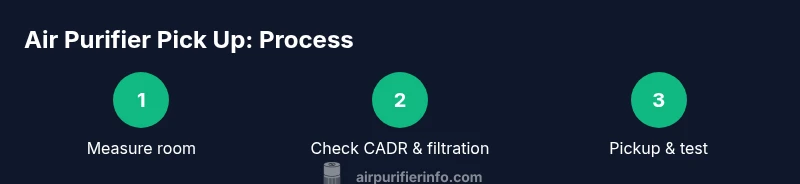
- 1
Measure the room
Use a measuring tape to capture length and width, then multiply to get area. If you want volume, multiply area by ceiling height. Record these numbers for CADR planning.
Tip: Double-check irregular layouts; measure in multiple spots to average out width and length. - 2
Identify filtration needs
Decide if you only need particle filtration (HEPA) or if you require odor and VOC control (carbon filter). Note any smoke, pets, or cooking odors that could rise in priority.
Tip: If odors are a key concern, prioritize units with a carbon filter lifespan that fits your budget. - 3
Check CADR and noise
Compare CADR ratings to your room size and ensure the unit can operate quietly at the typical speed you’ll use. Higher CADR is not always better if noise is disruptive.
Tip: Target a model with a middle-to-low noise level on the most-used setting. - 4
Consider energy and replacement costs
Estimate annual energy use and filter replacement costs. A cheaper unit with high ongoing costs may end up more expensive in the long run.
Tip: Choose models that provide clear replacement schedules and bulk filter options. - 5
Plan pickup logistics
Check store pickup times, confirm stock, and know what to bring (order number, ID). If you prefer curbside pickup, verify that option.
Tip: Ask about exchange/return policies in case the purifier doesn’t meet expectations. - 6
Test and set up after pickup
Place the purifier in the target room, install filters per the manual, and run on a mid setting for 15–30 minutes to verify smooth operation.
Tip: Keep the packaging for a short period in case you need to return or exchange.
Questions & Answers
What does CADR mean and why is it important for picking an air purifier?
CADR stands for Clean Air Delivery Rate and indicates how quickly a purifier filters smoke, dust, and pollen. A higher CADR means faster air cleaning for a given room size. Match CADR to your room and choose a model that can comfortably handle the space without excessive energy use.
CADR measures how fast a purifier cleans air. Pick a model with a CADR suitable for your room to ensure efficient cleaning without wasting energy.
How do I know what size purifier to buy for my room?
Calculate the room area (length x width) and consider the ceiling height to estimate volume. Use CADR guidelines from the manufacturer to choose a purifier whose CADR matches or exceeds the room’s needs. Account for occupants and activities that generate pollutants.
Measure the room and compare CADR to the space. If in doubt, choose a slightly larger unit for more air changes per hour.
Is pickup cheaper than delivery, and what should I bring?
Pickup can be cheaper than home delivery, especially if you face delivery fees or schedules. Bring your order confirmation, photo ID, and the pickup notification. Verify stock before leaving the store to avoid extra trips.
Pickup often saves delivery fees. Bring your order details and ID, and check stock before you leave.
Should I buy a model with a carbon filter for odors?
If you regularly deal with cooking smells, pets, or cigarette smoke, choose a purifier with a carbon filter in addition to a HEPA filter. Carbon filters reduce odors and VOCs, but check replacement frequency and cost.
If odors are a concern, pick a purifier with a carbon filter and plan for replacement costs.
Can I test the purifier’s noise level before buying?
Ask the retailer if you can test how loud the purifier runs on the intended speed. If testing in-store isn’t possible, check independent reviews that report noise levels at different speeds.
Ask to hear it running on the speed you’ll use. If that’s not possible, read reviews for typical noise levels.
Do purifiers remove VOCs and chemical pollutants effectively?
Purifiers with activated carbon filters can reduce many VOCs, but performance varies by product and pollutant type. Look for models that specify VOC and odor control performance and consider air exchange rates for best results.
Activated carbon helps with odors and VOCs, but check product specs for coverage and replacement costs.
How often should I replace filters after pickup?
Replacement intervals depend on usage, room air quality, and filter type. True HEPA filters often last 6–12 months, while carbon filters may need replacement every 3–9 months in odor-heavy environments.
Change filters per the schedule in the manual, usually every several months depending on use and pollutants.
Watch Video
Main Points
- Measure your space before shopping.
- Prioritize CADR and appropriate filtration.
- Balance noise, energy use, and maintenance costs.
- Plan pickup logistics and post-purchase setup.