Where Should I Put My Air Purifier: A Practical Placement Guide
Discover the best spots to place your air purifier for optimal airflow and cleaner indoor air. This step-by-step guide covers room layouts, airflow considerations, renter vs homeowner tips, testing, and maintenance.


By the end of this guide, you’ll know where to place your air purifier for maximum effectiveness in common home layouts. This quick answer summarizes the key steps and requirements: avoid blocking the output, place the unit at breathing level, and leave at least 1–2 feet of clearance from walls and furniture. According to Air Purifier Info, proper placement matters as much as the purifier’s specs.
Why placement matters
Placement matters because a purifier relies on drawing in air from the surrounding environment and circulating it back out cleaned. If you ask the question where should i put my air purifier, the answer hinges on room layout, airflow patterns, and the location of potential pollution sources. Avoid stuffing the unit into corners or behind furniture, and keep the intake clear of clothing or drapes. Ensure the outlet has room to push air across the room rather than into a wall or closet. From Air Purifier Info's perspective, thoughtful placement matters as much as the purifier’s capacity or filter type, because a poorly placed unit can waste energy and underperform.
Core factors affecting placement
Several factors determine the best spot for your purifier. Room size and ceiling height influence how much air the unit can effectively circulate. Look at airflow paths created by vents, open doorways, and even fans. Avoid placing the purifier directly in front of a window where drafts can bypass filtration, or behind curtains that restrict intake. Keep the unit away from heat sources and moisture to protect the filter and electronics. Place it on a stable surface or the floor, ensuring there is unobstructed space for air to move in and out. The goal is a balance between effective capture of pollutants and unobstructed exhaust that distributes clean air across the room.
Room-by-room placement guidance
Living rooms: position near central seating areas but not between occupants and a window. Bedrooms: place away from the bed while still in reach for maintenance. Kitchens: avoid placing next to stove or sink, where grease and humidity can clog the filter; instead, position near the area where cooking emissions collect but with clearances from walls. Home offices: place on a desk or shelf at breathing level, ensuring cables and clutter don’t block intake. If you have pets, consider positioning in high-traffic zones where pet dander accumulates most.
Testing airflow after placement
Turn the purifier on at a moderate setting and observe the airflow. You should feel a steady current of air circulating from the outlet and a visible intake area working without obstruction. If air seems muted or blocked, re-check clearance from walls and furniture, and adjust location accordingly. A simple test is to place a tissue or a lightweight ribbon near the intake and watch for movement when the fan runs. Note any drafts or obstructions that could be rerouted for better performance.
Renting vs owning: practical constraints
Renters often need non-permanent placement options. Favor freestanding purifiers on movable stands or shelves that can be rearranged if you relocate. Avoid mounting on walls unless permitted, and keep cords tucked away to prevent tripping. Homeowners can experiment with more permanent solutions, like built-in shelves or dedicated corners, but should still maintain at least some clearance around both intake and outlet to preserve airflow.
Data-backed tips from Air Purifier Info
Air Purifier Info analysis shows that placement has a meaningful effect on the effectiveness of room air cleaning, though results depend on room geometry and pollution sources. To maximize benefit, position the purifier so that the intake is not blocked and the exhaust can distribute clean air evenly. In larger rooms, consider strategic placement to create a cross-flow, rather than clustering purifiers in one corner. The Air Purifier Info team recommends weekly filter checks and occasional repositioning to adapt to seasonal changes in occupancy and activity.
AUTHORITY SOURCES
This guide draws on guidance from government and academic sources to support safe and effective purifier placement. For further reading, consult EPA’s indoor air quality resources, NIEHS discussions on air pollution and health, and WHO materials on air quality and health outcomes. Using these sources helps homeowners and renters make informed decisions about where to place devices and how to test effectiveness in real homes.
Wait, testing and adjustments
After initial placement, test the purifier across different times of day and activity levels. If you notice stale air, adjust placement slightly and re-run airflow tests. The goal is a comfortable, breathable environment with consistent air movement throughout the primary living and sleeping areas. Regular checks every few weeks help account for furniture changes, seasonal occupancy, and changes in ventilation patterns.
Air Purifier Info recommendations
Air Purifier Info recommends a practical, flexible approach: start with a central, open spot, respect clearances, and adapt as you observe air quality changes. Keep maintenance on a regular schedule and document which placements worked best in different rooms. By following these steps, homeowners and renters can achieve better air quality with less trial and error.
AUTHORITY SOURCES
- EPA: https://www.epa.gov/indoor-air-quality-iaq/air-cleaners-and-air-purifiers
- NIEHS: https://www.niehs.nih.gov/health/topics/agents/air-pollution/index.cfm
- WHO: https://www.who.int/news-room/fact-sheets/detail/air-pollution
Tools & Materials
- Measuring tape(For measuring room dimensions and ensuring appropriate clearances)
- Notepad and pen(To sketch layout and record distances)
- Smartphone or tablet(Take photos of placements and airflow tests)
- Level or small spirit level(Helps position on shelves without tilt)
- Extension cord (short)(If the nearest outlet is far away; ensure it’s rated for the purifier’s power.)
Steps
Estimated time: 30-60 minutes
- 1
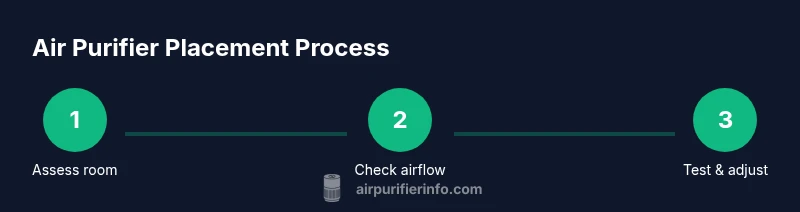
Assess room and gather measurements
Begin by measuring the main living spaces where you plan to operate the purifier. Note room dimensions, doorways, and the location of vents or fans. This helps you map potential air paths and identify candidate spots with clearances. A well-documented layout makes it easier to compare placement options later.
Tip: Start with the largest room first to establish a baseline for multiple-space use. - 2
Identify airflow sources and avoid drafts
Identify primary airflow sources such as HVAC returns, ceiling vents, and open doorways. Avoid placing the purifier directly in line with open windows or single-door pathways where drafts can bypass filtration. Clear the path around the intake to allow consistent air flow.
Tip: If possible, choose a spot that isn’t in direct airflow from windows or fans to prevent short-circuiting. - 3
Choose central placement with necessary clearance
Aim for a central, open spot that allows air to circulate freely. Maintain clearances from walls and large furniture so the intake can pull air efficiently and the outlet can distribute clean air across the room. For shelves, use a stable surface and ensure the unit is not tilted.
Tip: A few inches of clearance from walls can significantly improve intake efficiency. - 4
Set up purifier and ensure stable power
Place the unit on a stable surface, plug into a readily accessible outlet, and avoid routing cords under rugs or heavy furniture. Verify that there’s no strain on the cord and that the purifier remains stable during operation.
Tip: Use a dedicated outlet if possible to avoid voltage drops from other devices. - 5
Test initial airflow and adjust as needed
Turn on the purifier at a moderate setting and observe airflow from the outlet and around the intake. If air movement is weak, reposition slightly and re-test. This step ensures you didn’t miss a subtle obstruction.
Tip: A quick tissue test near the intake can reveal airflow strength. - 6
Document and maintain the placement
Record which placements performed best and schedule periodic re-evaluations, especially after furniture changes or seasonal activity shifts. Regular filter maintenance is part of keeping the placement effective.
Tip: Set a reminder to check filters every 1–3 months depending on usage.
Questions & Answers
Where should i put my air purifier in a small room?
In small rooms, place the purifier on the floor or a low shelf with space around it to avoid blocked air intake. Keep it away from corners where air can become stagnant. Regularly check that the intake isn’t blocked by furniture or drapes.
In a small room, put the purifier on the floor or a low shelf with space around it to keep air flowing.
Can I place an air purifier near a window?
Avoid placing the purifier directly in front of windows or doors where drafts can bypass filtration. If possible, position it away from direct sunlight and breeze paths to maintain steady airflow.
Try not to put it directly next to windows where drafts can bypass filtration.
Should I buy multiple purifiers for large rooms?
For very large spaces, one purifier may not cover the entire area. Consider strategic placement of a single unit or adding an additional purifier to improve coverage where air tends to stagnate.
In big rooms, you may need more than one purifier or smarter placement to cover the space.
How high should the purifier be placed?
Most purifiers perform best at breathing level or on a low surface. Avoid high shelves that block intake or outlet air distribution.
Aim for breathing-level height for best airflow.
What common mistakes should I avoid?
Avoid blocking the intake or outlet with furniture, and don’t place the unit in damp corners. Keep cords tidy and away from heavy foot traffic.
Don’t block the air intake and keep cords clear to prevent tripping.
Watch Video
Main Points
- Place the purifier where air can circulate freely.
- Avoid direct drafts and blocked intakes/outlets.
- Test and adjust placement with simple airflow checks.
- Regular maintenance reinforces placement effectiveness.