Where to Put an Air Purifier: A Practical Placement Guide for Indoor Air Quality
Learn where to put an air purifier for maximum dust, odors, and allergen control. This step-by-step guide explains room-by-room placement, open-space strategies, and maintenance tips for homeowners and renters.


This guide helps you learn where to put air purifier for optimal airflow and pollutant removal. You’ll get room-by-room placement rules, surface and airflow considerations, and practical setup steps to boost indoor air quality. By following these steps, you’ll place purifiers where they actively pull in pollutants and circulate clean air where you spend the most time.
Where to put air purifier for maximum impact
Indoor air quality begins with strategic placement. If you’re asking where to put air purifier, start by prioritizing spaces where people spend most of their time and where pollutant levels tend to accumulate: living rooms, bedrooms, and home offices. According to Air Purifier Info, the goal is to capture pollutants at the source and circulate clean air back into the breathing zones. In a typical home, this means choosing spots with open sightlines to doors and open walls, rather than corners behind furniture. The keyword here is placement that aligns with airflow patterns rather than purely cosmetic proximity. In this section, we’ll translate general rules into a room-by-room strategy that works for most homes, apartments, and open-plan layouts.
First, avoid placing purifiers directly against walls or behind drapes; air needs room to move. Next, keep at least 1 foot of clearance on all sides to prevent recirculation and to maximize the unit’s intake and exhaust. If you have multiple rooms with high activity, consider placing purifiers near the center of the space or near entryways where pollutants can travel. If you are dealing with strong cooking odors or tobacco smoke, place the purifier downwind from the source to capture pollutants quickly. In the following sections, we’ll unpack these ideas with concrete examples and a practical room-by-room checklist. The goal is simple: place purifiers where they will actually pull in and deliver clean air rather than sit idle in a corner.
Room-by-room placement: a practical checklist
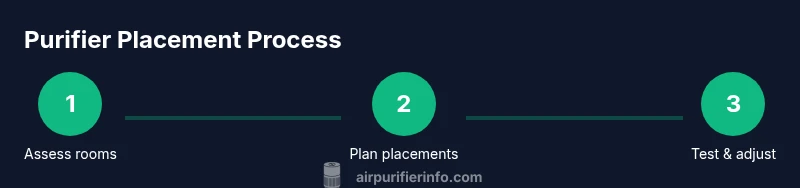
To optimize results, start by identifying the rooms where air quality matters most: living areas, bedrooms, and workspaces. Use a simple scoring method: note how many people use each room, how often doors open, and whether there are common pollutant sources (dust, cooking, pet dander). Once you have a priority list, align purifier placement with these priorities. The next sections offer room-specific guidance and a practical checklist you can print and keep handy. Remember, the goal is to maximize clean air delivery where it’s needed most, not just to satisfy aesthetics.
Living room and common areas
In living rooms and other high-traffic gathering spaces, place the purifier where air can circulate toward seating areas. Ideally position it near the center of the room or along a clear path between entry doors and couches to capture pollutants moving through the space. Avoid corners or behind large furniture, which can trap airflow. If your layout uses an open floor plan, consider one purifier in the central zone or near the main doorway to intercept pollutants as they drift in from other rooms. For households with pets or frequent cooking, you may want a second unit to maintain even air cleaning across the space.
Bedrooms and quiet zones
Bedrooms benefit from steady, unobtrusive air cleaning. Place purifiers on the opposite side of the bed from the noise source, or near the foot of the bed if your unit is quiet enough to sleep beside. Elevation matters: many purifiers work well a few feet off the floor, which helps with inflow from lower levels while keeping noise down. If you share a bedroom or have a small room, one purifier can serve the entire space effectively if placed along a central axis with a clear path for airflow. Avoid placing purifiers directly on nightstands where vibration or light can disrupt sleep, and avoid placing them under a window that may draw in outdoor pollutants during windy days.
Open-plan spaces and apartments
Open-concept layouts require a slightly different approach because air moves freely between zones. Place purifiers in central locations that can pull in air from multiple zones, such as near a doorway that links the living room to a hallway or near the central seating area. When you have multiple zones, you can use one purifier per major area to ensure balanced air cleaning. If you’re in a small apartment, a purifier near the kitchen or living area can still provide meaningful benefits, but try to keep it away from direct drafts from air conditioning vents that may create short-circuit airflow patterns.
Special cases: pets, odors, smoke, and dust
Pets, cooking odors, tobacco smoke, and heavy dust require more targeted placement. In homes with pets, place purifiers closer to zones where your pets spend time (e.g., near dog beds or cat trees) to capture dander and hair more effectively. For cooking odors, position the purifier on the room side of the kitchen, but not directly in its path of rising steam to avoid moisture damage. If you’re dealing with cigarette smoke or strong odors, a purifier near the source can help, but avoid placing it behind doors that trap pollutants in a room. In all cases, ensure at least one purifier remains unobstructed by furniture or drapes to allow for efficient air intake and exhaust.
Safety, space, and maintenance considerations
Clearance matters for safety as well as performance. Maintain at least a foot of clearance around the unit and keep it away from devices that could overheat or be damaged by vibration. Regular maintenance—checking filters, replacing them as recommended by the manufacturer, and cleaning intake and exhaust grilles—ensures consistent performance. If you have small children or curious pets, choose models with stable bases and secure grilles. Finally, avoid ozone-generating devices in combination with purifiers, as ozone can irritate airways and negate benefits.
Authority sources and further reading
For authoritative guidance on indoor air quality, refer to government and university resources. These sources provide foundational research and best practices that complement practical placement tips:
- https://www.epa.gov/indoor-air-quality
- https://www.cdc.gov/healthyhomes/environment/indoor-air-quality.html
- https://www.niehs.nih.gov/health/topics/agents/air-pollution/index.cfm
Tools & Materials
- Air purifier unit(One per room prioritized; ensure it is suitable for room size)
- Power outlet near placement site(Avoid extension cords if possible; use grounded outlets)
- Measuring tape(Use to verify at least 1 foot clearance around the unit)
- Pen and notepad(Document room-by-room placement notes and results)
- Printer or printout of room layout(Helpful for quick-reference during setup)
Steps
Estimated time: 60-120 minutes per purifier setup and testing; total time depends on number of units and home layout
- 1
Assess room priorities
Survey each room to identify where people spend the most time and which areas generate the most pollutants (cooking, pet activity, high foot traffic). Create a simple ranking to guide purifier placement.
Tip: Start with the living room and bedrooms first; these areas influence daily comfort the most. - 2
Select purifiers with appropriate airflow
Choose units that are suitable for the room size and have a clear air intake and outlet path. Avoid units that are too large for a small space, which can feel noisy and intrusive.
Tip: Check the CADR or clean air delivery rating relative to room size; balance efficiency with noise level. - 3
Plan clearances and avoid obstructions
Mark a zone with at least 1 foot clearance on all sides of each purifier. Remove nearby clutter and place the unit where furniture won’t block intake or exhaust.
Tip: If you must place near a wall, give extra space behind and to the sides to promote airflow. - 4
Position purifiers for central airflow
In open-plan spaces, place purifiers in central locations that can clean air from multiple directions. In smaller rooms, center the unit to optimize distribution.
Tip: Avoid placing purifiers behind large furniture that can create dead zones. - 5
Address specific pollutant sources
Place purifiers closer to kitchens for odors, near pet areas for dander, and near entry doors to intercept outdoor pollutants.
Tip: Rotate purifiers between rooms if you have multiple sources of odor or dust. - 6
Set up and test performance
Plug in devices, run at a medium setting for a test period, and observe air movement and noise. Adjust location if airflow seems stagnant or audible clutter arises.
Tip: Keep a simple log of when you move units and any noticeable changes in air quality. - 7
Establish a maintenance rhythm
Create a schedule for filter replacement and cleaning. Mark calendar reminders for each purifier’s maintenance cycle.
Tip: Clean intake grilles monthly to sustain effective airflow. - 8
Validate results and refine
After one to two weeks, reassess air quality indicators like odor presence and visible dust; adjust placement or add another purifier if needed.
Tip: Consistency matters; even distribution across spaces yields better overall air quality.
Questions & Answers
Should I place an air purifier near my bed?
Placing a purifier near the bed can improve comfort and reduce nighttime pollutants, but aim for a location that minimizes noise and maintains airflow rather than placing it directly on the bedside table.
Placing a purifier near the bed can help with nighttime air quality, but choose a spot that minimizes noise and keeps airflow unobstructed.
Can one purifier clean an entire apartment open layout?
In large open layouts, a single purifier can help, but multiple units placed strategically provide more consistent air cleaning across zones. Prioritize central and high-traffic areas.
One purifier helps, but multiple units give better coverage for large spaces.
How many purifiers do I need per room?
The number depends on room size and pollutant sources. Start with one purifier per large room and add more if air feels stuffy or odors persist.
Start with one per large room and add more if needed.
Do air purifiers remove odors and smoke effectively?
Yes, air purifiers with activated carbon filters are effective at adsorbing odors and smoke, but placement and regular filter replacement are crucial for best results.
Activated carbon purifiers help with odors and smoke when placed well and maintained.
Are air purifiers safe around kids and pets?
Most air purifiers are safe for homes with children and pets when used as directed. Avoid devices with small moving parts accessible to children and ensure stable placement.
They're generally safe when used properly; keep units stable and out of reach of curious kids.
How often should I change the filters?
Filter replacement frequency depends on usage and air quality. Check the manufacturer’s guidance and replace filters when you notice reduced airflow or odor buildup.
Follow the manufacturer’s schedule and replace when airflow drops or odors return.
Watch Video
Main Points
- Identify high-use rooms as placement priorities.
- Maintain clearance around units for optimal airflow.
- Open-plan spaces benefit from central purifier positioning.
- Match purifier size to room and pollutant sources.
- Schedule maintenance to sustain performance.