Where is air purifier? A practical placement guide
Discover where to place an air purifier for maximum dust, odor and allergen removal. Expert guidance on room selection, spacing, and maintenance for healthier indoor air in 2026.


Where is air purifier most effective? Place it in the room where you spend the most time (usually living room or bedroom). Keep intake and outlet unobstructed, maintain several inches of space from walls, and avoid corners or clutter that block airflow. If you have multiple rooms, prioritize the largest living area first.
Why placement matters for air purifier effectiveness
The effectiveness of an air purifier hinges on how well it can pull in polluted air, filter it, and release clean air back into the room. Placement determines how quickly the purifier can cycle the room’s air and whether contaminants linger in corners or behind obstacles. According to Air Purifier Info, the most impactful placements share two traits: proximity to the most-used space and minimal obstructions. In practice, this means choosing a room where you spend the majority of your time, such as a living room or primary bedroom, and ensuring the purifier isn’t tucked behind furniture, drapes, or plants. A well-placed purifier reduces dust buildup on surfaces and helps with allergen reduction for occupants with allergies or asthma, contributing to a healthier indoor environment.
Key takeaway for placement: prioritize central, open areas and avoid dead zones where air circulates poorly. If your home has an open floor plan, placing the purifier near common pathways can improve air exchange across adjacent spaces, even if those rooms are not the primary “hot spot.”
Placement guidelines by room type
Different rooms have different airflow patterns and pollutant sources. In a living room, where you entertain and relax, place the purifier in a spot with unobstructed intake and outlet paths—ideally on a stable surface about chest height if the model supports it, or on the floor in a central location. For bedrooms, you may prefer lower disturbance and quieter operation, so a lower shelf or nightstand height can work, as long as the unit has adequate clearance. In kitchens or entryways where cooking smells or outdoor pollutants drift in, consider positioning the purifier closer to the source of contaminants but still away from walls and corners that could trap air. Air Purifier Info emphasizes aligning placement with room usage to maximize CADR (clean air delivery rate) effectiveness and minimize stale air pockets.
In open-concept spaces, you can place a purifier near a primary seating area or along a main path of air flow. In small rooms, a compact purifier placed near the door can help capture pollutants entering the space. Always avoid placing purifiers directly behind curtains or inside built-in shelves where the intake is blocked. A simple rule: keep several inches of clearance on all sides to maintain steady air movement.
How to evaluate airflow and purifier orientation
Airflow direction matters. Most purifiers pull air from the intake side and push clean air out the outlet side. If the unit allows you to adjust the direction, aim for a configuration that sweeps clean air toward seating areas or sleeping zones. An easy check is to turn the unit on and observe nearby dust or light particles moving in the air stream from the intake to the outlet; if air seems to stall near a wall or cabinet, adjust the placement. If you’re unsure, start with a central, open spot and monitor over 24–72 hours to see if you notice reduced dust on surfaces and less lingering odors. Regularly repositioning can be beneficial in larger spaces or during seasonal changes when indoor air quality needs fluctuate. Air Purifier Info recommends testing a few placements and keeping a simple room map to track performance shifts.
Remember that not all purifiers pull air equally from all sides; some models are better at drawing air from the top or sides. Consult your model’s manual for recommended clearance distances and orientation if it supports multi-directional airflow.
Odors, smoke, dust, and pet dander: targeted placement tactics
Localized odor or smoke sources may justify closer placement to the source. For odors from cooking or smoking, aim the purifier toward the source of emissions, but ensure the intake remains unobstructed. For pet dander, a purifier placed in the living room or family room can reduce airborne allergens efficiently, especially if you have a high-traffic household. Dust accumulation is often worst near entryways or areas with frequent foot traffic; placing a purifier near these zones can help capitalize on cross-room air movement. In all cases, avoid corners and tight alcoves where air can stagnate. Air Purifier Info notes that a well-placed purifier can dramatically cut airborne particulates within hours, improving perceived air freshness and reducing irritants that trigger symptoms in sensitive individuals.
Evaluating CADR, room size, and real-world testing
Choosing a purifier that matches your room size is critical. CADR estimates give a sense of how quickly a purifier cleans a given volume of air, but real-world performance depends on placement and room airflow. Start by measuring the room dimensions and comparing them with the purifier’s CADR rating to ensure the unit can replace the room’s air multiple times per hour. After setting up, run the purifier for 1–2 days and observe whether dust levels on surfaces drop and whether odors feel less persistent. If not, consider adjusting the purifier’s position or moving it to the opposite side of the room to improve cross-room airflow.
Air Purifier Info recommends using a simple log to track changes in air quality indicators like visible dust, odors, and perceived freshness. This minimal data helps you justify repositioning if a different layout brings better results. Remember that multiple purifiers in larger homes may be necessary; plan placements to cover the primary living zones first and then expand to additional rooms as needed.
Maintenance, re-evaluation, and long-term considerations
Placement isn’t a one-time decision. Home layouts change with furniture rearrangements, new pets, or renovations, and air quality needs can shift seasonally. Re-evaluate purifier location at least twice a year or after major changes in your home environment. Regular maintenance—such as timely filter replacements—ensures the purifier continues to operate at peak performance, which in turn affects the efficacy of placement. Air Purifier Info suggests keeping a simple calendar reminder for filter changes, typically every 6–12 months depending on usage and air quality conditions. By combining mindful placement with consistent maintenance, homeowners and renters can sustain strong indoor air quality year-round.
Tools & Materials
- Air purifier unit (ensure CADR matches room size)(Select model with CADR appropriate for the room. Check manual for recommended room sizes.)
- Power outlet near intended location(Use a surge-protected outlet if possible and avoid extension cords for safety.)
- Measuring tape(Measure minimum clearance: typically 6–12 inches from walls, depending on model.)
- Clear space around purifier(Keep intake and outlet zones unobstructed; avoid placing behind furniture or in corners.)
- Notebook or digital device(Record placement observations and changes for future reference.)
Steps
Estimated time: 15-25 minutes
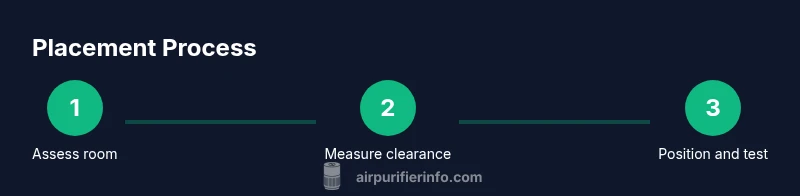
- 1
Assess room and plan location
Identify the room you use most and map potential purifier spots that meet clearance guidelines. Consider traffic patterns and where occupants spend the most time. A central, accessible location usually yields the best air exchange.
Tip: Use a simple floor plan to visualize airflow routes before moving furniture. - 2
Check distances from walls and furniture
Measure the recommended clearance from walls and large objects. Avoid corners and alcoves where air can stagnate. If your model requires below-table placement, ensure the surface is level and stable.
Tip: Keep at least 6–12 inches of clearance on all sides if not specified otherwise by the manufacturer. - 3
Place purifier on a stable surface or floor
Position on a flat, stable surface or directly on the floor, depending on the model. Ensure the intake is not blocked by rugs or drapes. If placed on a table, align height with chest level for optimal airflow.
Tip: Avoid placing on top of unstable furniture or near heat sources. - 4
Plug in and configure settings
Connect to a power outlet and select the appropriate mode (auto or standard) and timer if available. If your unit has multiple fan speeds, start on a middle setting to test noise and effectiveness.
Tip: Enable auto mode to continually adjust CADR to current air quality. - 5
Test airflow and adjust placement
Run the purifier for 15–30 minutes and observe for improved air movement and reduced dust near the intake. If air appears stagnant, gently reposition.
Tip: Observe the room after 24–72 hours to confirm improvement; adjust if needed. - 6
Maintenance and repositioning as needed
Replace or clean filters per manufacturer guidelines and re-evaluate placement after major changes in the room. Document dates to maintain consistent air quality improvements.
Tip: Set reminders for filter replacements to avoid performance drops.
Questions & Answers
Where should I place an air purifier for best results?
Place the purifier in the room you use most, with clear space around intake and outlet. Avoid corners and keep it away from walls to prevent restricted airflow.
Place the purifier in the room you use most, with clear space around intake and outlet, and avoid corners to keep airflow steady.
Can I place multiple purifiers in a home?
Yes. In larger homes or spaces with high pollutant sources, using more than one purifier improves overall air quality. Size each unit to the room and avoid crowding them together.
Yes, you can use several purifiers in a larger home. Size each unit to the room and keep them spaced apart.
Should I place an air purifier near odors or smoke sources?
If odors are localized, position the purifier closer to the source while keeping intake clear. Don’t block the intake with furniture.
Place the purifier closer to the odor source but keep the intake open and unobstructed.
How close can I place purifiers to electronics?
Keep purifiers away from heat-generating devices and ensure there is no obstruction around the intake. Maintain manufacturer-recommended clearance.
Keep it away from heat sources and make sure there’s clearance around the intake.
Do purifiers remove CO2 or VOCs effectively?
Air purifiers remove particulates and some VOCs with certain filters, but they are not a complete solution for CO2. Good ventilation also matters for gas build-up.
They mainly remove particulates and some VOCs; they don’t fully eliminate CO2—ventilation helps.
How often should I re-evaluate purifier placement?
Re-evaluate placement after any major room change or season shift, and at least twice a year to maintain optimal air quality.
Re-evaluate placement after room changes or season shifts, at least twice a year.
Watch Video
Main Points
- Place in the main room where you spend the most time.
- Maintain clear space around intake and outlet to maximize airflow.
- Match CADR to room size for effective cleaning.
- Avoid corners and obstructions that hinder circulation.
- Schedule regular maintenance and re-evaluate placement as needed.