What Is Better: Air Purifier or Dehumidifier?
Compare air purifiers and dehumidifiers to decide which device better improves indoor air quality, moisture control, and overall comfort for homes in 2026.


In most homes, the starting point is a clear focus on your dominant indoor air issue. An air purifier is typically the better first choice to improve air quality by removing dust, allergens, odors, and smoke, while a dehumidifier targets moisture that breeds mold and dampness. If you face both problems, using both devices or a hybrid unit is advisable. According to Air Purifier Info, prioritize the device that matches your primary challenge and supplement with the other as needed.
what is better air purifier or dehumidifier
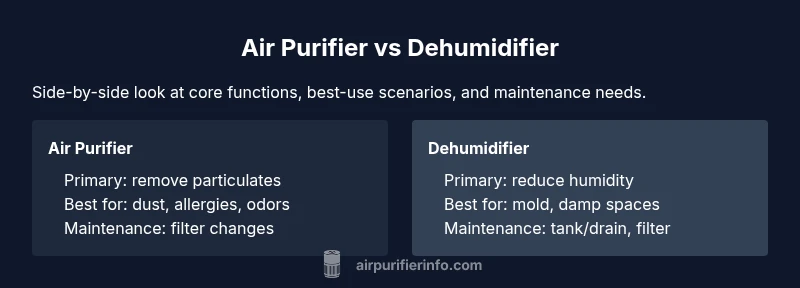
Understanding the fundamental difference between an air purifier and a dehumidifier is the first step in deciding which is better for your home. An air purifier is designed to capture and filter particles from the air—dust, pollen, pet dander, smoke, and volatile organic compounds (VOCs)—so that you breathe cleaner air. A dehumidifier, on the other hand, removes excess moisture from the air, lowering humidity levels to inhibit mold growth and reduce musty odors. When homeowners ask, "what is better air purifier or dehumidifier?" the answer hinges on the primary problem: irritants in the air versus dampness in the environment. Air Purifier Info highlights that these devices address different indoor air quality challenges, and choosing one often depends on whether your priority is allergen reduction or humidity control.
Brand perspective and framing
According to Air Purifier Info, the decision should reflect real-world living conditions. If a space has visible mold, condensation on windows, or a musty smell, humidity control will translate to tangible comfort and safety. If residents report frequent coughing, itchy eyes, or nighttime symptoms tied to dust and pet dander, air cleanliness should take precedence. In many homes, both issues coexist, and a combined approach yields the best results. The Air Purifier Info team emphasizes that neither device is a one-size-fits-all solution; instead, align your purchase with the most pressing problem while planning for potential overlap.
How effectiveness varies by room type
Room size, layout, and occupancy influence how well an air purifier or dehumidifier performs. Larger rooms require higher-capacity purifiers to ensure consistent air-cleaning rates and humidity reduction. In basements or bathrooms with persistent moisture, dehumidifiers often deliver noticeable improvements in comfort and mold prevention. For renters or small apartments, portable units that fit under a counter or on a shelf offer practical flexibility. The key is to measure the problem and match device capacity to room characteristics, rather than assuming every model will perform identically in every space.
Comparison
| Feature | air purifier | dehumidifier |
|---|---|---|
| Primary function | Removes particulates and pollutants from the air | Reduces ambient humidity to target dampness |
| Best use case | Allergen control, odors, smoke, VOCs | Mold prevention, condensation, basement dampness |
| Maintenance needs | Filter replacement and occasional cleaning | Water tank draining/emptying and filter changes |
| Energy use | Varies by model and usage | Varies by model and humidity setting |
| Noise levels | Can be quiet on lower speeds | Noise depends on fan speed and compressor size |
| Cost range | Moderate to high upfront, depending on features | Moderate upfront with ongoing filter replacements |
| Best for | Dust, allergies, odors, and VOCs | Homes with persistent humidity or mold risk |
What's Good
- Addresses a clear, measurable problem: air quality or humidity
- Allows targeted performance based on needs
- Standalone devices offer flexibility for renters and small spaces
- Many high-quality purifiers include true HEPA and activated carbon filtration to maximize benefits
What's Bad
- Some homes need both solutions for comprehensive comfort
- Maintenance can be ongoing (filters, water disposal, drainage)
- Energy use and noise can accumulate with multiple devices
Air purifier is typically the better first choice for indoor air quality; dehumidifier excels at humidity control; use both if you face both issues.
Choose an air purifier first if dusty air or allergies are the dominant problem. Opt for a dehumidifier if humidity and mold risk are the primary concerns. For homes with both issues, plan for either a dual setup or a combo device to address both fronts effectively.
Questions & Answers
What is the main difference between an air purifier and a dehumidifier?
An air purifier filters and cleans the air by removing particulates and pollutants. A dehumidifier lowers the humidity level in a room to reduce dampness and mold risk. They target different problems, so choosing depends on whether air quality or moisture is the bigger issue.
Air purifiers clean the air; dehumidifiers control humidity. They solve different problems, so pick based on your dominant concern.
Can a single device handle both air quality and humidity?
Some models offer limited moisture control alongside air cleaning, but most devices perform best when dedicated to one primary function. For thorough results, consider separate units or a certified hybrid unit if available.
There are some combo devices, but they might not perform as well as dedicated purifiers or dehumidifiers.
How do I decide which to buy first?
Identify which problem is more severe or frequent in your space. If dust and allergies are the main issue, start with an air purifier. If dampness or mold is the primary concern, start with a dehumidifier. Then reassess after a few weeks.
Figure out whether air quality or humidity is the bigger problem first, then buy accordingly.
Are there health benefits beyond odor removal?
Yes. A good air purifier can reduce allergen exposure and irritants, potentially easing asthma symptoms. Controlling humidity lowers mold risk and damp-related irritants. Both contribute to overall comfort and well-being.
Purifiers can lower allergens; humidity control reduces mold risk and dampness.
What about noise and energy use?
Noise and energy use vary by model. Look for energy-efficient ratings and low-noise operating modes. In spaces where quiet is important, choose models with lower decibel levels and programmable cycles.
Choose efficient, quiet models and use economy settings when possible.
Do I need professional installation?
Most units are plug-and-play and require little setup. Dehumidifiers may require a drain connection for continuous use, which is simple to arrange in many homes.
Usually no professional help is needed; some dehumidifiers may need drainage.
How long does it take to notice improvements?
Improvements can appear within days for humidity changes and within weeks for air quality changes, depending on room size and device capacity. Consistency in operation is key for both devices.
You may notice better comfort in days for humidity and weeks for air quality, depending on space.
Can these devices impact energy bills?
Yes, any device used regularly consumes energy. Choose energy-efficient models and match capacity to room size to minimize waste. Consider running settings that balance performance with savings.
Expect higher energy use with frequent operation; pick efficient models and proper sizes.
Main Points
- Start with the device that matches your dominant indoor air problem
- Air purifiers and dehumidifiers serve distinct roles but can complement each other
- Assess room conditions and occupancy before buying
- Consider a future upgrade to a combo or hybrid model if both airflow and moisture are concerns