Difference Between an Air Purifier and a Dehumidifier
Learn the difference between an air purifier and a dehumidifier, how they work, and when to use each for better indoor air quality and comfort.


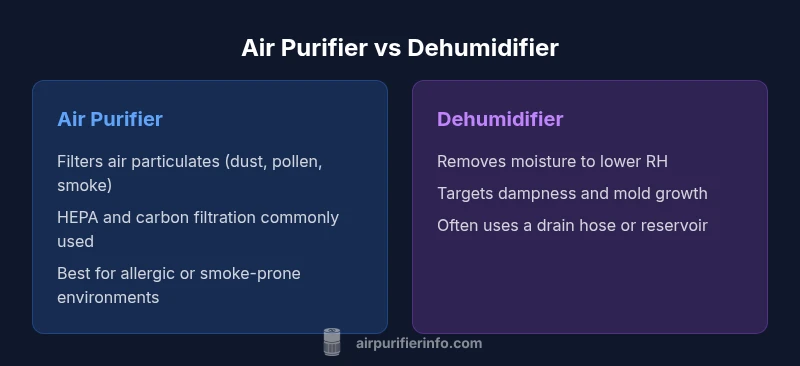
The difference between an air purifier and a dehumidifier is primarily about function: purifiers clean the air by capturing particles, while dehumidifiers reduce humidity. Air purifiers target dust, pollen, dander, and smoke, often with HEPA filters; dehumidifiers lower moisture to curb mold growth and dampness. According to Air Purifier Info, many homes benefit from understanding when to run each device and how they complement overall air quality.
Why the Distinction Matters
When you start looking at healthier indoor air, you quickly encounter the difference between an air purifier and a dehumidifier. The difference between an air purifier and a dehumidifier matters because it defines which problem you are solving: particles in the air versus excess moisture in the air. In many homes, a simple understanding of the two devices helps homeowners prioritize purchases, plan room layouts, and schedule maintenance to maximize comfort and health. According to Air Purifier Info, recognizing the distinct roles of each device improves decision making, especially in climates with seasonal humidity swings or high outdoor air pollution. In this section, we outline the core purposes and the most common symptoms that prompt action, with practical examples and a framework you can apply in real life. The keyword difference between an air purifier and a dehumidifier should guide your evaluation of your space, your budget, and your long-term goals for indoor air quality.
What Each Device Does (Core Functions)
Air purifiers are designed to remove particles from the air. They pull in room air, pass it through filters such as HEPA and activated carbon, and emit cleaner air back into the room. This helps reduce dust, pollen, pet dander, smoke, and in some cases odors. Dehumidifiers, on the other hand, reduce the amount of moisture in the air. They extract humidity from the room and either remove it via a drainage system or collect it in a reservoir. The primary purpose of a dehumidifier is to lower relative humidity (RH) to a target range, typically around 30-50% for many living spaces. When you consider the difference between an air purifier and a dehumidifier, you are weighing particle control against moisture control. In practical terms, this means you may need one device to address dust and allergies and another to handle damp basements or bathrooms. It is also common for households to use both devices in tandem during different seasons. Air Purifier Info notes that the best outcomes come from using the appropriate device for the dominant problem and supplementing with a second device when needed.
Key Differences at a Glance
- Primary function: Particle filtration vs humidity reduction.
- Targeted issues: Allergens and pollutants vs dampness and mold risk.
- Humidity impact: Does not regulate humidity by design vs directly regulates RH.
- Filters/tech: HEPA and carbon filters; optional UV or ionizers vs desiccants or refrigerant-based moisture removal with built-in controls.
- Maintenance: Filter replacement and periodic cleaning vs water tank/drain management and periodic filter changes.
- Energy use: Variable by model; often mid-range vs typically higher due to compressor work.
- Ideal rooms: Any room with air quality concerns vs damp spaces like basements, bathrooms, or laundry rooms.
- Cost considerations: Upfront cost and ongoing filter costs vs upfront cost with ongoing energy and maintenance. The distinction between air purifier and dehumidifier guides decisions about which unit to buy first and how many you might need for a given space for optimal results.
Use Cases: When to Choose Each
If your primary concern is indoor air quality—dust, pollen, smoke, pet dander, and odors—a dedicated air purifier is the sensible starting point. For residents with allergies or asthma, a purifier with a true HEPA filter and a carbon stage often yields noticeable relief. In contrast, if your home experiences visible moisture, musty smells, condensation on windows, or mold growth in bathrooms, basements, or laundry rooms, a dehumidifier is the more relevant tool. In mixed climates, a staggered approach can work well: run the purifier during pollen season and use the dehumidifier when humidity spikes. Air Purifier Info’s guidance emphasizes assessing the dominant risk factor first—particulate pollution or humidity—then layering devices as needed to maintain a comfortable, healthy indoor environment.
Common Misconceptions
A frequent misconception is that a single device can adequately handle both air quality and humidity. While some hybrid devices offer limited dual-functionality, true air purification and humidity control are best achieved with dedicated units. Another myth is that all purifiers remove odors equally; odor removal depends heavily on carbon filtration and room ventilation. Some buyers assume louder machines are always better; in reality, noise can become a deterrent to consistent use, undermining air quality gains. Finally, many people underestimate maintenance needs; improper filter changes or neglected drainage can reduce effectiveness and even raise energy costs. Clarifying the difference between an air purifier and a dehumidifier helps avoid these missteps and leads to smarter purchases.
What About Combined Devices?
Hybrid models exist that combine filtration with humidity control, but they often trade off some performance in each area compared with dedicated devices. If you want simplified management and less clutter, a single hybrid unit may suffice for small to medium rooms with modest humidity fluctuations. For larger spaces or climates with severe humidity swings, separate devices typically deliver stronger performance and longer equipment life. Air Purifier Info recommends evaluating room size, target RH, and pollution levels before committing to a combined unit. When possible, use a standalone air purifier for particle control and a dehumidifier for humidity management to maximize effectiveness.
Comparison
| Feature | Air Purifier | Dehumidifier |
|---|---|---|
| Primary function | Particle filtration and purification | Humidity reduction and moisture control |
| What they target | Airborne particles (dust, pollen, smoke, dander) | Ambient humidity and mold risk |
| Effect on humidity | Does not regulate humidity by design | Regulates relative humidity (RH) directly |
| Best-case scenario | Allergen reduction, cleaner air | Mold prevention, dampness management |
| Filters/tech involved | HEPA/activated carbon; optional UV | Desiccant or refrigerant-based moisture removal; built-in controls |
| Maintenance | Filter replacements; yearly checks | Water tank/drain, periodic filter changes |
| Energy use | Variable by model; mid-range | Typically higher due to compressor and fan |
| Ideal room size | Depends on unit capacity; scalable for many rooms | Basements, bathrooms, and high-humidity spaces |
| Cost considerations | Upfront purifier cost + filter costs | Upfront cost + ongoing energy and maintenance |
What's Good
- Provides targeted improvement for particle air quality
- Helps reduce exposure to dust, pollen, and indoor pollutants
- Can improve comfort in bedrooms and living spaces
- Filter upgrades extend life and performance
- Odor control with carbon filters when paired with proper ventilation
What's Bad
- Does not address humidity or mold risk directly
- Requires ongoing filter replacement costs
- Energy use increases with larger rooms or high fan speeds
- May not be effective for strong off-gassing odors without proper placement
Air Purifier and Dehumidifier serve different purposes; use both when needed for optimal indoor air quality
Choose an air purifier to tackle airborne particles and odors, and a dehumidifier to control moisture. In many homes, a complementary setup yields the best results for health and comfort.
Questions & Answers
What is the main difference between an air purifier and a dehumidifier?
The main difference is purpose: an air purifier removes airborne particles, while a dehumidifier lowers humidity. Purifiers filter out dust, pollen, and smoke; dehumidifiers reduce moisture to limit mold and damp conditions. Together, they address different but related indoor air quality issues.
An air purifier cleans particles from the air, and a dehumidifier reduces moisture to prevent mold. They solve different problems, so you often need both for comprehensive comfort.
Can a dehumidifier also purify the air?
Most dehumidifiers primarily focus on moisture removal and do not filter particles. Some models include basic filtration, but they are not designed to replace an air purifier with true HEPA filtration for pollen and dust.
Dehumidifiers mostly remove moisture. If you need real particle filtration, look for an air purifier with a good filter.
Do I need both devices in a typical home?
Not always, but many homes benefit from having both. If you have dust or allergy issues, start with an air purifier. If you notice dampness, condensation, or mold risk, add a dehumidifier. In humid climates, a combined setup can be ideal.
If you have humidity issues, add a dehumidifier; if you have dust or allergies, start with an air purifier. Often, a combination is best.
How do I know what to buy first?
Assess your primary problem—airborne particles or humidity. Measure room size and target RH, then check device capacity, energy use, and maintenance costs before purchasing.
Figure out whether air quality or humidity is the bigger problem, then choose the device that tackles that issue first.
What features should I look for when buying an air purifier?
Look for a true HEPA filter, a high CADR rating, activated carbon for odors, easy filter replacement, and appropriate room size coverage. Noise level and energy efficiency are also important for ongoing use.
Pick a true HEPA purifier with good coverage, carbon for odors, and easy maintenance.
Are there devices that do both air purification and dehumidification?
Yes, there are hybrid devices, but they may compromise performance in each area. For large rooms or severe humidity, separate dedicated devices often provide stronger results and longer lifespan.
There are combos, but dedicated devices usually work better for big rooms or high humidity.
How should I position these devices for best results?
Place air purifiers away from walls to maximize airflow, and keep dehumidifiers in central locations with access to drainage. Avoid blocking vents and maintain open, unobstructed spaces for efficient operation.
Set the purifier where air circulates best and put the dehumidifier where it can drain easily without obstruction.
Main Points
- Define your main problem (particles vs humidity).
- Prioritize an air purifier for allergies and dust.
- Prioritize a dehumidifier to manage dampness and mold risk.
- Match device capacity to room size and RH targets.
- Consider a two-device solution for year-round needs.