Should Air Purifiers Be on the Floor? A Practical Guide
Explore floor vs elevated placement for air purifiers, with room-specific tips, safety notes, and practical steps from Air Purifier Info to improve indoor air quality.


When deciding should air purifier be on the floor, consider room layout, airflow, and purifier design. In most spaces, place the unit where air can circulate freely, away from walls and obstructions. Elevation can help in high-traffic areas or rooms with pets. This guide provides a practical, step-by-step approach to placement.
Should air purifier be on the floor? Understanding placement fundamentals
Air purifiers work by drawing in air, filtering it, and releasing clean air back into the room. Placement matters because airflow patterns determine how quickly contaminants are captured and how evenly clean air circulates. According to Air Purifier Info, placement decisions should balance accessibility, safety, and performance. The question "should air purifier be on the floor" is common in homes with furniture, pets, and busy traffic, but the answer is not one-size-fits-all. In most setups, the purifier will operate effectively on the floor if there is clear space around the intake and exhaust. In addition, many models are designed for floor use and include features like 360-degree intake or quiet mode that make floor placement practical. The key concept is to avoid obstructions that create dead zones, ensure unobstructed airflow, and respect noise tolerances in sleeping areas. This section lays the groundwork for practical placement by outlining core principles such as clearance, airflow paths, and real-world constraints like pets and small children.
Floor placement influences and the role of height in airflow
Airflow dynamics change with vertical position. Floor-level intake can pull up heavier dust near the ground, while elevated exhaust can distribute cleaned air more evenly in rooms with high ceilings. The ideal setup balances the purifier’s intake and outlet relative to furniture, doors, and activity zones. If the unit sits on the floor, ensure there is several inches of clearance on all sides so air can move freely. When elevation is used, it often helps avoid thick piles of carpet fibers or soft furnishings that may trap contaminants. The goal is to minimize stagnant air pockets and stworze stagnant zones where pollutants can linger. Throughout this discussion, keep in mind that room shape, occupant activity, and purifier design all influence the best spot. Air Purifier Info analysis shows that thoughtful placement reduces stagnation and improves overall effectiveness.
Elevation vs floor: when to use stands or shelves
Elevation can reduce noise exposure in bedrooms, improve access for pets, and accommodate rooms with low furniture or limited floor space. If you elevate, choose a sturdy stand or shelf that matches the purifier’s weight and footprint. Position the unit so the intake is not blocked by curtains or decorative items, and ensure the exhaust can vent into the room rather than into a closet or corner. Height typically ranges from a few inches to about a foot or more, depending on the purifier model and room layout. Always verify stability and balance after moving the unit, and avoid placing it on unstable surfaces. While floor placement remains perfectly valid, strategic elevation can optimize airflow in busy living areas. Details like furniture spacing and door swing direction matter just as much as the purifier’s capabilities.
Room-by-room floor-placement strategies for common spaces
Living rooms benefit from central placement with room to breathe; bedrooms often require quieter operation and stable placement away from light sources. In kitchens or entryways, place the purifier where it won’t be knocked by traffic or heat vents. For small rooms, keep the unit off the floor if possible for easier cleaning and to prevent obstruction of foot traffic; in larger spaces, a central floor spot typically works well. If you must place near a wall, maintain at least 6-12 inches of clearance to avoid recirculating dirty air. In apartments with compact layouts, consider a compact purifier on a low stand to optimize airflow without crowding the space. These room-specific guidelines help homeowners tailor placement to real-world living patterns.
Safety, noise, and maintenance considerations for floor placement
Safety starts with a stable base and cord management. Never place a purifier on a carpeted edge or an unstable surface, as it could tip or vibrate excessively. Noise is a factor in bedrooms and study areas; some models offer low-noise modes or night settings. Maintain regular filter replacements and periodic cleaning to keep airflow consistent, especially when the unit sits on the floor where dust may accumulate around the intake. If you have curious pets or small children, using a stand or discreet enclosure can help reduce tip-overs. Always ensure vents are not blocked by furniture, drapes, or decorative items.
How to test and optimize placement: simple experiments
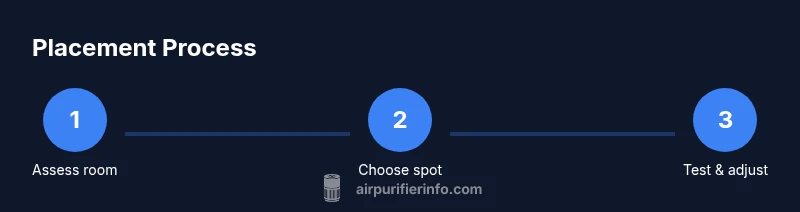
Start with a central floor location and run the unit at a moderate setting for 10-15 minutes. Observe whether air movement is consistent around the room and whether you notice a reduction in odors or dust near the purifier. If you detect stagnant corners or slow air changes, adjust location slightly—move 1-2 feet in any direction and re-test for another 10 minutes. Keep a simple note of changes and outcomes to guide future adjustments. Periodically reassess placement as furniture is rearranged or new heat sources are introduced. This practical approach ensures your purifier operates where it matters most.
Quick-start checklist to optimize floor placement
- Confirm there is 1-2 feet of clearance on all sides for airflow.
- Avoid placing directly against walls, doors, or vents.
- Keep cords untangled and away from high-traffic zones.
- Test airflow by noting the feel of refreshed air in seating and sleeping areas.
- Schedule regular filter changes according to manufacturer guidance.
Bonus tips and common mistakes to avoid
- Do not place on soft carpeting without a stable base; risk of tipping increases with movement.
- Avoid corners where walls create airflow shadows and dead zones.
- If you notice noise or vibration, try a different spot or use a pad under the purifier.
- Periodically rotate placement with furniture changes to maintain even air distribution.
Final takeaway: operational mindset for placement
Plan placement with room dynamics in mind, not just aesthetics. A well-placed purifier on the floor can deliver noticeable air quality improvements, especially when air is allowed to circulate freely and remain unobstructed by furniture. The Air Purifier Info team recommends beginning with a central floor location and moving outward as needed to optimize coverage and maintain silence in sleeping areas.
Tools & Materials
- Air purifier unit(Ensure the unit is suitable for the room size and has a stable base.)
- Power outlet with accessible cord(Cord should reach outlet without stretching; avoid extension cords.)
- Measuring tape(To measure distance from walls and furniture (at least 12–24 inches as a guideline).)
- Masking tape(To mark placement spots on the floor or carpet.)
- Stand or shelf (optional)(If elevating, choose a stable stand that can support the purifier’s weight.)
- Cleaning cloth and spare filters (optional)(For maintenance and testing after relocation.)
- Instruction manual(Keep for model-specific guidance.)
Steps
Estimated time: Total time: 30-45 minutes
- 1
Assess room layout and needs
Scan the space to identify the main activity zones and traffic patterns. Note where air tends to stagnate and where furniture could block intake or exhaust. Mark 2-3 candidate spots on the floor and evaluate each for accessibility and safety.
Tip: Use masking tape to outline each candidate spot on the floor. - 2
Choose placement spot and measure clearance
Select the best candidate spot based on airflow and access. Check that there is at least 12 inches of clearance from walls and large furniture on all sides. If one spot is borderline, prioritize the location with the least obstruction and best room coverage.
Tip: Move the purifier to test proximity to walls and doors for 10-minute airflow checks. - 3
If elevating, set up stand or shelf
If you’re elevating, install a sturdy stand or shelf at a height that keeps the intake accessible but reduces floor-level dust intake. Ensure the purifier sits level with no wobble. Verify cords are not stressed and outlets are safe.
Tip: Choose a stand with a wide base to prevent tipping. - 4
Plug in and conduct a first airflow test
Connect the purifier and run at a low setting initially. Observe whether air movement is strong around the intake and exhaust in the chosen spot. If airflow is weak, adjust position slightly.
Tip: Take note of any blocked air paths (curtains, furniture, or plush decor) and adjust accordingly. - 5
Fine-tune position based on odor and dust cues
After 10–15 minutes, assess odor reduction and dust clearance in seating areas. If certain zones still feel stuffy, shift the unit a few inches and re-test. Continue until you observe more even air distribution.
Tip: Aim for a center-of-room placement that facilitates uniform air changes. - 6
Finalize placement and document setup
Once satisfied, finalize the position and secure any loose cords. Record the exact spot for future reference, especially if you rearrange furniture. Establish a regular maintenance cadence to maintain performance.
Tip: Keep a simple placement map for quick future adjustments. - 7
Maintenance and periodic reassessment
Regularly clean the exterior and replace filters per manufacturer guidance. Reassess placement after significant layout changes or new furnishings to ensure continued effectiveness.
Tip: Schedule reminders to check filters and airflow seasonally.
Questions & Answers
Does placing an air purifier on the floor reduce its effectiveness?
Not inherently. Floor placement works well when there is adequate clearance for intake and exhaust. Effectiveness depends on airflow, room size, and model design, not simply height. If airflow is obstructed, performance drops regardless of height.
Floor placement is effective if air can circulate freely and not blocked by furniture.
Should I place an air purifier next to walls?
Avoid placing directly against walls; maintain at least several inches of clearance to prevent recirculation of dirty air. Positioning away from walls helps the purifier pull in air from the room rather than just along the wall.
Keep some space around the purifier for optimal airflow.
How far should the purifier be from furniture or curtains?
Provide consistent clearance on all sides, typically 6-12 inches or more depending on the model. Too-tight placement creates stagnant zones where pollutants linger.
Give the unit room to breathe with space around it.
Is floor placement better for bedrooms or living rooms?
Both can work; bedrooms often benefit from stable, quiet placement, while living rooms may benefit from central, elevated layouts if noise or space is a concern. Choose based on room size, noise tolerance, and daily routines.
Choose the setup that keeps sleep comfortable and air fresh.
Can pets knock over a purifier placed on the floor?
Yes, especially on carpet or unstable bases. Use a stable stand and secure cords to reduce tipping risk. Keep the unit out of high-traffic pet zones when possible.
Keep the purifier steady and out of pet paths.
How often should I move or adjust placement?
Move placement only if you notice reduced performance or layout changes. Otherwise, re-evaluate every few months or after major furniture rearrangements.
Adjust only when needed to maintain airflow.
Watch Video
Main Points
- Position for unobstructed airflow, not just aesthetics
- Elevate only if it improves coverage or reduces noise in a specific space
- Test and adjust with simple airflow checks after placement
- Maintain regular filter changes and cleaning for consistent performance