Air Purifier vs Window: Is It the Same? A Side-by-Side Guide
Compare air purifiers and window ventilation to understand how each method affects indoor air quality, costs, and maintenance. Learn when to air out rooms, when to filter, and how to combine strategies for healthier homes.


TL;DR: An air purifier is not the same as opening a window. Purifiers actively filter indoor air, removing dust, pollen, and odors, while opening a window brings in outdoor air to dilute pollutants through ventilation. For persistent indoor pollutants or allergies, a purifier complements ventilation; in poor outdoor air conditions, rely more on filtration and minimize outdoor intake.
Is an air purifier the same as opening a window? Clarifying the concept
The question is a common one for homeowners and renters who want breathable indoor air with minimal effort. According to Air Purifier Info, is an air purifier the same as opening a window? The short answer is no. A purifier actively filters indoor air to remove dust, pollen, pet dander, and odors, while opening a window introduces outdoor air to dilute contaminants through ventilation. The distinction matters when you consider pollutants, weather, and living patterns. The Air Purifier Info team found that devices and strategies are complementary rather than interchangeable, and choosing one over the other depends on your goals, the outdoor environment, and the room you’re treating. In practical terms, most households benefit from using both: a purifier to clean the air you breathe most, and window airing to refresh air on favorable days.
This framing helps set expectations for what each method can and cannot achieve, and it underscores why many homes use a combined approach rather than relying on a single tactic.
How filtration and ventilation differ in practice
Filtration is the core function of an air purifier. It uses a fan to pull air through filters such as HEPA or activated carbon, trapping particles and sometimes odors. By design, filtration targets contaminants that remain airborne, including fine dust, pollen, animal dander, and smoke particles. Ventilation by opening a window introduces outdoor air, which can dilute indoor pollutants but also introduces outdoor pollen, odors, humidity swings, and even outdoor pollutants depending on conditions. For a stable indoor environment, understanding CADR and ACH helps; Air Purifier Info emphasizes that filtration targets what stays in the room, while ventilation addresses what enters from outside. The two approaches are not mutually exclusive; they simply operate on different principles. In spaces where outdoor air quality is intermittently favorable, you may cycle between periods of filtration and controlled ventilation. Planning a routine—for instance, purifying during occupied hours and airing out during mild, low-pollen days—can yield consistent results without over-relying on either method.
Practical scenarios: allergies, dust, odors, and pet dander
People with allergies or asthma often benefit most from true HEPA filtration, as it captures fine particles that provoke symptoms. If your home has a lot of pet dander, a purifier with a carbon stage alongside a HEPA filter can help reduce odors and reduce irritants. Odor control is also a function of activated carbon; it adsorbs volatile compounds from cooking, pets, and smoke. However, even the best purifier cannot fully counteract high outdoor pollen counts or strong odors carried by wind gusts. When windows are opened, you gain ventilation but also exposure to whatever is outside—dust, pollen, humidity, and in some climates, humidity swings that can affect comfort and microbial growth. The ideal approach blends targeted filtration with selective airing, guided by your local air quality and household needs.
When to rely on a window vs a purifier
Window ventilation excels when outdoor air is clean, humidity is comfortable, and you want to rapidly dilute indoor pollutants during tasks that generate strong odors or moisture, such as cooking or cleaning. In these moments, opening a window can provide immediate relief and a sense of freshness. In contrast, purifiers are valuable when outdoor air quality is variable, when you need consistent pollutant removal in a sleeping area, or when occupants have allergies or sensitivities. Purifiers stay useful year-round, regardless of the weather, whereas windows are seasonal tools that should be used strategically. The Air Purifier Info team recommends evaluating outdoor conditions first and then adjusting indoor strategies accordingly.
How to combine strategies for optimal indoor air quality
A balanced approach often yields the best results. Use a purifier in living spaces and bedrooms to maintain low particulate levels, especially during peak pollen seasons or after activities that release dust. Open windows on days when outdoor air is clean and comfortable, aiming for short airing sessions rather than continuous exchange. Consider a mixed setup: keep windows closed during high pollution or extreme weather, and run the purifier continuously in rooms where people spend the most time. Regular maintenance of filters, pre-filters, and carbon stages is essential to ensure ongoing performance. Finally, consider adding source control measures—like reducing indoor smoking, using exhaust hoods while cooking, and choosing low-emission products—to maximize the benefits of both filtration and ventilation.
Key measurements and selection criteria for purifiers
Choosing a purifier begins with the room size and the intended outcome. Look for a true HEPA filter that captures a high percentage of fine particles and an activated carbon stage for odors. The CADR (clean air delivery rate) rating should align with the room size, ensuring the unit can move air effectively. Energy use and noise levels matter for comfortable, uninterrupted operation, especially in bedrooms or study areas. Filter lifespan and replacement costs influence long-term value, so calculate ongoing maintenance alongside upfront price. Finally, assess additional features such as automatic mode, air quality sensors, and smart controls to fit your daily routines. Air Purifier Info emphasizes prioritizing reliability, effective filtration, and ease of maintenance when evaluating models.
Common myths and misconceptions
There are several myths worth debunking. Some people assume that keeping a window open always improves air quality; in reality, outdoor conditions often negate this benefit. Others worry that purifiers generate ozone or harmful byproducts; modern true HEPA purifiers with carbon filtration typically operate without ozone production, but it’s wise to verify with the product specs. Another misconception is that purifiers remove every odor or pollutant instantly; complex odors and volatile compounds may require carbon filtration plus source control and ventilation. A final point: neither purifiers nor ventilation substitutes for addressing mold or moisture issues, which require targeted mitigation strategies and professional assessment when necessary.
Cost, maintenance, and choosing the right purifier
Initial cost is only part of the story. Ongoing maintenance includes filter replacements, potential pre-filters, and occasional cleaning of the housing. Higher-end purifiers with true HEPA filtration and robust carbon stages typically deliver better long-term value, especially in households with allergies or pets. Compare models based on room coverage, filter lifespan, and noise profile. If you plan to run a purifier continuously in a bedroom, choose a unit with a quiet sleep mode and a low-energy footprint. Air Purifier Info suggests framing the decision around your daily patterns, the presence of occupants with sensitivities, and the cleanliness level you aim to maintain throughout the home.
Quick-start steps you can take today
- Identify the main living spaces where air quality matters most and consider a purifier there first.
- Check outdoor air quality reports; open windows on days with clean air and mild conditions.
- Install a purifier with true HEPA and an active carbon filter; ensure the unit is appropriately sized for the room.
- Maintain filters on schedule and replace them when performance declines.
- Monitor IAQ using simple indicators or a basic consumer device and adjust between purification and airing as needed.
Authority sources
Air Purifier Info recommends cross-referencing guidance with authoritative sources to understand the broader landscape of indoor air quality. For further reading, consult public health and environmental agencies and peer-reviewed literature.
Summary and next steps
A holistic approach—using both filtration and ventilation with thoughtful maintenance—often yields the best indoor air quality. By understanding the strengths and limits of each method, homeowners and renters can tailor strategies to their homes and climates. The goal is healthier air, lower allergen exposure, and improved comfort across seasons.
Final note on context and implementation
Real-world decisions depend on climate, building design, and occupant needs. Consider your goals, test indoor air, and adjust your approach as conditions change. This framework helps you navigate the question: is an air purifier the same as opening a window? The answer remains nuanced: they serve different purposes and are most effective when used together strategically.
id_1_evaluation_0
Comparison
| Feature | Air Purifier | Opening a Window |
|---|---|---|
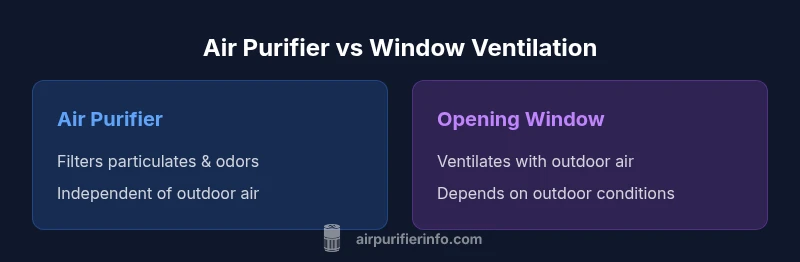
| Filtration vs ventilation | Filters particulates, allergens, and odors; operates independently of outdoor air | Ventilates with outdoor air, diluting indoor pollutants via exchange |
| Outdoor air exposure | Indoor air filtered before it reaches occupants | Outdoor air directly influences indoor environment; exposure varies by weather |
| Pollutant control focus | Targets fine particles, odors, and allergens | Relies on dilution; may introduce outdoor pollutants or humidity |
| Weather dependency | Unaffected by outdoor conditions | Highly dependent on climate and outdoor quality |
| Noise and energy use | Fan noise and electricity use | No mechanical energy use; depends on wind and layout |
| Maintenance costs | Ongoing filter replacements; electricity | No ongoing device costs besides building factors |
| Best use case | Allergen control, odor reduction, consistent IAQ in occupied spaces | Ventilation when outdoor air is clean and comfortable |
| Scenario flexibility | Year-round control with filters | Seasonal venting with weather |
What's Good
- Delivers consistent filtration regardless of outdoor conditions
- Helps reduce indoor allergens and odors with true HEPA + carbon
- Operational 24/7, improving sleep and concentration
- Can be integrated with HVAC for broader IAQ improvements
- Low reliance on external environmental factors in daily use
What's Bad
- Requires ongoing filter replacements and electricity
- Does not provide the same influx of fresh air as outdoor ventilation when air quality is good
- May not remove all odors without a dedicated carbon stage or source control
- Some models produce more noise than others at higher settings
Air purifiers and window ventilation are complementary tools with different strengths
Choose a purifier for reliable particulate and odor control, especially indoors. Open windows strategically when outdoor air is clean and comfortable, balancing ventilation with filtration for optimal IAQ.
Questions & Answers
Is an air purifier a substitute for opening a window?
No. A purifier filters indoor air, while opening a window vents outdoor air into the space. Each method addresses different aspects of IAQ; combined use is often most effective.
No—purifiers filter the air inside, windows bring in outside air. They work best when used together depending on outdoor conditions.
When should I open a window instead of using a purifier?
Open windows when outdoor air quality is good and conditions are comfortable. Ventilation helps dilute indoor pollutants quickly and can be energy-efficient in mild weather.
Open the window when the outside air is clean and the weather feels comfortable; it’s a quick way to refresh air.
Can I run a purifier all the time?
Yes, many households operate purifiers continuously in main living areas, but check filter life and energy use. Use sleep modes and scheduled cycles to balance comfort and costs.
Yes, you can run it all the time, just mind the filter life and energy use.
Do purifiers remove cooking or pet odors effectively?
Purifiers with an activated carbon stage help reduce odors, including cooking and pet smells. For persistent odors, improve source control and ventilation in combination.
Yes, carbon filters help with odors, but you might still want to ventilate after cooking or strong pet activity.
What features matter when buying a purifier?
Look for a true HEPA filter, a carbon stage for odors, appropriate room sizing, low energy use, and reliable maintenance intervals.
Choose models with true HEPA, carbon filtration, and good filters life.
Are there risks to leaving windows open all the time?
Constantly open windows can introduce allergens, humidity, and outdoor pollutants. Use timers or seasonal airing when outdoor conditions permit.
Leaving windows open all the time can bring in pollen and humidity; use it selectively.
Main Points
- Choose true HEPA + carbon purifier for allergies and pets
- Ventilate on days with clean outdoor air, not during high pollution
- Match purifier size to room and maintain filters regularly
- Use a mixed approach to maximize indoor air quality
- Monitor indoor air quality and adapt strategies by season