Can Air Purifiers Be Used with Open Windows? Practical Guide
Learn when it's beneficial to run an air purifier with open windows, how to optimize filtration, monitor air quality, and avoid pulling outdoor pollutants inside. A practical, expert guide from Air Purifier Info.


Using an air purifier with an open window is feasible in many settings, but performance depends on outdoor air quality and room size. This how-to covers when it helps, how to optimize filtration, and how to avoid pulling in more pollutants. Read on for practical setup and testing tips from Air Purifier Info.
Open-window dynamics and air exchange
Air purifiers clean indoor air by pulling in room air, filtering it, and releasing cleaned air back into the room. When you open a window, outdoor air mixes with indoor air, changing the rate at which pollutants are removed and replaced. This dilution effect can be beneficial for stale indoor air, but it also introduces outdoor pollutants such as pollen, dust, smoke, or vehicle exhaust. According to Air Purifier Info, understanding these dynamics is essential to decide whether running a purifier with the window open will help you reach your air-quality goals. In practice, you want enough fresh air to avoid stuffiness without letting outdoor contaminants overwhelm the purifier’s filtration. The best approach varies by room, weather, and outdoor air quality, so you’ll want a simple testing routine to guide adjustments.
When using an air purifier with open windows makes sense
There are situations where an open-window setup can be advantageous: after cooking strong odors, when indoor air feels stale, or during certain outdoor conditions when the outside air is clean enough to benefit from ventilation. Air Purifier Info notes that the decision hinges on outdoor air quality, the room size, and the purifier’s CADR (clean-air delivery rate). If you live in a city with high pollen counts or wildfire smoke, keeping windows closed most of the day and using the purifier on higher settings may produce the best indoor air quality. Conversely, in a mild, low-pollution environment, a window-open strategy can help balance filtration with fresh air.
How to set up for best results
For practical use, treat the purifier as a filter that can be enhanced by selective ventilation rather than a replacement for ventilation. Position the purifier so it draws air from the center of the room rather than directly at the window, and ensure it has a clear path to expel air. If the window is open, avoid placing the purifier where a strong draft could push dust and outdoor pollutants directly into the filter inlet. Use adjustable fan speeds to ramp up when outdoor air quality improves and to scale down when outdoor air worsens. This section is designed to help you tune your setup for a balanced air profile rather than an all-or-nothing approach.
Measuring impact without guessing
A simple way to gauge whether your open-window setup is helping or hurting is to monitor PM2.5 and VOC levels before and after changing window status and purifier speed. If levels rise when you open the window, it’s a sign outdoor pollutants are entering faster than your purifier can process them. If levels stay stable or drop, your environment may benefit from the added ventilation. Air Purifier Info recommends keeping a log for several days to capture weather-related changes and weekday vs weekend air quality patterns. A consumer air-quality monitor or the purifier’s built-in sensors can guide decisions without guesswork.
Safety considerations and limitations
Using an air purifier with an open window is not a substitute for proper filtration and filtration maintenance. Outdoor humidity, rain, or high wind can bring moisture or dust that saturates filters more quickly, reducing efficiency. If you notice excessive moisture on surfaces near the purifier, reduce exposure or reposition the unit. Do not run ozone-generating devices in the same space, and avoid blocking the purifier’s intake or exhaust. The goal is to balance ventilation with filtration, not to rely solely on one method. Air Purifier Info emphasizes that safety and effectiveness depend on staying aware of outdoor conditions and the purifier’s recommended usage guidelines.
Room-by-room guidance for different spaces
Living rooms, bedrooms, and kitchens each present unique challenges when mixing open-window ventilation with a purifier. In living rooms, aim for mid-range fan speeds and place the purifier away from direct drafts to ensure steady filtration. In bedrooms, consider cooler nights and the purifier’s noise; a low-to-moderate setting can preserve sleep quality while maintaining air cleanliness. In kitchens, use the purifier in combination with an exhaust hood or window vent and avoid letting steam accumulate near the filter. Across all rooms, ensure cords are tidy and the unit is kept away from heat sources or moisture-prone zones. Air Purifier Info suggests testing in each space to tailor the approach to your home’s layout and climate.
Alternatives if you keep windows mostly closed
If you prefer to keep windows closed most of the time, you can still achieve excellent indoor air quality with a high-efficiency purifier and a controlled ventilation strategy. Consider a purifier with a higher CADR for your room size and combine it with occasional, brief, controlled openings during times of low outdoor pollution. Mechanical ventilation systems or energy-recovery ventilators can provide fresh air with lower pollutant ingress. The key is to monitor air quality and adjust use based on outdoor conditions rather than relying on a single setup all year long.
How to choose the right purifier for open-window use
When your goal includes occasional open-window use, prioritize purifiers with adjustable CADR, solid HEPA filtration, and a design that minimizes backflow from the window. Look for units with a clean air delivery rate that matches your room size, and opt for models that perform well across a range of environmental conditions. Filters should be easy to replace, and the device should have a timer or auto-off feature to accommodate hours when outdoor air is unfavorable. Air Purifier Info recommends reading reviews focusing on real-world performance in mixed-vent scenarios to choose a model that remains effective in all seasons.
Maintenance tips while using open windows
Open-window use can increase exposure to moisture, dust, and pollen, accelerating filter wear. Check filters regularly and replace them according to the manufacturer’s schedule, not just when the unit signals. Keep the exterior housing clean to prevent dust accumulation inside the intake. If you notice reduced airflow or strange odors, pause operation and inspect the filter and housing. A quick wipe-down with a dry cloth and a thorough vacuuming around the intake can prevent debris buildup that reduces performance.
Quick-start routine for open-window use
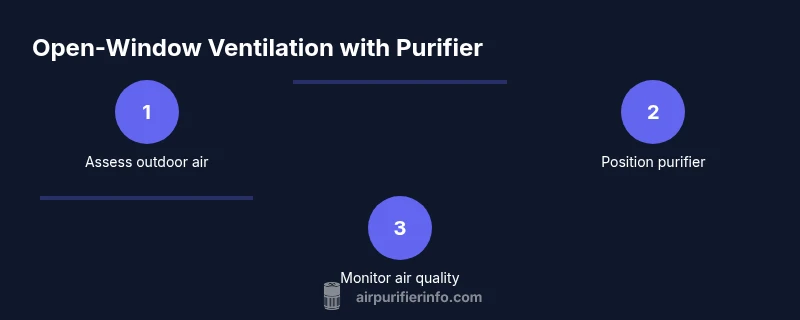
Create a simple routine: assess outdoor air, position the purifier, set an appropriate speed, and monitor air quality for a defined window-open period. Log the results, adjust settings based on real-time data, and iterate weekly to optimize the balance of fresh air and filtration. This approach helps you build a dependable pattern that improves indoor air quality without guessing.
note”:null}
toolsMaterials
stepByStep
tipsList
keyTakeaways
videoEmbed
faqSection
mainTopicQuery
Tools & Materials
- Air purifier (with adjustable fan speeds and HEPA filter)(Choose a model sized for your room; higher CADR helps with open-window scenarios.)
- Window opening or screen to maintain ventilation(Use when you want cross-ventilation; screen helps keep pests out.)
- CO2/PM2.5/VOC monitor (optional)(Helps quantify air changes and pollutant levels during open-window periods.)
- Timer or smart plug(Useful for scheduling purifier run times during specific windows of outdoor air quality.)
- Notepad or logging app(Record outdoor conditions and indoor readings to refine usage.)
Steps
Estimated time: 30-60 minutes for initial setup, with ongoing adjustments as conditions change.
- 1
Assess outdoor conditions
Check the current outdoor air quality and weather. If outdoor pollution is high (pollution alerts, pollen counts, smoke), plan shorter open-window periods or keep the window mostly closed. If air quality is good, you can extend the window-open period.
Tip: Use a quick outdoor-air quality check (a local weather app or air quality site) before starting. - 2
Position the purifier
Place the purifier in a central location with a clear path for air intake and outflow. Avoid blocking the window with furniture or curtains, which can disrupt circulation and reduce filtration efficiency.
Tip: Aim for a windshield-like air path: intake from the room center and exhaust toward the window area without creating a direct draft onto the purifier. - 3
Set the purifier speed
Start at a moderate speed and adjust based on indoor readings. If the air quality worsens when the window is open, lower the speed or shorten the open-window period.
Tip: High speeds may be noisy; balance noise with desired air cleanliness, especially in bedrooms. - 4
Open the window strategically
Open the window for a defined period during mild outdoor conditions and close it when outdoor air quality declines. For cross-ventilation, slightly angle the window to create a controlled breeze.
Tip: Avoid blasting pollutants directly toward the purifier inlet. - 5
Monitor indoor air quality
Use a PM/ VOC monitor or purifier’s built-in sensors to track changes. If readings rise after opening the window, adjust accordingly.
Tip: Log readings for at least a week to identify patterns. - 6
Fine-tune and adapt
As outdoor conditions change, tweak the purifier speed and window-open duration. Aim for a stable indoor air quality while leveraging fresh air when beneficial.
Tip: Keep a simple routine and update it with seasons. - 7
Document results
Record your setup, outcomes, and any odors or symptoms noticed by occupants. This helps you refine the approach over time.
Tip: A quick daily log can reveal trends that aren’t obvious in a single day. - 8
Close up and maintain
When finished, turn off the purifier or continue operating at a low setting if you want ongoing filtration after the window is closed. Clean the intake and exterior regularly.
Tip: Check filters monthly and replace as recommended.
Questions & Answers
Can I run an air purifier with the window fully open all day?
Running a purifier with the window fully open all day can reduce indoor pollutant buildup, but it also lets outdoor pollutants in. This isn’t always ideal, especially in high-pollen, pollution, or wildfire conditions. If you choose to do this, monitor outdoor air quality and expect higher filter wear.
Running a purifier with the window fully open all day can reduce indoor pollutants, but it also brings in outdoor pollutants. Monitor outdoor air quality and expect higher filter wear.
Will an air purifier replace ventilation when the window is open?
No, a purifier doesn’t replace ventilation. It cleans indoor air, while ventilation exchanges air with the outdoors. Use open-window periods judiciously to complement filtration, not to substitute proper ventilation.
No, purifiers clean air but don’t replace ventilation. Use open windows strategically to complement filtration.
Do I need to seal the purifier to the window?
Sealing the purifier to the window isn’t necessary. In fact, a loose setup can help avoid backdraft issues and reduce pressure differences. Focus on placement and controlled ventilation rather than tight sealing.
Sealing isn’t required. Focus on placement and controlled ventilation rather than trying to seal the purifier to the window.
How do I know if outdoor air is too dirty for open-window use?
If outdoor air is flagged as unsafe—smoke, high pollen, or smog—limit open-window periods, or close windows and rely on the purifier. Real-time readings from a PM monitor or local air-quality reports help you decide.
If outdoor air is unsafe, limit openings and rely on the purifier. Real-time readings help you decide.
Is it better to keep windows slightly cracked rather than fully open?
Cracked windows can provide mild ventilation while minimizing outdoor pollutant ingress. Combine a partially open window with a purifier on a moderate setting for a balanced approach.
A cracked window can balance ventilation while keeping pollutants lower; pair it with steady purifier use.
What about humidity and moisture from open windows?
Open windows can bring humidity; monitor for condensation on walls or the purifier. If humidity rises significantly, reduce open-window periods or use a dehumidifier.
Watch for humidity; if condensation appears, shorten window openings or add a dehumidifier.
Watch Video
Main Points
- Assess outdoor air quality before opening windows
- Place purifier centrally and avoid direct drafts
- Use data to balance ventilation with filtration
- Maintain filters and monitor changes over time
- Choose purifiers with adjustable CADR for flexible usage