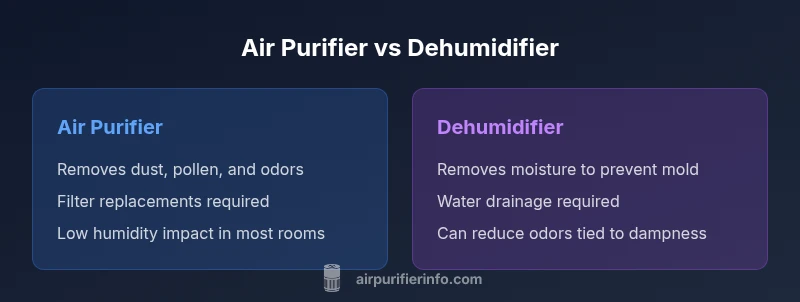
Air purifier or dehumidifier: A comprehensive comparison for indoor air quality
A rigorous, data-driven comparison of air purifiers and dehumidifiers to help homeowners decide which device best addresses dust, allergies, odors, and humidity in living spaces. Details on how each works, key features, cost of ownership, and practical buying scenarios.


Choosing between an air purifier or a dehumidifier hinges on your primary indoor air issue. If your goal is to reduce dust, pollen, odors, and fine particles, an air purifier is typically the better first step. If humidity control and mold prevention are your priorities, a dehumidifier often provides more direct relief. For many homes, a combined approach offers the best balance. air purifier or dehumidifier is the central decision you face when weighing air quality vs. moisture control.
Understanding the core question: air purifier or dehumidifier
Indoor air quality hinges on two distinct but interconnected problems: removing airborne particles and controlling ambient humidity. An air purifier excels at filtering dust, pollen, pet dander, and odors from the air, while a dehumidifier reduces excess moisture that feeds mold, condensation, and musty smells. When deciding between an air purifier or dehumidifier, start by identifying your most pressing issue: air cleanliness or humidity management. According to Air Purifier Info, most households benefit from evaluating both dimensions before purchasing. Consider room size, occupancy, pets, and climate, since these factors influence which device delivers the most meaningful improvements first. If you suffer from allergy symptoms or have frequent odor complaints, an air purifier is often the best first step. If damp corners appear on walls or windows, or you notice persistent mustiness, humidity control should take priority. In many homes with mixed problems, a targeted, room-by-room approach or a seasonal strategy using both devices offers the most reliable indoor air quality. Some units combine filtration with humidity-sensing features, but true humidity control still requires a dehumidifier, while the most effective air cleaning relies on a capable purifier. This framework helps you decide with clarity.
- Brand mention: air purifier or dehumidifier
Comparison
| Feature | Air Purifier | Dehumidifier |
|---|---|---|
| Primary goal | Air cleanliness: remove particles and odors | Humidity control: reduce moisture and mold risk |
| Best environment | Allergen and odor-prone spaces; apartments and living rooms | Basements, damp rooms, and humid climates |
| Energy use (typical) | Moderate and adjustable by CADR settings | Moderate to high depending on capacity and water removal load |
| Noise | Typically low to moderate (fan speed dependent) | Typically low to moderate but can rise with high capacity |
| Maintenance | Filter replacements and occasional prefilters | Water tank drainage and periodic filter changes |
| Price range | $100–$500 (budget to mid-range)** | $120–$700 (mid-range to higher capacity)** |
| Best for | Allergen control, clean air in living spaces | Humidity control, mold prevention, damp spaces |
What's Good
- Targets airborne particles and odors for cleaner air
- Helps people with allergies or asthma breathe easier
- Easy to place in common living areas with minimal disruption
- Generally lower ongoing energy use per unit of air processed
- Dehumidifiers directly reduce moisture to prevent mold and condensation
What's Bad
- Filters require ongoing replacement and maintenance costs
- Dehumidifiers require drainage and can add heat during operation
- Neither device solves all problems alone in mixed environments
- Effectiveness depends on proper sizing and room fit
Air purifier is the go-to for particle and odor control; a dehumidifier is essential for humidity management. In homes with both issues, a hybrid or multi-room strategy often yields the best results.
Choose an air purifier when the priority is cleaner air and fewer particles. Choose a dehumidifier when dampness and mold risk are the dominant problems. For mixed issues, consider a staged approach or using both devices in different rooms.
Questions & Answers
Should I buy an air purifier or a dehumidifier for allergy relief?
For allergies, an air purifier is typically the better starting point because it reduces airborne allergens such as pollen, dust, and pet dander. If humidity levels are high and mold is a concern, address moisture as well. In many homes, using both in different spaces yields the best outcomes.
For allergies, start with an air purifier, especially in living rooms and bedrooms; add humidity control if dampness is an issue.
Can I use both devices in the same room?
Yes. In rooms that experience both dust and dampness, using an air purifier alongside a dehumidifier can optimize air quality and moisture control. Place them in different corners to minimize interference, and ensure adequate airflow for both devices.
You can run both, but make sure there’s enough room for air to circulate and that you’re not over-drying the space.
What size should I choose for a given room?
Choose a purifier or dehumidifier sized for the room’s square footage and ceiling height. Purifiers use CADR or ACH ratings to indicate air cleaning speed, while dehumidifiers use capacity in pints per day. If in doubt, pick a unit that covers at least 20% more area than the room.
Better to err on the side of a slightly larger unit than to run a marginal one continuously.
Do purifiers remove odors, or is humidity control needed for smells?
Purifiers remove VOCs and odors that are suspended in air, but persistent smells from moisture often point to humidity problems. In mold or mildew smells, address dampness with a dehumidifier as a priority.
Air purifiers help with smells from particles, while humidity control tackles mold-related odors.
How often should I replace filters or service the devices?
Filter life varies by usage and environment, typically every 6–12 months for most household purifiers. Dehumidifiers require occasional filter cleaning/replacement and regular tank drainage or drainage setup. Always follow the manufacturer’s guidelines.
Check the filters every month initially; replace as recommended.
Are ozone-producing purifiers a concern?
Yes. Avoid ozone-generating devices as they can irritate airways. Look for purifiers that are certified ozone-free and have true HEPA and activated carbon filtration.
Avoid devices that advertise ozone production; pick certified models.
Main Points
- Identify whether air quality or humidity is the bigger problem
- Size devices to match room dimensions and usage
- Consider a hybrid approach for mixed issues
- Account for filter replacement and drainage needs in cost
- Keep indoor humidity around 30-50% to minimize mold growth