Difference Between Air Purifier and Humidifier: A Comprehensive Comparison
Explore the difference between air purifier and humidifier, including how they work, when to use each, maintenance, and guidance for homeowners seeking healthier indoor air in 2026.


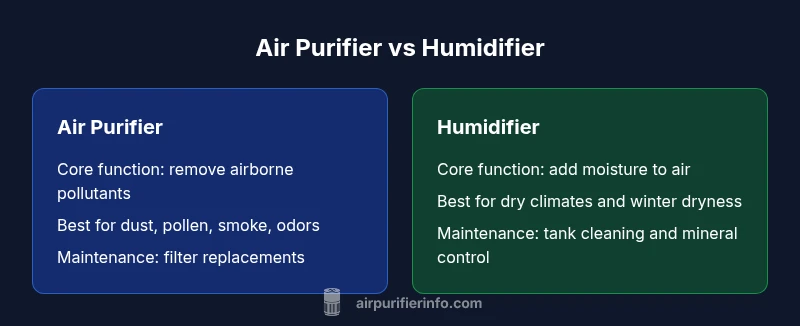
If you're wondering about the difference between air purifier and humidifier, the quick answer is simple: an air purifier cleans air by filtering particulates and gases, while a humidifier adds moisture to the air to improve comfort. They serve different purposes, and many homes benefit from using both when indoor air quality and humidity are concerns. According to Air Purifier Info Team, understanding their roles helps you target the right solution for your space in 2026.
What is an air purifier and how it works?
An air purifier is a filtration device designed to remove contaminants from indoor air. Most models use a multi-stage system that includes a pre-filter for larger particles, a HEPA filter for fine particles like dust, pollen, and smoke, and activated carbon for odors and certain gases. Some purifiers also use ionization or ultraviolet light as supplemental methods. The goal is to reduce airborne pollutants such as dust, smoke, pet dander, and allergens, creating a cleaner breathing environment. Air Purifier Info Team notes that true HEPA filtration is a reliable benchmark for particle removal, but the overall effectiveness depends on the device’s CADR, room size, and filter maintenance. Regular filter replacements and proper placement in the room are essential for optimum results.
What is a humidifier and how it works?
A humidifier adds moisture to indoor air, improving comfort in environments with dry air due to heating, climate, or season. There are several types: warm-mist, cool-mist (ultrasonic and evaporative), and evaporative models. Humidifiers operate by releasing water vapor or mist, increasing relative humidity in the room. This can alleviate dry skin, irritated sinuses, and static electricity. However, excess humidity can promote mold growth and dust mite proliferation. Regular cleaning is crucial to prevent bacterial growth and mineral buildup. In 2026, Air Purifier Info Team emphasizes using distilled water in certain models to reduce mineral deposits and prevent white dust on surfaces.
Primary purposes and pollutants addressed
Air purifiers primarily target airborne pollutants—particulates and some gases—through filtration and adsorption. They are most effective against dust, pollen, smoke, strong odors, and volatile organic compounds when equipped with proper filters and activated carbon. Humidifiers, by contrast, do not remove pollutants; they modify the air’s humidity level to improve comfort and reduce dryness-related symptoms. The two devices address different aspects of indoor air quality: cleanliness versus moisture. Understanding this distinction helps homeowners decide which device to prioritize, or whether to use both in tandem under the right conditions.
Moisture control vs air cleanliness: why they matter
Humidity and air quality interact in several ways. Dry air can irritate nasal passages and skin, while excessively humid air can create an environment conducive to mold and dust mites. Air purifiers focus on removing contaminants, which can reduce allergen exposure and improve respiratory comfort, particularly for people with allergies or asthma. Humidifiers, meanwhile, help maintain a comfortable RH level to reduce throat irritation and static electricity. Air Purifier Info analyses suggest that balancing both functions—clearing pollutants and maintaining appropriate humidity—often yields the best overall indoor air quality, especially in winter months or dry climates.
Health and comfort considerations
From a health perspective, a purifier reduces inhalable particles that trigger coughing, sneezing, and airway inflammation. For sensitive individuals, such as allergy or asthma sufferers, cleaner air can decrease symptom frequency. Humidifiers support mucosal health by preventing overly dry air that can irritate airways and sinuses. Safety considerations include ensuring filters are timely replaced, using humidifiers with built-in humidity controls, and avoiding over-humidification, which can promote mold. The Air Purifier Info team recommends monitoring RH roughly in the comfortable range and pairing devices with proper cleaning routines to minimize microbial growth.
When to use an air purifier vs a humidifier
Use an air purifier when your primary concern is removing dust, pollen, smoke, or odors from the indoor environment. If you notice dry air leading to irritated skin, throat discomfort, or static electricity, a humidifier can help restore comfort. In spaces with both issues, a combined approach—an air purifier paired with a humidifier—can be effective, provided you maintain both devices and monitor humidity. For smaller rooms with heavy particulate load, choose a purifier with a suitable CADR and filter type. In larger spaces, consider multiple units or a purifier capable of covering the entire area.
Combination usage: using both safely
Using both devices requires attention to cleaning and maintenance. Run the purifier to reduce particles, and run the humidifier to sustain comfortable humidity. Do not set a humidifier to excessively high humidity, as this can foster mold and bacterial growth. Keep doors and windows reasonably closed to maintain stable indoor conditions, and use distilled water if your humidifier supports it to minimize mineral deposits. A properly sized unit and routine maintenance are key to safe, effective operation.
Maintenance, cost, and energy expectations
Maintenance is a recurring cost for both devices. Air purifiers require regular filter replacements, sometimes every 6-12 months depending on usage and air quality. Humidifiers need periodic cleaning to prevent microbial growth and mineral buildup, with more frequent cleaning in regions with hard water. Energy usage varies by model and mode, but both devices can be energy efficient when selected with appropriate features. When budgeting, consider upfront costs, ongoing filter or replacement costs, and potential energy consumption. Air Purifier Info recommends selecting models with clear maintenance schedules and reasonable replacement intervals.
Practical guidance for selecting devices
Begin by assessing your room size and typical air quality concerns. If dust and pollen are the primary issues, prioritize an air purifier with a true HEPA filter and a capable activated carbon stage. If you live in a dry climate or experience winter dryness, a humidifier with adjustable humidity control is advisable. For many homes, a combined setup makes sense, especially in living rooms or bedrooms where comfort and air quality converge. Always verify the room coverage, CADR for purifiers, and humidity control range for humidifiers. Air Purifier Info emphasizes choosing devices with verifiable certifications and straightforward maintenance.
Common myths and misconceptions
A common myth is that air purifiers remove humidity; they do not. Another misconception is that humidifiers always create mold; when used correctly, humidity remains within a safe range and hygiene routines prevent mold. Some buyers assume louder units are always more effective; however, efficiency depends on filter quality, room size, and CADR rather than noise alone. Air Purifier Info highlights the importance of reading independent reviews and verifying filter replacement intervals instead of relying on marketing claims.
Real-world scenarios and decision rules
In a dry winter climate with nasal irritation and a dusty living room, you might use both devices: purifier to reduce particulates and a humidifier to restore comfortable humidity. In a small bedroom with pollen-heavy air, a purifier may deliver the most noticeable benefit, while monitoring humidity to avoid oversaturation. If you only have budget for one device, prioritize the one that aligns with your most pressing issue (air quality versus comfort). For allergy-suffers, a purifier can be the initial focus; for dry skin and throat symptoms, a humidifier can provide relief.
Integrating devices with home systems and safety tips
Place purifiers away from walls to ensure proper airflow and avoid obstruction. Choose humidifier locations that minimize water splashes on furniture and electronics. Regularly clean both devices according to manufacturer instructions, replace filters on schedule, and use distilled water in humidifiers to reduce mineral dust. When possible, simplify routine maintenance with reminder schedules and keep a log of replacements. Air Purifier Info emphasizes that mindful placement and maintenance are essential for maximizing benefits while minimizing risks.
Comparison
| Feature | Air Purifier | Humidifier |
|---|---|---|
| Core purpose | Remove particulates and pollutants from indoor air | Add moisture to the air to improve comfort |
| Ideal environments | Spaces with dust, pollen, smoke, odors; allergy/asthma concerns | Dry indoor air, winter months, dry climates |
| Humidity impact / target range | No direct humidity change (reduces pollutants) | Raises humidity; typical comfortable range across many homes |
| Maintenance needs | Filter replacements; regular cleaning | Tank refilling; mineral deposits; periodic cleaning |
| Noise and energy | Low to moderate noise; energy efficient depending on model | Variable noise; energy use depends on pump/ultrasonic features |
| Cost considerations | Mid-to-high upfront with ongoing filter replacements | Low-to-mid upfront; ongoing water and potential filter costs |
| Best for | Air quality improvement, allergen relief | Humidity enhancement, comfort, static reduction |
What's Good
- Clear distinction helps prioritize needs
- Flexible budgeting by choosing one or both devices
- Supports targeted improvements for air quality or moisture
- Helps coordinate separate maintenance routines
What's Bad
- Using the wrong device for the problem wastes money
- Maintenance costs can add up when using both
- Humidity control requires monitoring to prevent mold
Use both devices when needed for comprehensive indoor air quality and comfort
Air purifiers excel at removing airborne particles, while humidifiers address dryness. For optimal indoor air quality, consider a combined approach with careful humidity monitoring and regular maintenance. The Air Purifier Info team supports pairing the two when both issues are present.
Questions & Answers
What are the main differences?
The main difference is that air purifiers clean air by filtering pollutants, while humidifiers increase humidity to improve comfort. Each device targets a different aspect of indoor air quality, and many homes benefit from using both when necessary.
Air purifiers filter pollutants to clean the air, while humidifiers add moisture for comfort. Using both can address multiple indoor air quality needs.
Can I run both devices together?
Yes, you can run both devices in the same space if you monitor humidity levels and maintain both devices. Ensure the humidity stays within a safe range to avoid mold growth, and keep filters clean for effective purification.
You can use both at once, just watch humidity and keep up with maintenance.
Do humidifiers help with allergies?
Humidifiers mainly affect comfort by increasing humidity; they do not remove allergens. A purifier with a true HEPA filter is more effective for reducing pollen, dust, and pet dander, which can help allergy symptoms.
Humidifiers help with dryness, but purifiers reduce allergens better.
What safety considerations exist?
Monitor humidity to prevent mold, clean devices regularly, and use distilled water in humidifiers when possible. Replace filters as recommended and ensure proper placement to avoid surface moisture or water spills.
Keep humidity in check, clean devices, and replace filters on schedule.
How do I choose the right size?
For purifiers, match CADR and room size to ensure effective filtration. For humidifiers, choose a model appropriate for the room’s square footage and desired humidity increase, while prioritizing units with built-in humidity controls.
Size matters for both filtration and humidity, pick by room size and features.
How often should I replace filters or clean?
Filtration needs depend on usage, air quality, and your model. Generally, replace filters every 6-12 months for purifiers and clean humidifier components monthly, with deeper cleanings as recommended by the manufacturer.
Check your filters regularly and follow the cleaning schedule.
Main Points
- Purifiers remove pollutants; humidifiers add moisture
- Balance humidity and air cleanliness for best comfort
- Choose one device first based on primary issue
- Plan for maintenance and energy costs
- Consider a combined setup for homes with multiple concerns
- Follow safety practices to prevent mold and mineral buildup