Air Purifier vs Humidifier for Cough: Is One Better?
Explore whether an air purifier or humidifier better supports cough relief. This analytical guide explains how each device affects irritants, moisture, and symptoms, with practical setup tips from Air Purifier Info.


Is the question 'is air purifier or humidifier better for cough' answered by one device? In practice, cough relief depends on the dominant triggers in your home. Air purifiers reduce irritants in the air, while humidifiers address dry air. The best approach blends both strategies, tailored to your symptoms and environment.
Is the question 'is air purifier or humidifier better for cough' answered by one device? In practice, cough is a symptom with many triggers. According to Air Purifier Info, the best approach begins with diagnosing the dominant irritants in your home: dust, pollen, pet dander, bacteria, humidity level, and overall air moisture. The air you breathe matters: if your cough is triggered by airborne irritants, a purifier targeting particulates and volatile organic compounds (VOCs) can reduce exposure. If your cough stems from dry air, a humidifier can help. Air Purifier Info's team found that most households experience benefits when devices are chosen based on symptom profile rather than a default one-size-fits-all solution. The goal is to minimize risk while maximizing comfort. This means: identify symptoms, assess the environment, and then select either an air purifier, a humidifier, or a thoughtful combination. The keyword is not simply 'which device is best' but rather 'which device makes your cough less aggravated in your home.' We'll explore the mechanisms, benefits, limitations, and practical steps to implement either option effectively, considering real-world constraints like noise, maintenance, and energy use.
How Air Purifiers Reduce Cough Triggers
Air purifiers work by capturing fine particles from the air before you inhale them. Most models use HEPA filters that trap dust, pollen, pet dander, and some bacteria. Some also include activated carbon to reduce odors and certain VOCs. For cough relief, the most relevant metric is the CADR (clean air delivery rate) for dust and smoke; higher CADR means faster removal of irritants in the room. Placement matters: keep the purifier in the main living area or bedroom where you spend the most time, and point intake toward common sources of pollution, such as a doorway or HVAC return. Filter replacement schedules vary by model, but consistent maintenance is essential to keep performance high and avoid secondary air quality problems.
Purifiers do not moisturize air, so they cannot directly address dry air. If a room is dry, you may still benefit from a humidifier in the same space. Some purifiers also have pre-filters that catch larger particles, reducing load on the main filter and extending life. In households with pets or smoke, using an air purifier can significantly reduce coughing episodes by lowering airborne irritants. The key is to choose a purifier designed for your room size and to maintain it properly; otherwise, performance declines and the desired cough relief may not materialize. Air Purifier Info recommends starting with a purifier that has a proven track record for IAQ improvement and then assessing symptom changes over several weeks.
How Humidifiers Help When Humidity is Low
Humidifiers introduce moisture into dry air, which can soothe irritated throat and nasal passages that contribute to coughing. There are two main types: cool-mist and warm-mist. Cool-mist units are commonly used in bedrooms because of safety and energy considerations; warm-mist units can feel more comfortable in winter and may reduce bacteria growth in the environment, though they require caution around children and hot surfaces. The effectiveness of a humidifier for cough depends on keeping humidity within a comfortable range; too much moisture fosters mold and dust mites, which can worsen coughs. Therefore, humidity management—ideally with a hygrometer and proper cleaning—is essential.
Water quality matters: mineral deposits from hard water can create white dust that irritates the airways and surfaces. Distilled water reduces mineral residue. Clean the tank regularly and replace water daily to avoid bacterial growth. Some humidifiers come with built-in humidistats; if not, you may need to monitor humidity with a separate gauge. For cough relief, humidifiers work best when coughs are related to dry air especially in winter or in heated rooms. Air Purifier Info emphasizes that humidifier use should be selective and paired with dry-resistance cleaning to ensure air quality does not deteriorate due to moisture issues.
When to Prefer Purifier vs Humidifier: Decision Factors
Your decision should be guided by symptom patterns and environmental context. If cough episodes occur in rooms with visible dust, seasonal pollen, or pet dander, and the space is not overly humid, an air purifier is typically the stronger starting point. If the space feels dry, the air is crackling, or a dry cough emerges after prolonged indoor time, a humidifier can offer relief. Size and layout matter: purifiers work best in smaller to mid-sized rooms, while humidifiers are often needed for larger, drier open spaces or bedrooms where you sleep. Noise and energy use are practical constraints—select models with quiet operation for bedrooms and look at energy-efficient options.
Consider safety: humidifiers must be cleaned regularly to prevent mold growth and mineral dust, and purifiers should be replaced or cleaned per manufacturer guidance to preserve air quality. If you live with multiple irritants (dust, pets, smoke) or if your cough persists despite device use, seek professional evaluation. In some homes with both dryness and irritants, a combined approach—starting with a purifier and adding a humidifier in specific rooms—can provide the best cough relief with careful humidity management. Air Purifier Info notes that symptom-based selection reduces the chance of over-humidifying or under-filtering.
Practical Setup: What to Buy First Based on Home Conditions
For an irritant-driven cough, invest in an air purifier with a true HEPA filter and a carbon filter to address odors and VOCs. Target a purifier appropriate for your room size, with a higher CADR for dust. Pair with a simple mattress and bedding cleaning routine to reduce dust mite presence. If you live with pets or smokers, a purifier with a strong filter stack may provide more noticeable relief. In dry environments or winter months, a humidifier in the bedroom can be prioritized if you repeatedly wake up with a dry throat. Ensure to keep humidity in a moderate range to avoid mold.
When choosing a humidifier, consider the type, ease of cleaning, and water source. Humidifiers that are easy to disassemble and clean reduce the risk of bacterial growth. Distilled water is preferable to reduce mineral residue. Debris-free water plus daily maintenance will prolong device life and improve cough relief. In smaller apartments, you may start with a compact purifier and a small humidifier placed near the bed for nighttime relief. The goal is to test symptom changes over a 2-3 week period and adapt.
Maintenance, Safety, and Common Pitfalls
Maintenance is the most overlooked factor in cough relief. Air purifiers require periodic filter changes and routine sensor checks. CADR decreases if filters are clogged, so schedule replacements and verify airflow. Humidifiers require regular cleaning to prevent mold and bacterial growth; empty water daily and clean the tank weekly with a mild solution. Mineral dust can accumulate from tap water, so distilled water is preferred. Place purifiers away from walls to maintain airflow and avoid false readings.
Safety remains crucial: avoid running humidifiers near heat sources and out of sight of children; use cool-mist options if children are present. For cough relief, it's essential to maintain a stable humidity level, not just to humidify or filter. A misaligned approach—too dry or too humid—can worsen mucus or foster mold that triggers coughing. Air Purifier Info highlights that proactive maintenance and environment monitoring are the keys to successful cough relief.
Use Cases by Cough Type: Dry, Allergic, Infectious Cough
Dry coughs often respond to humidity increases; humidifiers can help with throat dryness. Allergen-driven coughs respond best to air purifiers that reduce particulates from dust, pollen, and pet dander. Coughs associated with illness or infection require a comprehensive approach, while devices can supply symptomatic relief by improving airway moisture and reducing irritants. Some households find that using both devices in conjunction yields better outcomes but requires careful humidity tracking.
Combining Devices Safely for Cough Relief
If you use both devices, ensure you monitor humidity and maintain both units. Place the air purifier in the main living area and the humidifier in the bedroom if you have nighttime coughing. Use separate circuits if possible to avoid overload, and keep the humidifier clean and dry when not in use. Use distilled water and change it daily to prevent mineral buildup and microbial growth. Set realistic expectations: devices can reduce symptoms but are not a substitute for medical evaluation if coughing persists.
Real-World Guidance from Air Purifier Info Team
The Air Purifier Info Team emphasizes that every home is unique, and cough relief depends on multiple factors, including exposure, humidity, and individual sensitivity. Their guidance: start with a purifier if irritants are a likely trigger, observe symptom changes for a few weeks, and consider a humidifier if dryness remains. The team also notes that safety and maintenance are critical to preserving air quality and avoiding adverse effects. Real-world cases show that a targeted, symptom-based approach often yields the best cough relief, particularly when combined with good cleaning practices and dust control. According to Air Purifier Info, the most successful setups are simple, properly maintained devices that address the leading cough triggers while keeping you comfortable.
Comparison
| Feature | Air Purifier | Humidifier |
|---|---|---|
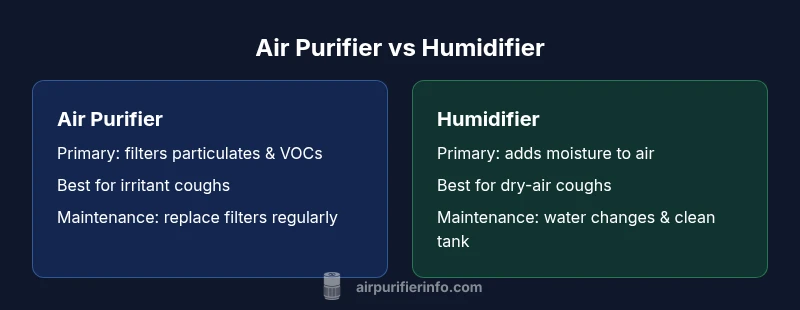
| Primary Mechanism | Filters particles and gases | Adds moisture to the air |
| Effect on Cough Symptoms | Reduces cough triggers from irritants by removing triggers | Alleviates dry or throat-irritated cough by moisturizing air |
| Best For | Allergen/irritant-driven coughs | Dry-air coughs or throat irritation |
| Maintenance Needs | Filter replacements and routine cleaning | Water changes and mineral residue management; regular cleaning |
| Risks/Drawbacks | Ongoing filter costs and possible noise | Potential for mold/bacteria if humidifier not cleaned and over-humidified |
What's Good
- Addresses air quality by removing particles and pollutants
- Can reduce coughing fits triggered by dust, pollen, and pet dander
- Humidifiers can improve comfort in dry indoor environments
- Maintenance is manageable with regular cleaning and filter changes
What's Bad
- Humidifiers risk mold/bacteria growth if not cleaned properly
- Purifiers do not add moisture and won’t fix dry-air symptoms
- Filters and humidifier water management incur ongoing costs
Air purifiers are the preferred first choice for cough relief in most homes; humidifiers can complement when dry air is a persistent factor.
Start with an air purifier to reduce irritants triggering coughing. Add a humidifier if you notice persistent dryness, but monitor humidity carefully to avoid mold and over-wetting.
Questions & Answers
What cough types benefit most from an air purifier?
Air purifiers are most effective when coughing is linked to airborne irritants like dust, pollen, and pet dander. They reduce exposure and can lessen coughing episodes when used consistently in key living spaces.
Air purifiers work best for irritant-driven coughs, like dust or pollen. They reduce exposure and can lessen coughing when used in the rooms you use most.
Can a humidifier help with cough?
Humidifiers help when coughing is due to dry air. They add moisture to the air to soothe dry throat and nasal passages, but they do not remove irritants and require careful cleaning.
Humidifiers help if dry air is the trigger, but they don’t remove irritants and must be cleaned regularly.
Are there risks to using humidifiers?
Yes. If not cleaned properly, humidifiers can harbor mold and bacteria. Over-humidification can promote dust mites and mold growth, which may worsen coughing.
Yes—clean them regularly and avoid over-humidifying to prevent mold and bacteria buildup.
Should I use both devices at the same time?
Using both can help in some environments, but it requires careful humidity monitoring. Start with one device based on your primary cough trigger and add the other only if needed and safe.
Using both can help, but you’ve got to monitor humidity and maintain both devices well.
What maintenance is required?
Purifiers need regular filter changes and occasional sensor checks. Humidifiers require daily water changes and weekly cleaning to prevent mineral buildup and microbial growth.
Keep filters fresh and clean for purifiers; clean and wash humidifiers daily and weekly.
What should I do if cough persists after using devices?
If coughing persists, consult a healthcare provider. Devices can support symptom relief but are not a substitute for medical advice when symptoms continue.
If cough persists, see a doctor. Devices help, but they aren’t a substitute for medical care.
Main Points
- Assess cough triggers before buying devices
- Air purifiers excel at irritant-related coughs
- Humidifiers help when dryness is the main issue
- Maintenance and humidity control are essential for safety and effectiveness