How to Put an Air Filter in Your Furnace
Learn how to replace a furnace air filter safely and correctly. This guide covers filter types, sizing, and a clear step-by-step process to improve airflow and indoor air quality.


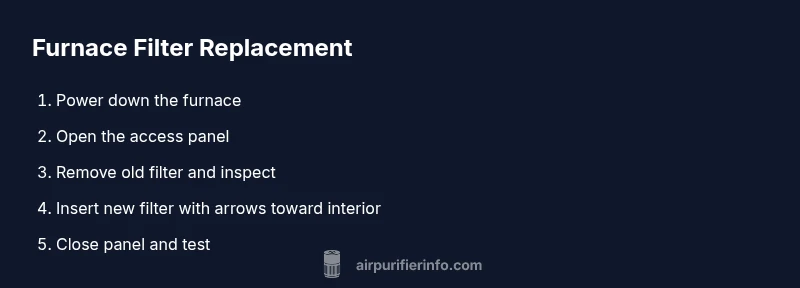
To put an air filter in your furnace, power off the unit, locate the filter slot, remove the old filter, note its size, insert a new filter with the arrows pointing inward, and resecure the housing. Use the correct size and MERV rating for your system to maintain efficiency and indoor air quality.
Why filter choice matters for furnace efficiency and indoor air quality
According to Air Purifier Info, choosing the right filter is about more than trapping dust. The Air Purifier Info team emphasizes that filter size, orientation, and MERV rating influence blower strain, energy use, and allergen control. In many homes, using a filter that's too thin or too thick reduces airflow, makes the fan work harder, and can raise furnace noise. A properly chosen filter acts as a barrier against dust, pet dander, pollen, and smoke particles while preserving heater efficiency. When you replace a filter regularly, you reduce the buildup in ducts and improve overall indoor air quality. Air Purifier Info analysis shows that consistent, correctly sized replacements can reduce residence dust levels by noticeable margins and help with seasonal allergy symptoms. Always verify the date on the old filter to estimate replacement frequency and keep a spare on hand for quick changes. In short, the right filter protects equipment, improves airflow, and supports healthier air.
Types of furnace filters and how to read labels
Furnace filters come in several common formats, including fiberglass disposable filters, pleated filters, and electrostatic types. The thicker and pleated filters generally offer better particle capture but may affect airflow if they’re not matched to your system. Always read the label for the MERV rating, which indicates filtration efficiency, and check the dimensions printed on the frame. The label also shows the correct orientation with an arrow; installing it backward restricts airflow and wastes energy. For households with pets or allergy concerns, a higher MERV (within what your furnace can support) can capture dander and fine dust more effectively. When buying, compare the recommended MERV range in your owner’s manual and match it to your needs without compromising airflow. Keeping a few filter options on hand makes quick changes easier during dusty seasons or when you notice more dust settling on surfaces.
How to locate and access the filter slot safely
Begin by turning off the furnace at the thermostat and, if applicable, at the service switch to ensure no power is flowing to the blower. Remove any access panel or door on the furnace to expose the filter slot. Use a flashlight to inspect the slot and verify the exact size and orientation. If screws are present, loosen them gently with the appropriate screwdriver and set them aside so you don’t lose them. Once the slot is open, slide the old filter straight out to prevent dust from falling back into ducts. Keep the surrounding area clean and have a trash bag ready for the disposal of the old filter. This step minimizes the risk of injury and keeps your workspace tidy for a smooth replacement.
How to measure, select, and buy the right filter size
Measure the old filter by noting the height, width, and thickness, or simply read the numbers printed on the frame. If measurements are unclear, measure the opening in the furnace with a ruler and choose a filter that fits snugly within those dimensions. Match the arrow on the filter to indicate the direction of airflow toward the furnace interior. When shopping, prioritize filters with a compatible MERV rating and a thickness that your furnace’s blower can handle without strain. If you’re unsure, err on the side of a thinner filter that still meets filtration needs and avoids airflow restriction. Keeping a log of your replacements helps you maintain consistency and prevent prolonged downtime for the unit.
Quick sizing and replacement checklist
Use the old filter size or the furnace label to select the correct replacement. Confirm the arrow direction before inserting. Align the filter evenly and press gently until it sits flush with the frame. Reattach the access panel securely and avoid overtightening screws. Restore power at the switch or thermostat, then run the blower for a few minutes to ensure smooth operation and proper sealing. A snug fit prevents unfiltered air from bypassing the filter and helps your system run efficiently.
Maintenance and when to replace
Plan replacements based on usage, household conditions, and the environment. If you have pets, live in a dusty area, or burn candles and smoke indoors, you may need to replace more frequently. Periodic checks, especially during peak heating months, help you catch a dirty filter before it affects airflow or efficiency. After installation, monitor the system for unusual noises or reduced airflow. Keeping a spare, knowing your typical replacement interval, and following the manufacturer’s guidance will help sustain indoor air quality and system health.
Common mistakes to avoid
Avoid installing a filter backward or using an incorrect size, both of which can reduce airflow and damage the blower. Do not skip cleaning the surrounding housing or skip replacing the filter entirely if it’s visibly dirty. Never run the furnace with a clogged or missing filter, as this can cause overheating and wear on components over time. If you notice persistent debris, consider a higher filtration option only after confirming compatibility with your furnace model.
Tools & Materials
- New furnace filter (correct size)(Choose size exactly as printed on old filter or furnace label)
- Gloves(Protect hands from dust and sharp edges)
- Flashlight or headlamp(Helpful for dark or recessed filter slots)
- Screwdriver (if needed)(Use if panel uses screws; avoid forcing panels)
- Trash bag or recycling bag(Contain used filter for disposal)
- Marker or tape(Label replacement date to establish schedule)
Steps
Estimated time: 10-15 minutes
- 1
Power down and locate the filter slot
Turn off the furnace at the thermostat and, if available, at the service switch. Find the filter slot behind the access panel, using a flashlight if the area is dim. This ensures safe handling and prevents accidental startup during replacement.
Tip: If you can’t find the slot, consult the user manual or manufacturer’s website for your model. - 2
Open panel and inspect the old filter
Remove the access panel or door carefully. Take a moment to observe how the current filter sits and note its orientation. Look for any signs of moisture, mold, or damage that would require attention beyond replacement.
Tip: Keep the panel screws in a small container to avoid losing them. - 3
Remove old filter and check size
Slide the old filter straight out without bending or tilting it. Look for the size printed on the edge or frame, and verify it against the new filter you plan to install. If the size doesn’t match, recheck the opening measurements.
Tip: If you can’t read the size, measure the slot itself with a ruler to ensure a proper fit. - 4
Prepare and select the new filter
Unpack the new filter and compare its dimensions with the slot. Confirm the direction of airflow indicated by the arrow. If you have a choice of MERV ratings, pick one that balances filtration with airflow for your furnace.
Tip: Avoid selecting a filter with a much higher thickness than recommended for your blower. - 5
Insert the new filter securely
Slide the new filter into the slot with the arrows pointing toward the furnace interior. Ensure it sits flat and evenly against the frame to prevent air from bypassing the filter. Do not force a tight fit.
Tip: If the filter binds, back out slightly and re-position; forcing can bend the frame. - 6
Close the panel and restore power
Replace and fasten the access panel securely. Restore power at the switch or thermostat and set the system to run the blower for a few minutes. Listen for unusual noises that might indicate a misfit.
Tip: Run the fan for several minutes to confirm consistent airflow and seal. - 7
Record replacement date
Mark the date on the filter or a home maintenance log. Keeping a replacement schedule helps you maintain indoor air quality and system efficiency over time.
Tip: Set a reminder on your phone or calendar for the next replacement. - 8
Dispose of the old filter responsibly
Place the old filter in a trash bag or recycling container as appropriate. Wash hands after handling the filter and wipe down the area to remove dust.
Tip: If the old filter looked moldy, wear a mask during disposal and consider a professional inspection.
Questions & Answers
How do I know what size filter to buy?
Check the size printed on the old filter or inside the furnace door. If that's not visible, measure the opening with a ruler and match it to a filter with the same dimensions.
Look for the size on the old filter or the furnace door; if needed, measure the opening to match the correct filter.
Can I clean a used furnace filter instead of replacing it?
Most disposable filters should be replaced. Cleaning can reduce filtration efficiency and may not restore performance. If you have a washable filter, follow the manufacturer’s cleaning and drying instructions.
Usually you should replace disposable filters; cleaning isn’t recommended. Washable filters follow specific care instructions.
What does MERV mean and which rating should I choose?
MERV indicates filtration efficiency. Higher numbers capture smaller particles but can impede airflow if the furnace isn’t designed for them. Choose a rating that balances filtration needs with the system’s airflow capabilities.
MERV is filtration efficiency; higher MERV gets more particles but may slow airflow. Pick a level your furnace can handle.
What if the filter won’t fit or is hard to remove?
Double check the size and ensure you’re using the correct orientation. Inspect the housing for obstructions and avoid forcing the filter. If it still won’t fit, consult a technician.
If it won’t fit, recheck the size and orientation, and call a pro if needed.
How often should I replace my furnace filter?
Replacement frequency depends on usage, pets, and environment. Check the filter monthly and replace per the manufacturer’s guidance or when you notice reduced airflow.
It depends on use and environment; check monthly and replace as recommended.
Is it safe to replace a furnace filter during a service call?
If a professional is already servicing your system, they will guide or perform the replacement. Always ensure the power is off before any interaction with the furnace.
Let the pro handle it if you’re unsure; turn off power first.
Watch Video
Main Points
- Turn off power before touching the furnace.
- Use the exact filter size and correct orientation.
- Replace filters regularly to maintain airflow and air quality.
- Keep a spare filter and replacement log for consistency.
- Avoid running the unit with a dirty or missing filter to protect the system.