How to Install an Air Filter: Step-by-Step Guide
Learn how to install an air filter correctly in your HVAC or air purifier. This guide covers filter types, compatibility, safety, tools, and maintenance to improve indoor air quality in 2026.


By the end, you’ll confidently install a new air filter in a furnace, air conditioner, or air purifier, ensuring proper fit and optimal airflow. The guide covers filter types, compatibility checks, essential tools, safety steps, and maintenance tips to extend filter life. You’ll learn how to locate the filter, remove the old one, install the new, and verify correct seating without damaging the unit.
Why Filter Replacement Matters
Replacing an air filter on schedule isn't just about clearing dust; it's a key step in maintaining indoor air quality and the efficiency of your heating, ventilation, and air conditioning (HVAC) system or purifier. A clogged or worn filter slows airflow, forces your fan to work harder, and can trigger higher energy use and uneven cooling or heating. From the perspective of homeowners and renters, keeping filters fresh reduces dust accumulation, helps with allergen control, and minimizes odors. According to Air Purifier Info, choosing the right filter size, type, and MERV rating improves performance and extends system life. Regular filter replacement also reduces particle load in living spaces, which is especially important for households with pets, children, or allergy sufferers.
Filter Types and Compatibility
Filters come in several formats: disposable pleated filters, washable/reusable filters, activated carbon for odor removal, and true HEPA options. In most residential setups, you’ll choose based on the device’s compatibility and your goals. The MERV rating helps gauge how well a filter traps particles; higher MERV filters capture more dust and pollen but can restrict airflow if the system isn’t designed for them. Air Purifier Info recommends checking your manual or the device’s label to confirm exact dimensions, thickness, and whether a carbon layer is needed for odors. When in doubt, select a widely compatible size and replace with a filter that matches the original specifications. If you’re using a purifier, filter availability and size may differ from central HVAC. Always measure the existing filter and verify the model’s compatibility before purchasing.
Safety and Preparation Before You Begin
Power off and unplug the unit before starting any filter work. If you’re dealing with a central system, switch off the thermostat and avoid touching electrical components. Wear a dust mask if you’re sensitive to allergens and keep the work area clear of clutter. Have a container ready for the old filter and a trash bag for disposal. Read the user manual to find the correct filter orientation (arrows facing inward) and the recommended replacement interval. Working with the wrong size, incorrect orientation, or a damaged gasket can lead to leaks and reduced efficiency. By following the manufacturer’s guidelines, you protect yourself and your equipment.
Step-by-Step Overview of the Installation
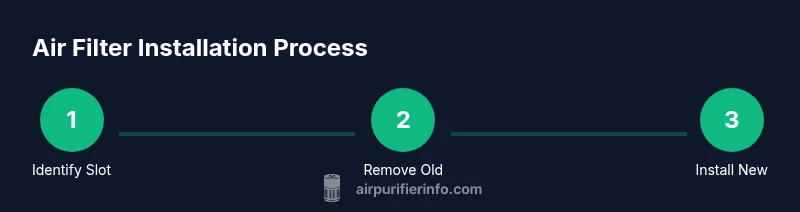
While the specifics vary by model, most installations follow a similar sequence: locate the filter compartment, remove the old filter, check for debris, insert the new filter with the correct orientation, reseal the compartment, and test for proper airflow. This block provides the high-level flow so you’re prepared to perform the exact steps later in the guide. Air Purifier Info emphasizes that taking time to verify the seal and fit prevents bypass leaks that allow unfiltered air to recirculate. For central HVAC units, avoid forcing a filter that’s too thick, which can stress the fan.
Confirm Proper Fit and Seal
After installation, inspect the seal around the filter. A loose or crooked fit creates bypass routes that defeat filtration. Turn the unit back on and check for even airflow from all vents. If you notice whistling, reduced airflow, or unusual noises, re-check the orientation and seating. Some systems have indicator lights or dashboards showing a filter status; consult your manual for exact cues. This step ensures you get the full performance benefits and helps protect your HVAC motor and purifier from unnecessary wear.
Maintenance, Troubleshooting, and Disposal
To keep performance high, replace filters on schedule, usually every 1-3 months for most homes depending on use, pets, and air quality. In dusty environments, you may need more frequent changes. When a filter is no longer clean, it should be disposed of in accordance with local waste guidelines. Washable filters require specific care; follow the manufacturer’s cleaning instructions and fully dry before reinstalling. If you notice persistent odors, check whether the filter is carbon-infused or replace with a new one. Upgrading to a higher quality filter can improve performance and help with allergies.
Authority Sources
- EPA Indoor Air Quality: Air Cleaners and Filters: https://www.epa.gov/indoor-air-quality-iaq/air-cleaners-and-air-filters
- U.S. Department of Energy: Energy Saver — Air Filters: https://www.energy.gov/energysaver/air-filters
- Harvard Health Publishing: Air Purifiers and Indoor Air Quality: https://www.health.harvard.edu/staying-healthy/air-purifiers-and-indoor-air-quality
Tools & Materials
- Replacement air filter (correct size and MERV rating)(Check model compatibility and orientation.)
- Screwdriver or prying tool (if needed to open housing)(Only if the panel is fastened.)
- Soft brush or microfiber cloth(Use to clean debris from housing.)
- Gloves or a mask (optional)(Reduce irritation when handling dusty filters.)
- Trash bag or container(Dispose of old filter properly.)
- User manual or model number (for reference)(Verify orientation and replacement interval.)
Steps
Estimated time: 25-45 minutes
- 1
Power down and locate filter housing
Power off the unit and unplug it. Open the access panel to locate the filter housing. This prevents electric shock and keeps you safe while handling the filter.
Tip: Have the manual handy to find the exact location of the filter slot. - 2
Remove the old filter
Carefully slide out the old filter. Note its orientation (which side faces inward) so you can mirror it with the new filter.
Tip: Take a quick photo for reference if your manual is not clear. - 3
Inspect the housing for debris
Look for dust and debris inside the compartment. Remove loose debris with a soft brush and wipe the area clean.
Tip: A dirty housing can impede airflow even with a new filter. - 4
Prepare the new filter
Verify the new filter’s size, thickness, and direction arrows. Confirm it matches the old filter and the unit’s requirements.
Tip: If it’s a carbon-activated filter, ensure the carbon layer is positioned correctly. - 5
Install the new filter with correct orientation
Slide the new filter into the housing with arrows pointing toward the airflow path. Make sure it sits evenly and fully inside the slot.
Tip: Avoid forcing; a tight fit is a sign of proper alignment. - 6
Re-seal and close the housing
Close the access panel and secure any latches or screws. Confirm the panel is sealed to prevent unfiltered air bypass.
Tip: A loose panel can cause air leaks and reduce filtration effectiveness. - 7
Restore power and test airflow
Plug the unit back in and turn it on. Check for consistent airflow from vents and listen for unusual noises.
Tip: If airflow is weak, recheck filter orientation and seating. - 8
Record the replacement date
Note the replacement date in a log or the unit’s calendar reminder. This helps schedule future changes.
Tip: Set a reminder for the next replacement based on usage. - 9
Dispose of the old filter properly
Place the used filter in a bag and dispose of it per local guidelines. Clean your hands after handling.
Tip: Wash hands or sanitize after handling dusty filters.
Questions & Answers
How often should I replace an air filter?
In most homes, replace every 1-3 months, depending on use, pets, and air quality. Check the device manual for exact guidance.
Most homes replace every one to three months, depending on usage and pets.
What type of filter is best for allergies?
A true HEPA or high-quality pleated filter with low resistance is typically best for allergen reduction. Ensure compatibility with your device.
HEPA or good pleated filters are usually best for allergies.
Can I wash disposable filters?
Disposable filters should not be washed; washable models require specific care per the manufacturer. Always follow the product instructions.
Disposable filters aren’t washable; follow the manual for washable types.
What if the filter doesn’t fit after replacement?
Do not force it. Measure the slot, verify orientation, and confirm the filter size. If it still doesn’t fit, contact the manufacturer or a service tech.
If it doesn’t fit, stop and check size and orientation.
Is it safe to install a filter with the unit powered?
Always unplug or switch off power before starting. For centralized systems, turn off at the breaker and follow the manual.
Power off before starting to install the filter.
How do I decide on a higher rated filter (MERV)?
A higher MERV captures more particles but may reduce airflow. Check system capacity and consult the manual before upgrading.
Higher MERV filters catch more dust but may affect airflow. Check compatibility.
Watch Video
Main Points
- Know your unit’s filter size and MERV rating.
- Power off before starting; avoid electric shock.
- Install with arrows facing the airflow.
- Check the seal for leaks after installation.
- Maintain a replacement schedule to protect air quality.