How to Clean an Air Filter Without a Kit: Step-by-Step
Learn how to safely clean an air purifier filter without a specialized kit. Dust, wash (if washable), dry thoroughly, and reinstall with confidence using practical, safe methods.


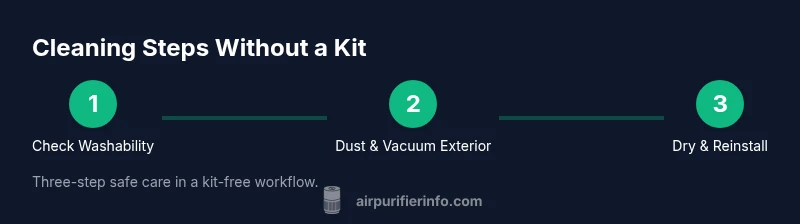
To clean an air purifier filter without a kit, first unplug the unit and inspect the filter for washability. If washable, rinse with lukewarm water and mild soap, then air-dry completely before reinstalling. If not washable, simply dust and vacuum the exterior, replace the filter if signs of wear appear. This guide covers safe, effective methods.
Understanding Filter Types and Safety Considerations
Before attempting any cleaning, it's crucial to know what kind of filter sits in your purifier. Some filters are washable; many are not. Washable filters tolerate gentle rinsing with lukewarm water and mild soap, while non-washable pleated media can be damaged by moisture. Always unplug the unit before touching any internal parts. Read the owner's manual or manufacturer labeling to confirm whether washing is permitted. According to Air Purifier Info, following the device's guidance protects your investment and preserves indoor air quality. The health of your family depends on keeping the filtration path clear and free from mold or residue. If you notice any warping, tears, or heavy buildup, plan to replace rather than attempt a risky cleaning. Handling an air filter with care reduces the chance of damaging the purifier and avoids introducing contaminants back into the air. Brand-new filters maintain airflow and efficiency, helping your room feel fresher and cleaner.
Can You Clean a Filter Without a Kit? What You Need to Know
Yes, in many cases you can clean a purifier filter without a specialized kit, but only when the filter is clearly labeled as washable. Without a kit, you should still rely on basic steps that avoid harsh chemicals or high-pressure jets. For non-washable filters, the safest option is to dust, vacuum gently, and replace when necessary. Air Purifier Info emphasizes using non-damaging methods that keep the filter media intact. Always check the filter frame for guidance. Avoid bending pleated media or saturating it with water. If the unit's manual specifies "do not wash," do not attempt water-based cleaning. When in doubt, or if odors persist after cleaning, a replacement filter is the best long-term solution to maintain indoor air quality.
What You’ll Need Before You Start (Tools and Materials)
Having the right tools ready helps you clean safely without a kit. Gather a vacuum cleaner with a brush attachment, a microfiber cloth, a basin or bowl, mild dish soap, lukewarm water, and a clean, dry place for air-drying. Optional items include a soft brush for stubborn dust, disposable gloves for hygiene, and a small fan to speed drying if the filter is known to be washable. Keep extra replacement filters on hand in case the filter media is damaged or not washable. Make sure to perform cleaning in a well-ventilated space and wear a mask if you are sensitive to dust. By preparing these items, you can work efficiently and minimize the risk of cross-contamination during cleaning.
Cleaning Methods You Can Use Without a Kit on Washable Filters
If your filter is labeled washable, start with dusting the exterior and the frame to remove loose debris. Use the vacuum's brush attachment at a low setting to avoid deforming folds. Then rinse under lukewarm water, using a mild soap if the label permits. Rinse away all soap and allow the filter to drain before drying. Never use hot water, high-pressure jets, or strong detergents that could degrade the media. After washing, press gently on the filter to remove excess water but avoid wringing. Place it in a warm, ventilated area away from direct sunlight until completely dry, which can take several hours to a full day depending on humidity.
Handling Non-Washable or Delicate Filters Safely
If the filter is not washable, or if you observe tears, warping, or heavy buildup, do not attempt water cleaning. Instead, vacuum the exterior surfaces and the housing to remove loose dust and debris. Replace the filter according to the purifier’s schedule—typically every 6 to 12 months, depending on use and air quality. When in doubt, contact the manufacturer for guidance. If odors linger after cleaning the housing area, consider replacing the entire filter assembly to ensure air quality remains high. Remember to reassemble carefully and ensure seals are snug to prevent bypass of unfiltered air.
Drying, Reinstalling, and Testing Your Filter
Always ensure the filter is completely dry before reinstalling. Reinsert the filter in the correct orientation, guided by arrows or labels on the housing. Reassemble the unit and run the purifier on a low setting for 5-10 minutes to ensure it is drawing air properly and not producing odd noises. If you notice moisture on the interior glass or housing, stop and re-check drying time. A properly dried filter improves efficiency and reduces the risk of mold growth.
Maintenance Schedule and How to Extend Filter Life
Create a simple maintenance routine: inspect the filter monthly for visible dirt, dust, or clogging; vacuum exterior as needed; wash only when safe; replace according to manufacturer guidance. Maintaining a clean environment around the purifier also helps reduce dust load. Keep the purifier away from high-humidity areas to slow moisture-related damage. By sticking to a routine, you can maximize air quality and minimize downtime.
Common Mistakes to Avoid and Quick Fixes
- Using hot water on non-washable filters can warp the media. - Ignoring drying times can lead to mold or odors. - Reinstalling a damp filter risks damp air and microbial growth. - Using harsh detergents or bleach can degrade filtration media and seals. For best results, stick to gentle dusting, confirm washability, and allow complete air-drying before reassembly.
Tools & Materials
- Vacuum cleaner with brush attachment(Low setting; use for exterior dust only)
- Microfiber cloths(Lint-free; use dry first, then damp if allowed)
- Basin or bowl(For rinsing if filter is washable)
- Mild dish soap(Gentle formula; avoid bleach)
- Lukewarm water(Avoid hot water that can warp media)
- Optional soft brush(For stubborn dust on exterior)
- Disposable gloves(Hygiene, especially for sensitive individuals)
- Replacement filter (on hand)(Useful if the current one is non-washable or heavily soiled)
Steps
Estimated time: Active work: 15-25 minutes; drying can take up to 24 hours depending on filter type and humidity
- 1
Unplug and Locate the Filter
Power off the purifier and unplug it from the wall. Open the housing and locate the filter compartment using the manufacturer’s guides or label indicators. Make a mental note of the filter’s orientation so you can reinstall it correctly.
Tip: If you’re unsure where the filter lives, consult the user manual or manufacturer site for a quick diagram. - 2
Remove the Filter Safely
Carefully lift the filter out without dragging it across dusty surfaces. Place it on a clean surface. Check for arrows showing airflow direction and note the orientation for reinstallation.
Tip: Hold the frame to minimize pressure on the pleated media; avoid bending or tearing the folds. - 3
Check Filter Label to Confirm Washability
Inspect the filter frame or edge for washing instructions. If it says washable, proceed with washing. If it states non-washable, skip to the drying/replacement steps.
Tip: If the label is unreadable, assume non-washable and avoid water exposure to protect the media. - 4
Dust and Vacuum Exterior Surfaces
Vacuum the outer surfaces and housing area to remove loose dust. This reduces debris that could contaminate the interior when reassembling.
Tip: Use a soft brush attachment to prevent damage to the filter’s edges. - 5
Wash (If Washable) with Lukewarm Water
Rinse the filter under lukewarm water and apply a small amount of mild soap if permitted. Rinse thoroughly to remove all soap and allow the filter to drain fully.
Tip: Do not use hot water or strong detergents that can degrade the filter media. - 6
Dry Thoroughly Before Reinstalling
Air-dry the filter completely in a warm, ventilated area. Do not use direct heat or sunlight; ensure no moisture remains before placing back into the unit.
Tip: You may use a gentle fan to speed drying if the filter is designed to be washable. - 7
Reinstall and Test
Reinsert the filter with the correct orientation and close the housing. Run the purifier on a low setting for 5-10 minutes to confirm airflow is normal and there are no unusual sounds.
Tip: If you detect musty odors or moisture, stop and re-check the drying time before normal use.
Questions & Answers
Can I clean any air filter without using a kit?
Not all filters are washable. Check the label or manual. If it says not to wash, avoid water-based cleaning and consider replacement.
Not every filter can be washed. Check the label or manual first, and replace if it says not to wash.
What should I do if the filter is very dirty after cleaning?
If dirt remains or airflow drops noticeably, replace the filter. Continued use of a dirty filter reduces air quality and purifier efficiency.
If it’s still dirty, replace the filter to protect air quality.
How can I tell if a filter is dry enough to reinstall?
A dry filter should feel dry to the touch and not bend. If in doubt, allow extra drying time in a warm, ventilated space.
Make sure it’s completely dry before reinstalling.
How often should I clean or replace the filter?
Frequency depends on use and air quality. Many purifiers suggest replacement every 6-12 months; cleaning can extend life when permitted by labels.
Check the manufacturer’s guidance for your model.
Is it safe to use soap and water on HEPA filters?
Only if the filter is explicitly labeled washable. Most HEPA pleated media are not washable and water can damage them.
Wash only if the label says washable; otherwise, avoid water.
What if I smell burning after cleaning the filter?
Power off immediately and inspect for damage. If the odor persists, stop using the purifier and replace the filter or consult the manufacturer.
If you smell burning, stop and check the unit.
Watch Video
Main Points
- Check filter label to determine washability.
- Unplug before handling to stay safe.
- Dry completely before reinstalling to prevent mold.
- Dust and vacuum exterior for non-washable filters.
- Replace when advised by the manufacturer to maintain air quality.