Can You Clean Filter in Air Purifier: A Complete How-To
Learn how to clean washable filters in air purifiers and when to replace non-washable ones. Safe, actionable steps, maintenance tips, and expert guidance from Air Purifier Info.


Yes—most air purifier filters can be cleaned in some cases, but it depends on filter type. Start by turning off and unplugging the unit, then check the manual to see if the filter is washable. If washable, rinse or brush off dust, dry completely, and reinsert. If not washable, replace the filter. Regular cleaning extends efficiency and air quality.
Why cleaning the filter matters
Dust, pollen, and pet dander accumulate in purifier filters over time, reducing airflow and filtration efficiency. If you’re wondering can you clean filter in air purifier, the answer depends on the filter type and model. According to Air Purifier Info, regular cleaning keeps performance high and extends filter life. Always unplug the unit before touching any interior parts, and consult the manual for washable vs non-washable options. In environments with heavy dust, pollen, or pet dander, more frequent checks are beneficial. A well-maintained filter helps maintain strong allergen reduction, odor control, and overall indoor air quality for households with kids, pets, or allergy sufferers.
Understanding filter types and cleaning feasibility
Most purifiers use one of several filter configurations: pre-filters, main filters (commonly HEPA or equivalent), and carbon/odor filters. Some are designed to be washed, while others are disposable. Washable pre-filters can often be brushed or rinsed; HEPA and activated carbon components are usually not washable and should be replaced when dirty. Air Purifier Info analysis shows that devices with washable pre-filters tend to maintain airflow better when cleaned regularly, but never attempt to wash components that are labeled non-washable. Check the product manual or manufacturer site for exact guidance; if unclear, treat as non-washable to avoid damage. For models that permit quick cleaning, you may vacuum the intake grille and remove surface dust. Understanding which parts are cleanable helps you tailor a maintenance routine that preserves filtration efficiency and indoor air quality.
When to clean vs when to replace
Filter life and cleaning frequency depend on usage, room size, and air conditions. If the unit exhibits reduced airflow, unusual odors, or increased noise after cleaning, inspect the filter and seals. Washable pre-filters can often be cleaned every 2-4 weeks in dusty environments, while main HEPA or activated carbon filters may require replacement every 6-12 months depending on use and air quality. Air Purifier Info analysis suggests tracking replacement dates and maintaining a simple log to avoid gaps. If you notice mold, discoloration, or persistent odors after cleaning, discontinue use and replace the filter. Do not attempt to reuse damaged filters. This approach keeps the purifier operating at peak efficiency and protects indoor air quality.
Quick overview of the cleaning approach (high-level)
Safety first: unplug and remove dust-laden parts. Then decide whether you’ll rinse or replace based on the filter type. For washable filters, use cool or lukewarm water and a mild rinse—avoid detergents unless the manual approves. Allow filters to air-dry completely before reinstalling. For non-washable filters, simply vacuum the surface to remove dust and replace when airflow slows. After reassembly, run the purifier on a high setting for 5-10 minutes to verify proper airflow and operation. Always follow the manufacturer’s guidelines to prevent damage.
Best practices and safety reminders
Always unplug before opening the unit, wear gloves if you have sensitivities, and avoid soaking non-washable filters. Do not use harsh chemicals or high-pressure rinses on components not labeled washable. Ensure everything is completely dry before reassembly and avoid placing the purifier in direct sun while drying, which can warp plastics. If mold or visible damage appears on a filter, replace it immediately. Regular cleaning reduces dust and odors and supports healthier indoor air; schedule checks at least every 4-8 weeks depending on environment. The Air Purifier Info team emphasizes following official guidelines for your specific model.
Maintenance rhythm and long-term care
Create a simple maintenance calendar tailored to your space. In hallways or rooms with pets or smokers, plan more frequent checks; in quieter bedrooms with light use, a quarterly cadence may suffice. Keep a small cleaning kit nearby: microfiber cloths, a soft brush, and a small container for rinsing if your model supports it. Periodically inspect the intake and exhaust grills for clogging, since dust can accumulate there even if the filter looks clean. For households with pets, consider more frequent checks and early replacement when you notice reduced airflow or odor transfer.
How to verify air quality after cleaning
If you have an air quality monitor, compare measurements before and after you clean or replace filters to confirm an improvement. Without a monitor, rely on the senses: fresher air, less visible dust, and fewer odors. A noticeable improvement often occurs within hours to a couple of days after cleaning or replacement. The Air Purifier Info team recommends tracking changes over 24-48 hours and adjusting your cleaning/replacement cadence as needed to maintain optimal air quality.
Tools & Materials
- Gloves(Nitrile recommended; protects hands from dust and moisture)
- Soft brush(Gentle bristles to lift dust without tearing material)
- Microfiber cloth(Lint-free for wiping surfaces without leaving fibers)
- Mild dish soap (optional)(Only if manual approves; use sparingly)
- Water, lukewarm(For rinsing washable filters; avoid hot water)
- Vacuum cleaner with brush attachment(To remove surface dust from grills and housings)
- Small screwdriver(If you need to access cover screws)
- Drying rack or clean surface(Air-dry washable filters completely)
Steps
Estimated time: 15-30 minutes
- 1
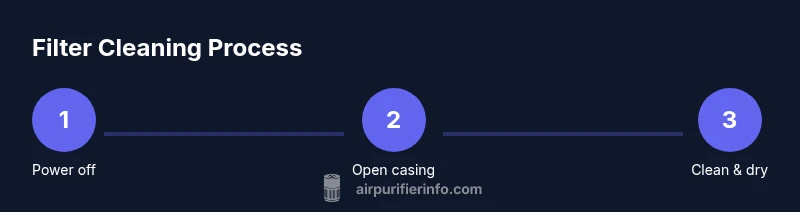
Power down and prepare
Unplug the purifier and move it to a well-lit, clean workspace. This prevents electrical shock and keeps dust contained as you access the filter.
Tip: Keep the purifier unplugged for at least 5 minutes after switching off to avoid residual power in the system. - 2
Open casing and locate filter
Remove the front panel or access door according to the manual. Identify the filter housing and note how the filter sits to ensure correct reassembly.
Tip: Take a quick photo of the filter orientation before removal to avoid misalignment. - 3
Remove filter safely
Carefully lift the filter straight out to avoid dislodging dust into the purifier or room. Place it on a protected surface for cleaning or replacement.
Tip: Do not shake dirty filters over furniture; work over a disposable sheet or tray. - 4
Decide on cleaning method
If the filter is labeled washable, rinse gently with cool or lukewarm water. If non-washable, proceed to replacement. Do not use high-pressure water or detergents unless the manual allows.
Tip: Always check the filter type before washing to avoid damage. - 5
Clean or replace the filter
Washable filters: rinse until water runs clear and gently shake out excess moisture. Non-washable: dispose of the filter according to local regulations and prepare a replacement.
Tip: Never wring a damp filter; allow it to air-dry completely before reinstalling. - 6
Dry and reinstall
If washable, lay flat on a drying rack in a well-ventilated area until completely dry. Reinsert the filter, reseal the housing, and reattach the panel.
Tip: Wait at least 1-2 hours of drying time to avoid moisture-related mold growth inside the unit. - 7
Test the purifier
Plug in the unit, power on, and run on a high setting for 5-10 minutes to ensure proper airflow and proper seal around the filter.
Tip: If you hear unusual noises or smell burning, power off and re-check the installation or consult support.
Questions & Answers
Can you clean the filter in all air purifiers?
No. Some filters are washable, but many are disposable. Always check the manual for your model before attempting cleaning.
Not all filters can be cleaned; check your model's manual to know if washing is allowed.
How often should I clean the filter?
Frequency depends on usage and environment. Inspect monthly and clean or replace according to the purifier's guidelines. In dusty or pet-heavy homes, more frequent checks are advised.
Depends on use and environment; inspect monthly and follow the manual for cadence.
Is cleaning the filter safe?
Yes, when the unit is unplugged and you follow the manual's instructions. Use gloves if desired and avoid moistening non-washable parts.
Yes, as long as you unplug first and follow the manual.
What if the filter looks damaged after cleaning?
Discontinue use and replace the filter. Damaged filters can allow unfiltered air and may release contaminants.
If damaged, stop using it and replace the filter immediately.
Can washing improve air quality?
Washing helps only for washable filters. Non-washable filters should be replaced to maintain air quality.
Only washable filters should be washed; otherwise replace.
Should I use soap on washable filters?
Only if the manual explicitly allows it. Generally, a plain rinse with water is sufficient and safer than using soap.
Only if the manual says it's OK; otherwise, just rinse with water.
How do I know when to replace a filter?
If airflow remains weak after cleaning or if odors persist, replace. Manufacturer guidelines provide replacement intervals based on usage.
Replace when airflow is still weak after cleaning or odors persist.
Can I clean multiple times between replacements?
Yes, for washable pre-filters; however, main filters generally need replacement on schedule. Over-cleaning a non-washable filter can cause damage.
You can clean washable parts between replacements, but don’t over-clean non-washable parts.
Watch Video
Main Points
- Unplug before touching any internal parts.
- Identify washable vs non-washable filters via manual.
- Ensure complete drying before reinstallation.
- Replace non-washable filters on schedule to maintain air quality.
- Regular cleaning sustains filtration efficiency and reduces odors.