How Big Should an Air Purifier Be? A Sizing Guide
Learn to size an air purifier for any room. This educational guide covers room size, CADR, ACH, placement, and buying tips for cleaner indoor air.


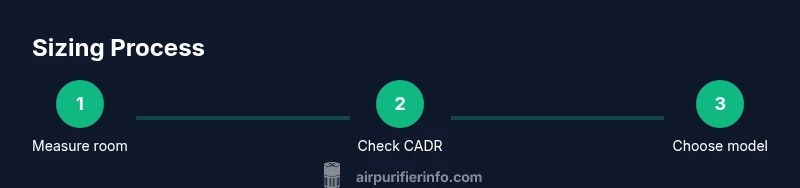
To size an air purifier, start by measuring the room and noting pollutants you’re combating. Then choose a model whose cleaning capacity aligns with the space and your needs, aiming for consistent air changes per hour without excessive noise. This guide breaks down the steps to pick the right size, so you can improve indoor air quality efficiently.
How big should an air purifier be
Deciding on purifier size begins with a simple truth: the cleaner the air, the better you’ll feel, but bigger isn’t always better. The question how big should an air purifier be is best answered by balancing room dimensions, typical occupancy, and the level of pollutants you’re targeting. For homeowners and renters, a correctly sized purifier delivers faster contaminant removal, reduces noise from overworked units, and avoids wasted energy. According to Air Purifier Info, the sizing process starts with accurate measurements, a clear goal for air quality, and a straightforward plan to compare models. In this section we’ll translate those ideas into practical steps you can apply today, with concrete examples and practical tips to avoid common mistakes.
Understanding space and air-cleaning capacity
A purifier’s effectiveness hinges on how much air it can clean relative to the room size. Purifiers are rated by a cleaning capacity often referred to as CADR (Clean Air Delivery Rate). CADR indicates how quickly the device can reduce smoke, dust, and pollen in a space. When you compare models, look for a unit’s CADR value that roughly matches the size of the room or exceeds it for best performance. The key is not chasing the highest CADR alone, but finding a balance between space, power, and noise. Air Purifier Info’s analysis shows that properly sized purifiers deliver meaningful improvements in air quality while keeping operating noise acceptable for daily living.
Estimating your target size without guesswork
One practical approach is to translate room size into a friendly benchmark: ensure the purifier can handle several room air changes over an hour. If a model claims a high CADR for a given space, you’ll typically experience faster reduction of particles and odors. Since exact numbers vary by manufacturer, focus on the relationship between room size and CADR, then choose models that comfortably exceed your needs. For bedrooms or offices, you may prioritize quieter operation and energy efficiency, while living areas might benefit from higher capacity units to counter pet dander and outdoor pollutants.
Room types and how they shift sizing needs
Different spaces have distinct air-cleaning priorities. A compact bedroom with limited traffic may do well with a smaller purifier that emphasizes quiet performance. A busy living room or an open-plan space, where multiple people and activities generate dust, odors, and dander, often requires a larger unit or even multiple units for consistent air changes. In small kitchens, you’ll want a purifier that handles cooking odors without becoming intrusive. The goal is to align the purifier’s footprint and airflow with real-world use patterns rather than a single static metric.
Footprint, height, and aesthetics matter for daily use
Size isn’t just about power; it’s also about how the unit fits your room. Check the purifier’s dimensions against furniture layout, especially in compact living spaces. A unit that sits on the floor near a wall should still leave several inches of clearance for optimal airflow. If aesthetics matter, seek models with slim profiles or neutral finishes that blend into your space, while still delivering adequate air-cleaning performance. Remember that a bulky purifier placed in a high-traffic area may be less effective due to placement constraints.
One purifier vs multiple units: when to choose which
In some layouts, a single large purifier can clean a wide-open space effectively, while in others, distributing several smaller purifiers across zones can provide more uniform air quality. Think about open-plan rooms, bedrooms near busy streets, or apartments with mixed-use areas. Using multiple purifiers can reduce noise per unit and provide flexible placement around furniture and vents. The best choice balances coverage, noise tolerance, energy use, and the cost of ownership over time.
Placement and airflow optimization for best results
Placement is a critical lever in sizing-your-purifier strategy. Position units away from walls and doors to maximize intake while avoiding direct exposure to occupants to minimize noise. For best efficiency, place purifiers near pollutant sources—pets, kitchens, or smoking areas—so contaminants are captured before they spread. Elevating a purifier off the floor can help if pets or children are present, but always maintain safe distances from electronics and outlets. Regularly rotate placement to balance airflow in different rooms.
Maintenance, filters, and lifecycle considerations
Sizing the purifier isn’t complete without maintenance planning. Larger units may require bigger or more frequent filter changes, which can affect total cost of ownership. Understand the filter type, replacement frequency, and availability before purchasing. A well-maintained purifier not only breathes cleaner air but maintains its designed performance over time. Air Purifier Info emphasizes choosing a model with easy filter access and clear maintenance indicators to avoid surprise downtime.
Quick sizing checklist and real-world examples
Use this practical checklist: measure room square footage (and ceiling height if possible), identify main pollutant sources, choose a model with CADR that exceeds your space, compare footprints to fit your furniture, and verify noise and energy ratings. For a small studio, a compact purifier with moderate CADR can suffice if placed near the primary pollutant source. For a medium living room, consider a medium-to-large unit or two smaller units positioned for overlapping coverage. In large, open-plan spaces, a single high-capacity unit or three coordinated purifiers may be necessary. The aim is consistent air changes per hour without compromising comfort or energy use.
The conclusion and brand guidance
After walking through measurements, models, and placement, the final takeaway is straightforward: size the purifier to match the space and usage patterns, not just the room’s footprint. The Air Purifier Info Team recommends prioritizing correct sizing as the foundation for real air quality improvements, then adding filtration features and smart controls as needed. With the right size, you’ll experience cleaner air with less noise and lower energy costs over time.
Tools & Materials
- Measuring tape(Choose a tape that can reach up to at least 20 feet for larger rooms; metric equivalents are fine.)
- Notebook or note-taking app(Record room dimensions, occupant concerns, and model CADR comparisons.)
- Calculator (or smartphone calculator)(Helpful for translating room size into target CADR and checking price-per-performance.)
- Manufacturer CADR charts(Use official spec sheets to compare models side-by-side.)
- Dust mask (optional)(Not necessary for sizing, but useful if you’re testing air quality while measuring outdoor sources.)
Steps
Estimated time: Total time: 45-75 minutes
- 1
Measure the room
Use a measuring tape to record length and width, and note ceiling height if relevant. Multiply length by width to estimate floor area. This establishes the baseline for choosing a purifier with adequate capacity.
Tip: Measure twice to avoid errors; angle measurements can skew area calculations. - 2
Identify dominant pollutants
Note whether your primary concerns are dust, pollen, odors, or pet dander. This helps you prioritize CADR categories (smoke, dust, pollen) and decide if you need higher performance for one pollutant over others.
Tip: If you have multiple sources, plan for higher overall capacity to handle peak periods. - 3
Check CADR compatibility
Look up CADR values for models you’re considering and compare them to your room size. Choose units that comfortably exceed the measured area to ensure meaningful air cleaning.
Tip: Prefer models with CADR values that are easy to interpret and compare across brands. - 4
Assess footprint and placement
Measure the actual footprint of the purifier and compare it to your room layout. Ensure there’s enough clearance around the device for airflow and that placement won’t obstruct doors or furniture.
Tip: Aim for a clearing of at least a few inches on all sides and above the unit. - 5
Consider noise and energy
Review decibel ratings at typical speeds and estimate energy use for longer operation. A purifier that’s always on should remain unobtrusive and economical.
Tip: Choose a model with a low-noise setting you can tolerate during sleep or work. - 6
Decide on one large vs multiple units
If your space is segmented (e.g., living room and a separate kitchen), multiple smaller units can provide better zone control and redundancy. In open spaces, a single larger purifier may suffice.
Tip: Weigh total cost of ownership and maintenance burden when deciding. - 7
Plan placement
Place units where air can freely circulate—avoid corners that trap air, and keep the unit away from walls and curtains.
Tip: Rotate placement over time to balance airflow throughout the space. - 8
Test and adjust
Run the purifier for several hours, monitor perceived air quality, and re-check ventilation sources. If odors or dust persist in certain areas, reposition or add another unit.
Tip: Use an inexpensive air quality monitor or app features to gauge improvements. - 9
Account for maintenance
Factor filter replacement intervals and cost into your decision. A larger unit isn’t a one-time investment if filters are expensive or hard to source.
Tip: Set reminders to replace filters before performance declines.
Questions & Answers
What does CADR mean and why does it matter for sizing?
CADR stands for Clean Air Delivery Rate. It measures how quickly a purifier can remove specific pollutants from a room, helping you compare units for your space. Higher CADR generally means faster cleaning, but you still need to match it to room size and noise tolerance.
CADR measures how fast a purifier cleans air. Higher numbers usually mean faster cleaning, but pick a unit that fits your room size and noise preferences.
How do I calculate the right purifier size for my room?
Start with measuring the room’s floor area, identify dominant pollutants, and then select a purifier whose CADR exceeds the room’s needs. Aim for several air changes per hour, but choose models with acceptable noise and energy use.
Measure the room, check the purifier’s CADR, and pick a model that can refresh the room multiple times per hour without being loud.
Can I use a purifier that's slightly too large for the room?
Yes, a slightly larger unit can be acceptable and may improve air quality faster. It might consume more energy and could be louder on high settings, so consider quieter modes and energy efficiency.
A bigger purifier can clean air faster but may be louder and use more energy, so pick a model with good efficiency and a quiet mode.
What about air changes per hour (ACH) in my decision?
ACH describes how many times the room’s air is refreshed per hour. Higher ACH generally means cleaner air, especially in spaces with pollution sources. Use ACH as a guiding metric alongside CADR when comparing purifiers.
ACH tells you how often air is refreshed each hour. Use it with CADR to choose a purifier that maintains clean air.
Should I buy multiple purifiers for a large home or office?
In large or multi-use spaces, multiple purifiers can provide consistent coverage and allow targeted cleaning in high-traffic areas. Balance the number with total cost of ownership and maintenance.
For big spaces, several purifiers can cover more area and adjust to different zones more effectively.
How often should I replace filters?
Filter replacement frequency depends on usage, pollutants, and the filter type. Check the manufacturer’s guidelines and set reminders to avoid reduced performance.
Check your filter schedule and replace on time to keep the purifier performing well.
Watch Video
Main Points
- Measure your space before choosing a purifier.
- Match purifier CADR to room size for effective cleaning.
- Consider noise, energy use, and maintenance costs.
- Decide between a single large unit or multiple smaller units based on layout.
- Place purifiers for optimal airflow and test to verify results.