Difference Between Air Purifier and Humidifier for Baby: A Practical Guide
A detailed, data-informed comparison of air purifiers vs humidifiers for babies. Learn when to use each device, safety tips, and practical setup for a healthier nursery.


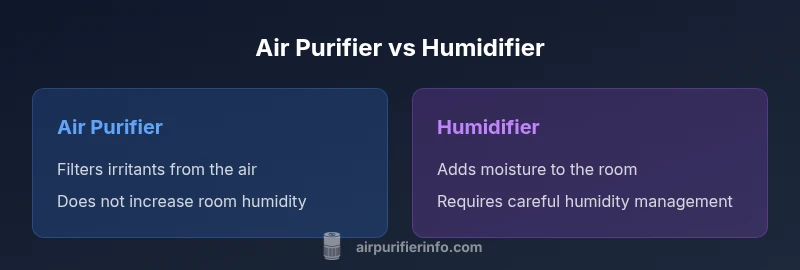
Difference between air purifier and humidifier for baby: An air purifier primarily filters the air to remove dust, pollen, pet dander, and odors, improving overall air quality. A humidifier adds moisture to the room, which can reduce dryness in the nose and throat. For nurseries, prioritize an air purifier to cut irritants, and use a humidifier only when humidity is low and carefully monitored. Always follow manufacturer safety guidelines.
Why the difference matters for babies
Understanding the difference between air purifier and humidifier for baby is critical for nursery safety and comfort. According to Air Purifier Info, babies are especially sensitive to airborne irritants, so filtration can significantly reduce exposure to dust, pollen, pet dander, and odors that trigger coughing or congestion. In contrast, a humidifier addresses moisture in the air, which can relieve dryness in the throat or nasal passages. However, excess humidity can foster mold growth or dust mites, offsetting benefits. By recognizing that these devices perform distinct jobs, caregivers can design a layered approach to improve indoor air quality while maintaining appropriate humidity levels for infants.
Key definitions: air purifier vs humidifier
An air purifier is a filtration device that pulls room air through a filter system, catching particles such as dust, pollen, pet dander, and smoke odors. A humidifier is a moisture-increasing device that releases a fine mist or cool fog to raise humidity in a closed space. In nurseries, the purifier's job is air quality improvement, while the humidifier's job is humidity management. Some devices combine features, but most babies benefit from a primary focus on filtration with humidity added only when needed and carefully monitored.
The nursery air quality landscape: what to expect
In a typical baby's room, airborne irritants accumulate from outside pollen, indoor dust, skin cells, and household fibers. An effective air purifier reduces the concentration of these irritants, supporting easier breathing, fewer nighttime coughing episodes, and potentially fewer allergy-like symptoms. A humidifier, when used correctly, can alleviate dryness that makes nasal passages feel irritated. The key is to tailor each device to a real need rather than treating moisture or filtration as a single solution. Air Purifier Info emphasizes that a well designed nursery plan includes both components only when used safely and intentionally.
Safety considerations for infants
Choose devices with proven child friendly safety features such as auto shut off, low risk of heating, and sealed reservoirs. For air purifiers, avoid filters with ozone generation or ionizers that produce ozone. Pick a purifier with true HEPA filtration and a cleanable prefilter. For humidifiers, use distilled water or demineralized water to avoid mineral dust, clean the reservoir daily, and empty the tank when not in use. Keep devices out of reach of curious babies, and do not place units directly beside the crib. Monitor humidity with a baby safe hygrometer to keep levels within a safe range to reduce respiratory irritation.
When to choose one over the other
If your main concern is irritants and allergens in the baby’s environment—dust, pollen, pet dander, odors—prioritize an air purifier. If you notice persistent dryness of the nasal passages, lips, or throat, a humidifier can help, especially in dry climates or during winter months. For many nurseries, a two step approach works: use the purifier as the primary tool and add a humidifier only when humidity measurements indicate a need, maintaining safe levels. Always pick devices appropriate for baby use and maintain them meticulously.
Placement, setup, and daily use
Place air purifiers on the floor or a sturdy dresser away from the crib, ideally behind a door or wall to reduce direct airflow into the sleeping area. Humidifiers should sit on a stable surface at least a few feet from the crib and away from direct line of sight of a sleeping infant. Both devices should be easy to reach for cleaning, with cords managed to prevent pulling. Run the purifier continuously during sleep periods if possible, and only run a humidifier when humidity trends show dryness. Regular cleaning and filter changes are essential for both devices to avoid mold, bacteria, or mineral buildup.
Maintenance you can't ignore
Filter upkeep for air purifiers is crucial; follow the manufacturer’s replacement schedule and clean the prefilter frequently to maintain airflow. Humidifier maintenance focuses on daily reservoir cleaning, mineral deposit removal, and using only clean water to minimize white dust. Keep a cleaning calendar and set reminders for when to inspect seals, replace filters, or drain water. A poorly maintained unit can become a source of contaminants rather than a solution for your baby’s room.
Myths vs reality: common misconceptions
Myth: A humidifier alone will fix all breathing problems in babies. Reality: Dry air can irritate the nose, but without filtration, irritants remain. Myth: All humidifiers are safe for babies. Reality: Some models release minerals or bacteria if not cleaned. Myth: Bigger is always better. Reality: Room size, placement, and air turnover matter just as much as device capacity.
Combining both devices: best practices
If you need both devices, use them with clear boundaries: run the purifier to remove irritants, and add humidity only when the room’s relative humidity is below safe levels. Ensure the humidifier does not over-humidify, keeping humidity in a comfortable range. Use a hygrometer to monitor levels and adjust operation accordingly. Maintain both devices religiously to prevent cross contamination or mold growth.
Nursery setup checklist
- Choose a baby-safe air purifier with true HEPA filtration. - Keep the humidity at a comfortable level using a hygrometer. - Place devices away from the crib and out of reach. - Clean regularly and replace filters on schedule. - Use distilled water in humidifiers to minimize mineral buildup. - Regularly inspect wiring and water reservoirs for safety.
Cost and value considerations in the long run
Initial purchase cost varies by model, but the long-term costs include filter replacements and maintenance. Budget to mid-range purifiers generally provide reliable filtration with reasonable ongoing costs, while premium humidifiers offer advanced features but higher upkeep. In a nursery, the value comes from improved air quality and reduced irritants for sensitive babies, not merely feature count.
Quick-start nursery air quality plan
Start with a high-quality air purifier suited for a small room, monitor air quality for two weeks, and add a humidifier if dryness signs persist. Maintain both devices with a simple cleaning routine and set up a Baby Safety checklist to track maintenance and placement. Air Purifier Info recommends documenting changes and outcomes to refine your plan over time.
Comparison
| Feature | Air Purifier | Humidifier |
|---|---|---|
| Primary purpose | Filters airborne irritants to improve air quality | Adds moisture to air to raise humidity |
| Impact on humidity | Does not increase room humidity | Increases room humidity when active |
| Best for | Babies with allergen or irritant concerns | Babies with dry nasal passages or winter dryness |
| Maintenance considerations | Filter replacements and regular cleaning | Reservoir cleaning; potential mineral buildup; some models require filter care |
| Safety notes | Ensure ozone-free operation and proper placement | Avoid mold risk by cleaning and using distilled water |
| Noise and energy | Typically low to moderate noise; energy efficient | Usually low energy; consider water usage and tank size |
What's Good
- Reduces infant exposure to dust, allergens, and odors
- Addresses sleep-disrupting irritants more reliably
- Provides clearer air without increasing moisture when not needed
- Longer-term maintenance is straightforward with routine cleaning
What's Bad
- Humidifiers can promote mold or mineral dust if overused
- Humidifiers require daily reservoir cleaning and water management
- Air purifiers do not fix dryness and may incur ongoing filter costs
- Some models generate noise that can disturb sleep in very quiet nurseries
Prioritize air purification for most nurseries; use humidity control only when dryness is evident and monitored.
An air purifier directly reduces irritants that commonly trigger breathing issues in infants. Humidifiers are helpful for dryness, but carry growth and contamination risks if misused. A careful, layered approach yields the best overall baby safety and comfort.
Questions & Answers
What is the primary difference between air purifiers and humidifiers for babies?
Air purifiers remove particles from the air, improving overall air quality. Humidifiers add moisture to the air to relieve dryness. For babies, filtration helps with irritants; humidity helps with dryness, but must be controlled to avoid mold, bacteria, or excess moisture.
Air purifiers filter air to reduce irritants; humidifiers add moisture. Use filtration first, humidity second when needed.
Can a single device cover both filtration and humidity?
Some devices offer combined features, but babies may benefit from a dedicated purifier and a separate humidifier for safer, more precise control. Check safety certifications and ensure the unit is designed for infant environments.
Some combo devices exist, but a separate purifier and humidifier gives better control for babies.
What features should I look for in a baby-safe air purifier?
Look for true HEPA filtration, sealed construction, easy-to-clean parts, and no ozone emission. Quiet operation, auto mode, and a filter replacement indicator help with child-friendly use.
Choose a purifier with true HEPA, no ozone, and easy cleaning.
Are humidifiers safe for babies?
Humidifiers can be safe when used with distilled water, regular cleaning, and proper humidity control. Avoid warm mist models around children and ensure the device is kept away from the crib.
Humidifiers can be safe if cleaned regularly and used with care.
Where should I place devices in the nursery?
Place purifiers on the floor or a dresser away from the crib, with good airflow. Humidifiers should be on a stable surface, away from the crib, not directly beside the sleeping area.
Keep devices away from the crib and out of reach, with good airflow.
How do I avoid mold and bacteria growth in humidifiers?
Use distilled water, clean the reservoir daily, thoroughly dry between uses, and replace the device if staining occurs. Regularly inspect for mineral buildup and clean all parts.
Clean daily with distilled water and dry thoroughly to prevent mold.
Main Points
- Prioritize air purification to reduce irritants in the nursery
- Use humidity control only when dryness is clearly present
- Regular maintenance is essential to prevent mold and contamination
- Place devices away from the crib and monitor with a hygrometer
- Consider a two-step setup rather than relying on one device alone