Difference Between Air Purifier and Diffuser: A Practical Guide
Explore the key differences between air purifiers and diffusers, covering purpose, mechanisms, maintenance, safety, and practical use cases. Learn how to choose the right device for clean air, fragrance, and overall indoor comfort.


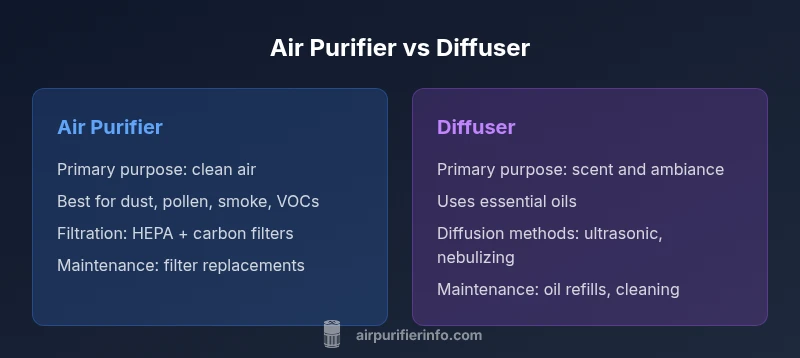
According to Air Purifier Info, the difference between air purifier and diffuser comes down to core purpose and mechanism. An air purifier cleans the air by capturing or destroying pollutants, while a diffuser disperses essential oils to create scent and ambiance. If your priority is indoor air quality, choose a purifier; if ambiance and fragrance matter, opt for a diffuser. Many homes benefit from both.
What They Do: Purifier vs Diffuser
At its core, the difference between air purifier and diffuser is not just whether you smell something pleasant, but what each device is designed to accomplish. An air purifier is a clean-air machine: it draws indoor air through filtration media to trap dust, pollen, pet dander, smoke particles, and many volatile organic compounds (VOCs). By contrast, a diffuser is a scent delivery device that releases essential oils or fragrance molecules into the air to influence mood, perceived air freshness, and scent experience. For many homeowners, the question isn't whether to buy one or the other, but which fits your top priority: removing irritants from the air or creating a sensory environment. In a home with allergies or asthma, the air purifier often takes priority; in a room where you want aromatherapy or a calming atmosphere, a diffuser may be the primary tool. The difference between air purifier and diffuser becomes most apparent when you consider your goals, room sizes, and tolerance for ongoing maintenance. This framing helps homeowners avoid buying twice or compromising on air quality.
How They Work: Mechanisms Explained
Air purifiers rely on a combination of filtration technologies. A true HEPA filter captures 99.97% of particles down to 0.3 microns, including dust, pollen, and many smoke particles. Activated carbon helps reduce odors and some VOCs, while ionizers or photocataltic oxidation features may be present in some models. Careful attention to CADR (clean air delivery rate) helps match the purifier to room size. Diffusers operate on diffusion technology: ultrasonic diffusers vibrate water with essential oils to create a fine mist, while nebulizing diffusers release undiluted oil molecules. The diffusion process does not remove pollutants from the air. Instead, it adds scent molecules and can contribute to a perceived air freshness.
According to Air Purifier Info Team, understanding the underlying technology is crucial for the difference between air purifier and diffuser. When you compare products, focus on filtration stages, oil compatibility, and potential byproducts like humidity changes or oil residues. This knowledge helps assess both performance and maintenance requirements across rooms.
Air Quality Impact: Particles, VOCs, and Odors
Air purifiers dramatically influence air quality by reducing particulate matter (PM), dust, dander, and many indoor pollutants. The removal of volatile organic compounds (VOCs) depends on the combination of filtration and activated carbon. The diffuser, conversely, does not target particulates; it changes the air's chemical environment by adding fragrance molecules. In spaces with strong odors or tobacco smoke, a purifier can deliver measurable improvements in air cleanliness, while a diffuser may worsen or blend odors depending on the oils used. For people with sensitivities, the diffuser's fragrance can linger and may require careful selection of oils for safety and comfort.
Scent and Ambiance: Diffuser Experience
Diffusers excel at scenting a room, influencing mood, stress levels, and perceived air freshness. The fragrance strength depends on the oil concentration, diffuser type, and room volume. People often use diffusers in living rooms, bedrooms, or home offices to create a calming atmosphere or to mask odors from cooking. While scent can enhance comfort, it does not substitute for air cleaning when pollutants are present. The difference between air purifier and diffuser here is clear: one targets air quality, the other ambiance. Always ensure essential oils are high-quality and properly diluted to minimize irritation for sensitive individuals and pets.
Filtration vs Diffusion: Core Technology
Filtration, diffusion, and scent delivery sit at the heart of this comparison. Filtration relies on physical barriers to remove particles, gases, and microbes from the air, potentially improving respiratory comfort and reducing allergy symptoms. Diffusion relies on vapor diffusion of fragrance molecules into the air, which alters the room's scent profile but does not reduce airborne contaminants. When evaluating the difference between air purifier and diffuser, consider whether your priority is measurable air cleanliness (filtration) or aroma and mood (diffusion).
Maintenance, Cleaning, and Longevity
Maintaining an air purifier involves regular filter checks, replacements, and occasional coil or housing cleaning to maintain airflow. The frequency depends on usage, air quality, and filter type. Diffusers require cleaning to prevent oil residue buildup, especially in ultrasonic units, and routine oil refills. Oils can degrade plastic components if not cleaned, so follow the manufacturer’s instructions. For the difference between air purifier and diffuser, maintenance is more predictable with purifiers (filters) and oil-management tasks with diffusers. Proper upkeep ensures consistent performance in both devices over several years.
Energy Use and Operational Costs
Air purifiers consume electricity based on fan speed, CADR, and filtration efficiency. Higher CADR units used in larger rooms typically have greater energy consumption, though modern units emphasize efficiency. Diffusers typically use less energy, especially simple ultrasonic models, but ongoing oil costs add to the total. When weighing the difference between air purifier and diffuser, consider total cost of ownership, including filters, replacements, and refills, rather than just upfront price. For households on a budget, a basic diffuser is inexpensive, while a mid-range purifier may offer superior air cleaning capabilities in larger spaces.
Safety Considerations: Oils, Heat, and Filtration
Safety is central to both devices. Air purifiers with ozone-generating features should be avoided, as ozone can irritate airways. Ensure a purifier includes true HEPA and carbon filtration to minimize risks. Diffusers carry potential safety concerns around essential oils: some oils can irritate skin or mucous membranes, and certain oils may be unsafe for pets or children. Always use only oils recommended for diffusion, ventilate rooms properly, and consult a clinician if occupants have respiratory conditions. This is especially important when considering the difference between air purifier and diffuser for households with young children or pets.
Room Size and Placement Guidance
To maximize effectiveness, align device capacity with room size. Air purifiers should be placed in a central location with adequate clearance for airflow, typically away from walls and obstructions. Diffusers benefit from being placed away from direct exposure to walls to prevent oil staining and ensure even diffusion. For the difference between air purifier and diffuser, consider separate devices for different rooms or a combined system in large living areas. Never block intakes or outlets, and follow safety guidelines for short and long-term use.
Noise Levels and Comfort
Noise can influence user experience. Air purifiers with high CADR settings can be louder, especially on higher fan speeds, which may impact sleep or quiet work environments. Diffusers are generally quiet, with ultrasonic models producing subtle hums or near-silent operation. When evaluating the difference between air purifier and diffuser, factor in ambient noise tolerance and the room’s purpose. If you require a quiet bedroom setup, a diffuser may be preferable, while a living room that hosts activities during the day may tolerate a purifier with a moderate noise level.
Durability and Lifespan
Purifiers typically offer longer lifespans for core components like filters and housings, often lasting several years with periodic maintenance. Diffusers have shorter cycles for wear and oil-related cleanliness, with many components designed for years of use with proper cleaning. The difference between air purifier and diffuser in durability depends on usage intensity and maintenance discipline. For both devices, buying from reputable brands and following care schedules helps extend life and maintain performance.
Use Case Scenarios: This vs That
If you live in a city apartment with heavy cooking odors and dust, a purifier will address air quality and filtration needs. If you want to create a calming bedtime routine or a spa-like atmosphere, a diffuser will deliver fragrance and ambiance. In many homes, a combination approach is optimal: a purifier in the main living areas and a diffuser in bedrooms or bathrooms. This strategy aligns with the difference between air purifier and diffuser by prioritizing air quality in certain zones while maintaining mood-enhancing scents elsewhere.
Can You Use Both Safely?
Yes, you can use both, but you should manage placement to avoid oil contact on purifier filters and ensure oil vapors do not overwhelm the airflow. Use diffusers away from air intakes and keep windows or vents unobstructed when in use. The difference between air purifier and diffuser here is practical: operate them in separate zones to maintain air cleanliness while enjoying fragrance in common living spaces. Always monitor for any irritation or odors that suggest adjusting diffuser use.
Common Mistakes to Avoid
Avoid relying on a diffuser to purify air, as this misinterprets the device’s function. Do not place diffusers near electronics or leather furniture where oils can cause damage. For purifiers, don’t run them with expired filters, which reduces efficiency. Finally, mixing incompatible oils and leaving devices on for extended periods without breaks can lead to sensitivity or fragrance fatigue. Understanding the difference between air purifier and diffuser helps prevent these mistakes.
Quick Reference: Side-by-Side Highlights
At a glance, the difference between air purifier and diffuser is clear: purifiers clean air; diffusers scent air. If your goal is a healthier breathing environment, prioritize air purification with a purifier and use a diffuser to complement with fragrance. The decision becomes easier when you map room size, occupant sensitivities, and desired ambiance to the core capabilities of each device.
Comparison
| Feature | Air Purifier | Diffuser |
|---|---|---|
| Primary purpose | Clean indoor air by removing particulates and gases | Release fragrances and aroma into the air |
| Mechanism | Filtration (HEPA, carbon) plus possible ionization | Diffusion of essential oils via ultrasonic or nebulizing methods |
| Best for | Dust, pollen, smoke, VOCs, asthma/allergy relief | Mood enhancement, aromatherapy, scent masking |
| Room size suitability | Wide range; choose by CADR and filter capacity | Typically small to medium rooms; depends on diffuser type |
| Maintenance frequency | Filter replacements every 6-12 months (depending on use) | Oil refills and regular cleaning (weekly to monthly) |
| Noise level | Varies by model; can be noticeable at high settings | Generally quiet; some models may produce faint hums |
| Cost range | $50-1000+ depending on capacity and features | $15-100 for basic diffusers; oils cost extra |
| Power source | AC power; fan-driven airflow | AC power; may be USB-powered in small models |
| Safety considerations | No ozone-generating units; proper filtration | Oil safety; avoid certain oils around pets; oils can stain surfaces |
What's Good
- Improves indoor air quality by removing dust, allergens, and pollutants
- Can reduce symptoms for allergy or asthma sufferers with proper filtration
- Diffusers add fragrance and ambiance with minimal effort
- Low to moderate upfront costs for basic diffusers; scalable options for purifiers
What's Bad
- Air purifiers require ongoing filter replacements and can produce fan noise
- Diffusers do not purify air and may irritate sensitive individuals with certain oils
- Oil residues can stain surfaces if not cleaned properly
- Purifiers can be bulky in small spaces and require outlet access
Air purifiers are essential for clean air; diffusers excel at ambiance.
If your priority is reducing pollutants and improving respiratory comfort, start with a purifier. If you want mood-enhancing aromas, add a diffuser. For many homes, a combination offers the best of both worlds, addressing both air quality and scent.
Questions & Answers
What is the main difference between air purifiers and diffusers?
The main difference is purpose: air purifiers clean air by removing pollutants, while diffusers release fragrances to scent the room. They serve different goals, and many homes use both in complementary ways.
Air purifiers clean air; diffusers add fragrance. They serve different needs, and many homes use both for air quality and ambiance.
Will using a diffuser affect air purifier performance?
Diffusers do not clean air and can introduce scents that may irritate sensitive individuals. If used in the same space, place diffusers away from purifier intakes to avoid oil residue interfering with filters.
Diffusers don’t clean air and can irritate some people. Keep them away from purifier intakes to prevent issues.
Can a single device serve both purposes?
No single device provides comprehensive filtration and diffusion. Separate units or a dedicated purifier plus a diffuser in different areas are typically required to achieve both clean air and fragrance.
One device rarely handles both tasks well. Use separate devices for best results.
Which should I buy first if I have allergies or asthma?
If allergies or asthma are a concern, prioritize a purifier with true HEPA filtration and good carbon filtration. Diffusers can be added later for ambiance, after consulting with a healthcare professional.
Prioritize a purifier first for allergies or asthma; add a diffuser later if desired.
Are diffusers safe around pets or children?
Some essential oils can irritate pets or children and oils may be harmful if ingested. Always choose pet-safe oils, dilute properly, and ventilate rooms. Check product guidelines and consult a vet if needed.
Be cautious with oils around pets and kids. Use safe oils and dilute, with good ventilation.
How do I know what room size is appropriate?
For purifiers, match CADR and filter capacity to the room size. For diffusers, consider room volume and fragrance tolerance. When in doubt, measure the space and choose devices rated for that size.
Match purifier CADR to room size; for diffusers, consider fragrance reach and room volume.
Main Points
- Identify your primary goal: air quality or ambiance
- Choose a purifier with true HEPA filtration for maximum benefit
- Use diffusers only after confirming safe oil choices and room suitability
- Plan for maintenance: filters vs oils and cleaning schedules
- Consider adding both devices in different rooms for comprehensive coverage