Breathe Air Purifier: Choose, Use, Maintain
Learn how to select a breathe air purifier, place it for maximum effectiveness, and maintain filters to reduce dust, odors, and allergens. Air Purifier Info guides homeowners and renters with practical, safe steps for better indoor air quality in 2026.


By the end of this guide, you'll know how to select, place, and operate a breathe air purifier to improve indoor air quality. You'll understand which filtration stages matter most—like HEPA and activated carbon—and how to size a unit for your room. Air Purifier Info's team designed this practical, step-by-step approach for homeowners and renters.
What is a breathe air purifier and why it matters
A breathe air purifier is a device designed to filter the air you breathe, removing dust, pollen, pet dander, smoke particles, and odors from indoor spaces. For homeowners and renters, these devices are powerful allies for reducing exposure to common indoor pollutants. The term 'breathe air purifier' emphasizes a practical tool you can deploy in daily life to improve comfort and health. According to Air Purifier Info, properly selected and placed purifiers can lower the concentration of irritants in rooms where people spend time. This matters most in bedrooms, living rooms, home offices, and spaces where children or pets play. In 2026, the Air Purifier Info Team notes that outcomes depend on filtration stages, room size, and consistent use. The goal is not perfection, but a meaningful reduction in airborne irritants that can worsen allergies, asthma, or sensitivity to odors.
How air purifiers filter the air
Most purifiers use a combination of filters and design features to remove contaminants from the air. The core component is a true HEPA filter, which captures small particles such as dust, pollen, and pet dander. A secondary stage, often activated carbon, traps odors and many volatile organic compounds (VOCs). Pre-filters catch larger particles and protect the main filter, extending its life. Some models include optional ionizers or UV-C technology, but these features vary in effectiveness and may affect safety and maintenance. CADR (clean air delivery rate) is a key metric that helps you compare units, but real results depend on room size and placement. For many households, a combination of HEPA and activated carbon provides the best balance of particle removal and odor control. Air Purifier Info analysis emphasizes that the practical value comes from consistent use and correct sizing rather than chasing the newest feature.
Key features to compare when buying
When shopping for a breathe air purifier, consider size, filtration, noise, energy use, and ease of maintenance. Start with the room size and match to CADR; larger spaces require higher CADR. Look for true HEPA filtration (preferably H13) and a dedicated activated carbon or specialty filter for odors. Check how often filters need replacement and whether the model has washable pre-filters. Noise level matters for bedrooms and home offices; many models offer a silent or sleep mode. Energy efficiency matters for longer use. Smart features such as timers, auto mode, and air-quality sensors can help you maintain a steady standard of air quality.
Room sizing, placement, and setup
Optimal placement avoids blocked air intake or exhaust. Place the purifier where clean air can circulate freely, usually 3-6 feet from walls and away from corners. If possible, position it in the main living area or near sources of pollutants, such as a smoker's area or a dusty workspace, to maximize impact. For multi-room homes, consider at least one purifier per 300-500 square feet of living space or follow the manufacturer’s room size guidelines. Keep doors open when possible to improve cross-ventilation. Connect to a reliable power source; avoid extension cords that create a tripping hazard.
Maintenance, filters, and safe operation
Maintain your breathe air purifier by following the manufacturer's filter replacement schedule and cleaning instructions. Replace HEPA and carbon filters as recommended; pre-filters can be washed or vacuumed to extend the main filter's life. Keep the housing clean and dry; never operate the device if it shows signs of moisture leakage or unusual noise. If the purifier emits strange odors or smoke-like fumes, turn it off and contact support. Air Purifier Info's guidance emphasizes checking seals and gaskets to prevent leaks.
Practical setups for common rooms
Bedroom: A quiet purifier with a low-profile footprint on a nightstand or dresser can improve sleep quality by reducing allergens and nighttime odors. Living room: A larger unit near the main seating area helps with overall air freshness and reduces dust that settles on furniture. Home office: Place near your desk to minimize distraction and ensure clean air during long work sessions. If you cook frequently, consider placing a purifier near the kitchen doorway to capture strong cooking odors before they spread.
Common myths and misperceptions
Myth: Purifiers eliminate all pollutants instantly. Reality: Purifiers reduce pollutants over time but do not create perfect air. Myth: Higher price means better air. Reality: Efficient unit depends on room size, filtration, and usage. Myth: All purifiers produce ozone. Reality: Many units are ozone-free if they meet safety standards. Myth: Filtration replaces ventilation. Reality: Purifiers complement ventilation, especially in sealed spaces.
Measuring impact and next steps
Air quality improvements take time to become noticeable; use a simple qualitative approach first and consider a consumer-grade monitor for longer-term tracking. Document your start date, room size, purifier model, and maintenance dates to build a personal record. The Air Purifier Info team suggests focusing on symptoms and perceived air freshness as practical signals, while also noting dust presence and odor changes. For significant concerns such as persistent smoke or mold, seek professional assessment.
Authority sources and next steps
For deeper guidance, consult the following reputable sources: EPA's Indoor Air Quality (epa.gov/indoor-air-quality-iaq) for general air quality guidance, NIEHS's indoor air and health resources (niehs.nih.gov/health/topics/agents/air-pollution/indoor-air/index.cfm), and the World Health Organization (who.int) for public health perspectives on indoor air. Air Purifier Info Analysis, 2026 provides our current conclusions based on industry data and user feedback. Remember to evaluate models against your room size and health needs, and consult a healthcare provider if allergies or asthma worsen.
Tools & Materials
- Air purifier unit (breathe air purifier)(Choose a model with true HEPA filtration (ideally H13) and a CADR suitable for your room size)
- Replacement filters(Have spare HEPA and carbon filters on hand; ensure compatibility with your model)
- Power outlet(Use a stable outlet; surge protection is optional but recommended)
- Measuring tape or room dimensions(Helpful to verify room volume against purifier capacity)
- Smart plug or controller (optional)( facilitates scheduling and automation)
- Maintenance log(Record filter replacement dates and cleaning notes)
Steps
Estimated time: 20-45 minutes
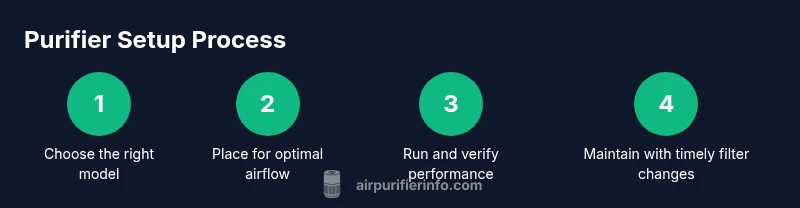
- 1
Choose the right model
Identify a model with true HEPA filtration and a carbon stage for odors. Check room size guidelines and ensure CADR matches the largest space you intend to treat. Read product reviews and Air Purifier Info recommendations to avoid overpaying for features you won't use.
Tip: Match CADR to room size; bigger is not always better if the unit won't run efficiently in that space. - 2
Place for optimal airflow
Position the purifier so air can circulate without obstruction. Keep it away from walls and furniture that block intake or exhaust. In living areas, place near activity zones to maximize air turnover.
Tip: Leave at least 1–2 feet of clearance on all sides to prevent recirculation. - 3
Power up and configure basics
Plug in the unit and set it to auto or the appropriate speed for the room. If your model has a night mode or dim display, enable it for a quieter, sleep-friendly operation.
Tip: Auto mode maintains a steady air quality without manual adjustments. - 4
Run for initial assessment
Run the purifier in continuous mode for the first 24–48 hours to establish a baseline. Observe room freshness, dust settling, and any odor changes.
Tip: Take notes on symptoms or comfort changes to gauge real impact. - 5
Schedule and track filter changes
Record filter replacement timelines and set reminders aligned with manufacturer guidance. Keep a simple maintenance log to avoid unexpected performance drops.
Tip: Write the replacement date on the filter itself if possible. - 6
Monitor performance and adjust
If odors persist or you notice lingering dust, consider repositioning the unit or adding a second purifier for larger rooms. Verify seals and gaskets are intact for optimal filtration.
Tip: Even small placement tweaks can improve air changes per hour. - 7
Address odor-heavy or pollutant scenarios
In kitchens or smoking areas, consider running the purifier for longer periods or near the odor source to capture emissions more quickly.
Tip: Close doors to reduce cross-flow and direct airflow toward the source. - 8
Maintenance and cleaning
Regularly vacuum or wash pre-filters if the model supports it, and replace main filters as recommended. Keep housing dry and free of moisture hazards.
Tip: A clean exterior and sealed housing ensure efficient airflow and safe operation.
Questions & Answers
What is a breathe air purifier?
A breathe air purifier is a device that filters the air to remove dust, pollen, pet dander, odors, and some VOCs. It uses filters in stages to physically trap particles and improve comfort in indoor spaces. Consistent use in the right-sized room can meaningfully reduce irritants for many households.
A breathe air purifier cleans the air by trapping particles and odors, helping with allergies and dust. It works best when sized for the room and used consistently.
Can air purifiers remove VOCs?
Activated carbon filters are designed to reduce many VOCs and odors. Not all models perform equally, so choose a purifier with dedicated carbon filtration for best odor control and VOC reduction.
Yes, many purifiers reduce VOCs, especially those with effective carbon filters. The results depend on the room and filter quality.
Do air purifiers help with allergies?
Purifiers can lower exposure to common allergens like dust mites, pollen, and pet dander. Individual results vary based on room size, filtration type, and ventilation.
They can help by reducing indoor allergens, but it depends on room conditions and proper use.
How often should I replace filters?
Follow the manufacturer's guidance for filter replacement. Factors like room activity, smoke exposure, and pets influence how quickly filters load.
Stick to the manufacturer's schedule; heavy use or smoke means you may need to change filters sooner.
Are car purifiers better for small spaces?
Car purifiers can improve air quality in vehicles, but their impact differs from home units due to size and airflow. They are useful for localized improvement inside a car.
Car purifiers help in cars, but they don’t replace room-size purifiers for homes.
What size purifier do I need for my room?
Match the purifier’s CADR to the room size using the manufacturer’s guidelines. A device outside the recommended range will be less effective at cleaning the air quickly.
Choose a purifier with CADR appropriate for your room size to ensure effective air cleaning.
Watch Video
Main Points
- Choose true HEPA and carbon filters for balanced removal of particles and odors
- Size and placement matter more than fancy features
- Follow manufacturer guidelines for maintenance and replacement
- Regular maintenance sustains effectiveness and energy efficiency
- Measure impact over time with simple observations and optional monitors