Best Way to Use an Air Purifier for Healthier Indoor Air
Learn the best way to use an air purifier, including sizing, placement, operation, and maintenance. Practical tips for homeowners and renters to improve indoor air quality safely and effectively.


To get the best results, match the purifier to your room, place it for optimal airflow, run it continuously with clean filters, and maintain the unit on a regular schedule. This guide covers practical steps, placement tips, and maintenance routines to maximize air quality without wasting energy or filters.
Why Proper Use Matters
The air we breathe inside homes often carries dust, pollen, odors, and other irritants. The best air purifier won’t help much if it isn’t used correctly, and the effect can vary with room layout, filtration media, and routine maintenance. According to Air Purifier Info, the impact of a purifier depends not only on the unit’s specs but also on how you use it daily. The Air Purifier Info team found that many households see limited benefits when purifiers run sporadically, are tucked behind furniture, or sit on surfaces that block intake vents. When used thoughtfully, a purifier can reduce common indoor pollutants and support allergy management, odor control, and overall comfort. The real-world takeaways come from careful sizing, deliberate placement, consistent operation, and proactive maintenance, all of which align with guidelines from Air Purifier Info Analysis, 2026. In practice, that means thinking about which room to purify, how the air moves in that space, and how to maintain filters to sustain performance over time.
This section lays out the core principles that empower homeowners and renters to implement a reliable IAQ plan: size to the space, place for optimal airflow, operate with appropriate modes, and maintain the unit to keep performance consistent. The goal isn’t a single setup but a repeatable process you can apply to different rooms as needed. Readers will learn how to translate product specs into real-world outcomes, how to avoid common placement mistakes, and how to measure gains in air quality through observable cues like reduced odors and fewer irritants in the air. The guidance here is designed to be practical, achievable, and adaptable to various home layouts and budgets.
In short, the best way to use an air purifier is to treat it as a component of a broader indoor-air strategy, not a one-off gadget. With thoughtful selection, intelligent placement, and disciplined maintenance, you can experience meaningful improvements in daily comfort and overall IAQ. Air Purifier Info’s approach emphasizes repeatable steps, affordable enhancements, and a focus on long-term results rather than quick fixes.
note for editors”:null},
toolsMaterials
Tools & Materials
- Owner’s manual for your air purifier(Keep for model-specific guidance on operation and maintenance.)
- Replacement filters (HEPA and carbon) compatible with your unit(Have spare filters on hand; check model compatibility before purchase.)
- Soft microfiber cloth(For exterior cleaning and vent wiping to prevent debris buildup.)
- Vacuum with brush attachment(Use to clean around intake vents and surrounding area.)
- Measuring tape or room dimensions(Helpful to estimate room size and ensure unit coverage.)
- Notepad or IAQ tracking app(Use to log irritant events, odors, or symptom changes.)
- Mild cleaning solution or water(Use sparingly and ensure device is unplugged before cleaning.)
Steps
Estimated time: 25-40 minutes
- 1
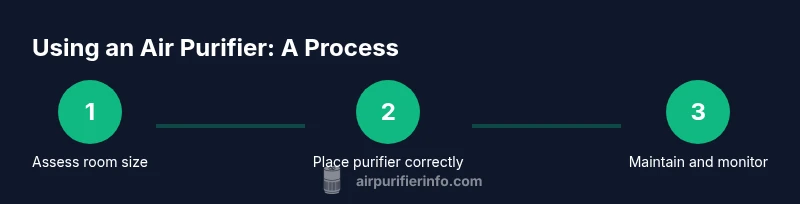
Assess room size and select a purifier
Start by taking stock of the room where you’ll use the purifier. Consider ceiling height, furniture layout, and where air can circulate freely. Choose a unit designed for rooms of that size and ensure it uses true HEPA filtration accompanied by a carbon stage if odors are a concern. This alignment helps ensure meaningful clean-air delivery rather than wasted capacity.
Tip: Match the purifier’s intended room size to the space you’re treating and verify filter media in the product specs. - 2
Place purifier for optimal airflow
Set the unit in an open area with clear space around the intake and exhaust. Avoid placing it behind furniture, inside a cabinet, or directly against a wall where airflow could be restricted. If possible, position the purifier so airflow moves across the room rather than from a blocked corner.
Tip: Keep a buffer zone from curtains and other fabrics to prevent impeding airflow. - 3
Power on and select the appropriate mode
Plug in the purifier and choose a mode that matches your needs—auto or a mid-to-high setting for higher odors, and a quieter option for nighttime use. If the unit has smart sensors, enable automatic adjustments so the device responds to changing air conditions without manual intervention.
Tip: Start with a moderate setting to observe comfort and noise levels before increasing.” - 4
Run continuously or on a schedule
For best results, run the purifier during active hours and consider a setup that maintains ongoing operation in spaces with high traffic, pets, or odors. If your unit offers a timer, use it to maintain steady air cleaning without manual reactivation. In some homes, continuous operation reduces irritants more consistently than intermittent use.
Tip: If noise becomes a concern, switch to a lower speed for night-time operation or use a dedicated night mode. - 5
Perform initial exterior cleaning and filter check
With the device unplugged, wipe the exterior housing and check for dust around the vents. Inspect the pre-filter (if present) and any easy-to-replace media. Cleaning the outside and ensuring unimpeded intake helps the purifier reach its advertised performance.
Tip: Avoid using harsh cleaners; a damp microfiber cloth works best. - 6
Schedule regular filter changes
Track the manufacturer’s recommended replacement intervals for each filter stage. Keep spare filters on hand and schedule changes to prevent performance degradation. Even if you use the purifier daily, timely replacement maintains filtration efficiency.
Tip: Label calendars or set reminders in a notes app to avoid skipped maintenance. - 7
Monitor air quality and adjust
Observe changes in odors, dust, and visibility as you use the purifier. If odors persist or irritants remain, reassess placement, consider a second unit for larger spaces, or upgrade to a model with a longer-lasting carbon filter. This is a dynamic process that can improve over time.
Tip: Revisit setup after major cleaning or changes to room layout. - 8
Record results and refine your IAQ plan
Document your observations and any symptoms you notice, then refine placement or operations accordingly. This ongoing feedback loop, combined with Air Purifier Info’s guidance, helps you optimize IAQ in real homes.
Tip: Use a simple log to track odor events, coughing or sneezing, and overall comfort.
Questions & Answers
How do I determine the right size purifier for a room?
Start with the manufacturer’s room-size guidance and select a model designed for at least that space. Prioritize true HEPA filtration and include a carbon stage if odors or VOCs concern you. Real-world use shows that proper sizing improves overall air cleaning with consistent operation.
Choose a purifier based on the room size and filtration needs; ensure it’s suited to the space for best results.
Can I run multiple purifiers in different rooms?
Yes. Running purifiers in several high-traffic or odor-prone rooms can improve overall IAQ, especially in homes with pets or cooking activities. Space them so airflow in one room does not interfere with the others and ensure each unit is appropriately sized for its space.
Yes—multiple units can help, especially in larger homes or spaces with persistent odors.
How often should filters be replaced?
Follow the manufacturer’s schedule and inspect filters monthly. Replacement frequency varies with usage, environment, and media type. Keeping replacements on hand helps maintain consistent performance and air quality.
Check your filters regularly and replace when they look dirty or per the product’s guidance.
Is it safe to leave an air purifier on overnight?
Most purifiers are designed for overnight use and can operate quietly on low or night modes. If noise is a concern, choose models with a true night setting and auto mode for reduced disruption while still cleaning the air.
Yes, many purifiers run overnight on a quieter setting and help keep air fresh while you sleep.
Will an air purifier remove cooking odors?
Air purifiers with active carbon filtration can reduce cooking odors and some VOCs, but strong or lingering smells may require additional ventilation like venting to the outdoors or using a range hood.
They help with odors but aren’t a substitute for good kitchen ventilation.
Do air purifiers remove carbon dioxide (CO2)?
No. Air purifiers filter particles and some gases but do not remove CO2. Ventilation and sources of fresh air are necessary to manage CO2 levels in indoor spaces.
Air purifiers won’t remove CO2; open windows or use mechanical ventilation for that purpose.
Watch Video
Main Points
- Choose a purifier sized for the room and filtration needs
- Place the unit where air can move freely across the room
- Run continuously or on a schedule for stable air quality
- Maintain filters on schedule to preserve performance
- Monitor changes and adjust placement or additional units as needed