Air purifier or humidifier for winter: A practical comparison
Compare air purifier vs humidifier for winter to optimize indoor air quality and comfort. Learn how to balance humidity, filtration, and maintenance for dry heating-season air.


Winter IAQ often hinges on whether you prioritize moisture or filtration. If you’re weighing an air purifier or humidifier for winter, start by your room’s dryness and allergen load. A purifier targets dust, odors, and pollutants, while a humidifier adds humidity to ease dry skin and throat. Many homes benefit from addressing both needs in sequence or with a hybrid setup.
Why winter demands careful IAQ and humidity management
If you're evaluating the question of whether to buy an air purifier or humidifier for winter, the answer hinges on indoor climate and health priorities. Heating systems dry out moving air, increasing perceived irritation for people with allergies or asthma. Dry air also affects wooden furnishings and houseplants, but a too-humid room can invite mold growth. According to Air Purifier Info, winter IAQ challenges are unique because humidity levels swing with heating cycles, outdoor moisture, and occupant activity. Start by measuring baseline humidity (preferably 30-50% relative humidity) and noting seasonal irritants you encounter indoors, such as dust or pet dander. Your goal is to maintain comfortable moisture without creating a cradle for microbes.
In practical terms, an air purifier for winter helps reduce fine particles, pollen, and odors that can worsen symptoms during the heating season. A humidifier, conversely, increases humidity to reduce dryness-related discomfort. The choice is not simply “which device is better” but “which problem do you need to solve first.” The Air Purifier Info team emphasizes that most homes benefit from a targeted IAQ plan rather than relying on a single device to do everything. The goal is to create conditions that feel comfortable, reduce irritation, and support respiratory health without inviting new hazards.
Understanding the core differences: air purifier vs humidifier
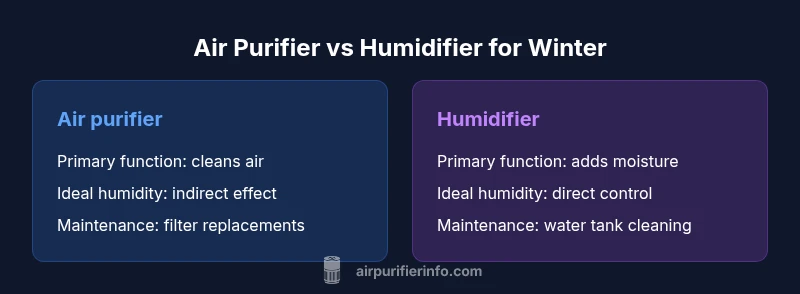
The core difference is straightforward: an air purifier filters the air, capturing dust, pollen, pet dander, odors, and sometimes VOCs depending on the filter. A humidifier adds moisture to the air to alleviate dryness. Purifiers excel in improving IAQ by removing particles, while humidifiers excel in comfort by stabilizing humidity. However, neither device alone solves every winter IAQ problem. A purifier cannot significantly raise humidity, and a humidifier cannot reliably remove microscopic pollutants without a true filtration system. When considering which to buy for winter, match the device to the primary symptom: irritation and allergy symptoms point to filtration, dryness points to humidity. Air Purifier Info’s guidance emphasizes looking for devices with validated filtration standards (like HEPA-type filtration) and built-in safety features to prevent over-humidification.
Placement matters. A purifier benefits from being placed where pollutants are most concentrated, often in living spaces or bedrooms. A humidifier should sit on a stable, moisture-safe surface and be easy to clean, with a detectable humidity target. If you’re prone to mold or damp spots, usage should be paired with humidity monitoring. The takeaway is to identify the dominant winter IAQ driver in your space and choose the device that directly mitigates that driver, with a plan to address the secondary need as budget and space permit.
Health considerations: allergies, asthma, and indoor air pollutants
Allergies and asthma often worsen during dry, furnace-heated months, when tiny particles like dust and pet dander remain suspended longer. A high-quality air purifier with a true HEPA filter helps capture these allergens, supported by ongoing filtration maintenance. VOCs and odors can also be a concern in some homes, particularly with new furniture or cleaning products. Humidifiers address different symptoms: they can reduce mucous membrane irritation by maintaining humidity in a comfortable range, typically around 40-50% RH, which can lessen coughing and throat irritation. Importantly, too much humidity fosters mold and dust mite growth, so humidity must be monitored. Air Purifier Info Analysis, 2026, notes that many households benefit from combining humidity control with effective filtration, especially in rooms with limited natural ventilation. A well-timed humidity target and a reliable filtration system together reduce indoor irritants while preserving comfort.
For people with asthma, humidity can be a friend or foe depending on levels and mold risk. The best IAQ practice is a balanced approach: use a purifier to tackle irritants, and employ humidity management to prevent dryness and secondary moisture-related issues. If mold or dampness is present, addressing moisture sources is essential before relying on devices to fix the symptoms. Overall, the goal is a stable indoor environment that minimizes triggers and supports respiratory health.
Space considerations: room size, placement, and humidity targets
Room size dramatically affects device performance. A compact purifier may struggle in large living areas, while a small humidifier can oversaturate a bedroom. The general rule is to size the device to the room and use a humidity monitor or smart display to track RH levels. For winter, aim for a relative humidity of roughly 30-50% in most living spaces, adjusting for climate and occupant sensitivity. In larger rooms, consider a purifier with a higher CADR (clean air delivery rate) and a humidifier with an appropriate output for the square footage. Strategic placement also matters: position purifiers away from walls or curtains to maximize airflow and ensure both devices operate without obstruction. For bedrooms, a quieter purifier model and a compact humidifier can help maintain sleep quality. The key is to tailor setup to room dynamics rather than applying a one-size-fits-all solution across the entire home.
Air Purifier Info recommends testing one-room scenarios first before expanding to other spaces. A phased approach helps you calibrate humidity targets and filtration effectiveness without overspending or creating maintenance bottlenecks.
Practical winter setups: single-device strategies and combinations
For many households, a single device is insufficient in truly challenging winter conditions. A practical strategy begins with a targeted assessment of the most impactful problem—dry air or persistent particles. If dryness dominates, start with a humidifier in the living room and a separate portable purifier in the bedroom. This setup addresses comfort and sleep quality where people spend a significant portion of their time. If filtration is the primary concern due to dust or pet dander, begin with a purifier that has a strong HEPA filtration and good filter replacement intervals, and add a humidifier only if humidity remains stubbornly low.
Consider a hybrid solution: some units combine filtration with built-in moisture control or warm-mist capabilities, offering a space-saving approach. When evaluating hybrids, ensure the device uses a certified filtration standard, has easy cleaning access, and provides safe humidity indicators. A layered approach—filtration first, humidity second—often yields the best results, especially in homes with multiple rooms. Always monitor room RH and adjust settings to avoid oversaturation. For renters, portable options with straightforward replacement cycles can provide flexible IAQ management without permanent alteration to the space.
Maintenance, safety, and energy use
Maintenance is the quiet driver of long-term IAQ performance. Filter replacement frequency is determined by usage level, pollutants in your environment, and the filter's efficiency. Many purifiers require replacement every 6-12 months, depending on model and air quality, while humidifiers need regular cleaning to prevent bacterial or mold growth in the water reservoir. Safety features—auto-shutoff when humidity is too high, water level sensors, and child-lock controls—help prevent accidental misuse. Energy use typically scales with fan speed and humidity output; a purifier with an efficient motor and a humidifier with a low-wattage heater or evaporative mechanism generally keeps daily electricity consumption reasonable. In winter, running costs accumulate quickly if devices are kept on at high settings around the clock, so adopt a schedule and use room sensors to optimize operation times. The goal is to maintain IAQ and comfort without creating new energy or safety concerns.
Always follow manufacturer recommendations for cleaning, filter changes, and mineral buildup prevention. Regular inspection of water quality in humidifiers reduces mineral dust and white residue, which can aggravate respiratory symptoms. A proactive maintenance mindset—monthly checks, seasonal device reviews, and a simple troubleshooting checklist—ensures your winter IAQ plan stays effective and safe.
Measuring impact: humidity targets and IAQ indicators
Reliable IAQ assessment goes beyond subjective comfort. Use a combination of RH sensors, particle counters (if available), and personal symptom tracking to determine whether a purifier or humidifier is delivering the intended benefits. Track RH across different rooms and times of day, aiming for a stable 30-50% range in most winter scenarios. If you notice persistent dryness, irritation, or recurring mucus symptoms, re-evaluate humidity levels. For filtration performance, monitor filter replacement intervals and check for any noticeable changes in odor, allergen symptoms, or visible dust. Keep an eye on energy use, as comfort improvements should not come at the expense of excessive electricity bills. Air Purifier Info emphasizes that a data-driven, iterative approach yields better results than a static, one-size-fits-all solution. In high-dust environments or homes with pets, consider a higher-efficiency purifier with an easy-to-clean filter to maintain IAQ as indoor activities increase during winter.
If you live in a dry climate or during extreme heating cycles, temporary humidity spikes may be necessary. Use a humidistat connected to your humidifier if possible, and avoid over-humidifying. The ideal winter IAQ plan uses a realistic humidity target, a reliable filtration system, and regular checks to adjust settings based on actual conditions. In practice, this means adjusting humidity output to keep RH in the safe range while maintaining good filtration outcomes in the spaces where you spend most time.
Getting the best of both worlds: hybrids and multi-device strategies
If budget and space permit, a hybrid approach can simplify winter IAQ management. Some manufacturers offer devices that integrate HEPA filtration with a built-in humidifier or a humidifier with optional filtration upgrades, reducing clutter and simplifying maintenance. When using multiple devices, ensure they do not compete for power or cause conflicting humidity and airflow patterns. For example, a purifier in a high-traffic living area paired with a compact humidifier in the bedroom can balance airflow while maintaining comfort. Smart devices with remote monitoring enable you to track humidity, filter life, and performance without frequent manual adjustments. When evaluating dual-device setups, prioritize user-friendly maintenance, clear indicators for filter replacement, and energy-efficient operation. The ultimate goal is a cohesive system that addresses the two primary winter IAQ drivers—dry air and airborne particulates—without creating new issues like mold growth or excessive noise.
Comparison
| Feature | Air purifier | Humidifier | |
|---|---|---|---|
| Primary function | Filters air to remove dust, dander, odors, and some VOCs | Increases room humidity to reduce dryness | |
| Humidity impact | Low direct impact on humidity (depends on room airflow) | Directly raises humidity levels in the treated space | |
| Maintenance | Filter replacements and periodic cleaning | Water reservoir cleaning; mineral buildup prevention | |
| Energy use | Moderate, varies by model and fan speed | Low to moderate, depends on output method (evap, warm mist) | |
| Best for | Allergies, asthma relief, odor reduction, clean air | Dry air relief, skin/throat comfort | Best For |
What's Good
- Clarifies whether you need moisture or filtration first
- Supports a balanced winter IAQ strategy by addressing two main problems
- Encourages data-driven decisions with measurable indicators
What's Bad
- May require two devices for optimal results
- Maintenance can be more involved than expected
- Humidity management adds complexity and ongoing monitoring
Air purification and humidity control are complementary in winter; choose based on dominant IAQ needs, and consider a staged or hybrid approach for best comfort.
In most homes, start with the primary issue—dry air or filtration—and add the other device as needed. A data-driven plan, regular maintenance, and proper sizing lead to the best indoor air quality during winter.
Questions & Answers
Can I use a humidifier and an air purifier at the same time?
Yes. Using both can address dryness and particulates simultaneously, but ensure humidification targets are not exceeded and that the purifier’s placement doesn’t interfere with airflow. Pairing them in adjacent rooms can be an efficient approach.
Yes, you can run both at once. Just monitor humidity and airflow so one device doesn’t work against the other.
What humidity level should I aim for in winter?
Aim for a relative humidity in the 30-50% range, adjusting to comfort and season. In very dry environments, you may need to increase humidity slightly, but avoid going above 60% to prevent mold growth.
Keep humidity around 40-50% for comfort and mold prevention.
Are there safety concerns with humidifiers?
Yes. Clean humidifiers regularly to prevent mold and bacteria growth in the reservoir. Use distilled water if possible and follow manufacturer safety guidelines to avoid burns or electrical hazards.
Yes—clean regularly, use clean water, and follow safety guidelines.
Do air purifiers remove humidity?
Most purifiers do not significantly change humidity. Some models with integrated humidifiers can, but standalone purifiers primarily reduce particles and odors.
No, most purifiers don’t change humidity; they focus on air cleanliness.
What should I look for in a winter IAQ device?
Look for true HEPA filtration, sealed units to prevent leaks, easy filter access, humidifier safety features, and sensor-driven or auto modes to optimize performance in winter.
Seek HEPA filtration, safety features, and sensors to automate operation.
How do I know if I need a single device or multiple devices?
If your rooms vary greatly in humidity and pollutant load, multiple devices or a hybrid unit can be more effective. Start with the primary issue in the largest room, then expand as needed.
If big differences between rooms exist, consider more than one device.
Main Points
- Identify your primary winter IAQ driver (dry air vs filtration)
- Consider staged or hybrid setups to balance humidity and air quality
- Monitor humidity and air quality regularly to adjust device use
- Choose models with easy maintenance and clear filter indicators
- Balance energy use with maintenance costs for long-term results