Can You Use an Air Purifier in Winter? Practical Guide
Learn how to safely use an air purifier during winter, optimize filtration, manage humidity, and choose models that keep your indoor air clean without wasting energy.


Winter air often becomes drier and indoor spaces feel stuffier because heating and limited ventilation trap pollutants. can you use air purifier in winter? Yes, you can, with the right setup. According to Air Purifier Info, purifiers can still play a crucial role in maintaining indoor air quality when outdoor air is less accessible. This guide explains how to select the right model, position it for optimal airflow, and balance humidity to maximize comfort and filtration. By following these steps, homeowners and renters can reduce dust, odors, and pet dander without sacrificing energy efficiency.
Winter Air Quality Basics
Winter air often becomes drier and indoor spaces feel stuffier because heating and limited ventilation trap pollutants. can you use air purifier in winter? Yes, you can, with the right setup. According to Air Purifier Info, purifiers can still play a crucial role in maintaining indoor air quality when outdoor air is less accessible. This section explains why winter air conditions affect air quality and how a purifier helps address particulates, odors, and dander that accumulate indoors during cold months. The key is choosing the right model, using it consistently, and pairing it with humidity control to keep comfort high and contaminants low. For homeowners and renters, a purifier is a practical tool for reducing allergy symptoms, tobacco smoke from indoor use, and cooking odors, especially in compact spaces where ventilation is limited. In apartments and small homes, even a modest purifier can make a noticeable difference in perceived air freshness and reduced coughing after meals. Finally, you’ll learn how to tailor purifier use to your space and climate without wasting energy.
How Purifiers Work in Winter
Air purifiers remove particles and gases from indoor air using filtration media and airflow. In winter, the job is similar, but practical considerations arise: lower outdoor ventilation means recirculating air and heating can dry air further. True HEPA filters capture dust, pollen, and pet dander with high efficiency, while activated carbon reduces odors from cooking, smoke, and damp spaces. Some units include optional features like ionizers or UV-C light; these can help with certain pollutants but may produce ozone in some configurations, so check manufacturer notes. When used correctly, a purifier lowers PM2.5 and VOC levels, improving comfort and reducing irritation. The keys are matching a purifier to room size, monitoring filter life, and avoiding placement that creates cold drafts or blocks intake.
Choosing Filters and Models for Winter Use
Winter filtration hinges on three goals: strong particle filtration, effective odor control, and humidity resilience. Look for a True HEPA filter (or higher) for fine particles and an activated carbon stage for smells from cooking or fireplaces. For cold climates, some purifiers feature heat-resistant seals and motors designed to tolerate drier air without warping. If you live with smokers, pets, or frequent cooking, consider a multi-layer system with a larger surface area to maintain airflow. Check CADR ratings aligned to room size and verify energy efficiency if you’re running the purifier for long periods. Avoid ozone-generating purifiers, which can jeopardize indoor air quality, particularly in dry conditions.
Placement and Airflow in Winter
Central placement maximizes coverage and minimizes dead zones, so choose a spot away from walls and furniture that can impede airflow. Leave at least a few feet of clearance on all sides to promote intake and outlet flow, and avoid direct exposure to heat sources like radiators that could overheat the device. If you have multiple purifiers, stagger them so their air streams overlap rather than collide. In drafty rooms or near windows, ensure there’s a clear pathway for air exchange; an obstructed path reduces effectiveness, and cold drafts can create uneven filtration. Finally, consider noise levels; you may prefer a unit that remains quiet on low to mid settings while still delivering filtration.
Humidity and Condensation Considerations
Dry winter air can irritate skin and mucous membranes, so pairing purification with humidity control often makes air feel cleaner and more comfortable. Use a hygrometer to maintain relative humidity around 30-50%, which helps reduce static and supports respiratory comfort. If humidity is very low, a separate humidifier may be warranted; avoid over-humidification near windows where condensation can form. When humidity is too high, you may risk mold growth, so balance purification with moisture control strategies. In practice, run the purifier in conjunction with humidity management to keep air fresh and comfortable throughout the season.
Energy Use and Noise in Winter
Extended purifier operation can increase electricity use, so choose models with energy-efficient ratings and eco/sleep modes to minimize consumption. If you’re sensitive to noise, look for units rated under 40-50 dB on low or mid settings and consider scheduling runs during the day when you’re awake. In colder climates, running a purifier alongside space heaters or other HVAC equipment can create competing air currents, so coordinate timing and airflow to maximize efficiency. For renters and homeowners alike, a balance of performance and quiet operation makes winter purification sustainable month after month.
Maintenance and Filter Life in Winter
Winter use often means longer daily runtimes, so schedule regular checks of filters and seals. Inspect the pre-filter monthly and clean or replace as needed; HEPA cartridges typically require replacement every 6-12 months depending on usage and air quality. Carbon filters may saturate faster in spaces with strong odors, so plan to replace sooner if you notice persistent smells. Keep the exterior clean to prevent dust buildup that can clog intakes, and store spare filters in a dry place to avoid moisture damage. A proactive maintenance routine prevents performance dips and extends purifier life.
Odors, Smoke, and Pet Dander in Winter
Winter cooking, fireplaces, and pet dander can accumulate in closed spaces. An air purifier with a carbon filter can significantly reduce odors, and multiple filtration stages capture fine particles from dander. If lingering smells persist after cooking, temporarily increase the purifier’s speed while ventilating the room when possible. Regular cleaning of surfaces minimizes dust and dander available for recirculation, and nightly purifier use helps maintain a fresh environment through the season.
Living in Small Spaces vs. Large Rooms
Smaller rooms benefit from compact purifiers with high air turnover, while larger open-plan areas may require bigger units or multiple purifiers to achieve uniform filtration. Renters especially gain from portable devices that can be moved if you rearrange furniture or if you relocate. In any space, ensure consistent operation and avoid blocking vents; test different placements to find the most effective configuration for winter living.
Quick Start Winter Setup Checklist
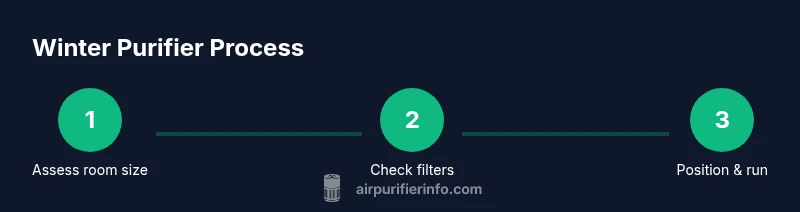
Create a simple plan to get started: measure room size, choose a purifier with a suitable CADR, replace filters before intense winter use, position the unit centrally, and set it to Auto or a comfortable speed. Monitor humidity with a hygrometer and adjust moisture levels as needed. Run the purifier for 6-8 hours per day minimum, and increase running time when odors or heavy dust are present. Schedule monthly filter checks and follow manufacturer replacement timelines to maintain peak performance.
Tools & Materials
- Air purifier(Choose a model with True HEPA and activated carbon; ensure it covers your room size.)
- Replacement filters(Keep spare filters on hand; check replacement intervals per manufacturer.)
- Humidistat / Hygrometer(Optional but helpful to track humidity and maintain 30-50% RH.)
- Power source / outlet(Use a stable outlet; avoid daisy-chaining near heat sources.)
- Timer or smart plug(Great for automating run times and saving energy.)
Steps
Estimated time: 60-90 minutes
- 1
Assess room size and purifier capability
Calculate the room square footage and compare it to the purifier’s CADR rating to ensure adequate coverage. This helps prevent under- or over-filtering in winter conditions.
Tip: Choose a unit designed for at least the room size; bigger is usually better in poorly ventilated spaces. - 2
Inspect and replace filters
Open the unit, inspect the pre-filter, HEPA, and carbon filters for dirt buildup. Replace worn or saturated filters to restore filtration efficiency.
Tip: New filters can dramatically improve performance even if your unit isn’t old. - 3
Choose placement for airflow
Place the purifier in a central location with at least 3 feet of clearance on all sides. Avoid corners and direct proximity to heat sources.
Tip: Test a couple of positions to find the fastest clean air delivery path. - 4
Set appropriate mode and speed
If Auto mode is available, enable it. Otherwise, start at a moderate speed and adjust after a few hours based on odor and particle levels.
Tip: Auto mode adapts to changing air quality without manual intervention. - 5
Manage humidity alongside purification
Measure RH; if it’s too low, add a humidifier to reach roughly 30-50% RH. If it’s too high, adjust purifier speed or enable a humidity-aware mode if available.
Tip: Use a hygrometer to maintain consistent comfort and air quality. - 6
Monitor air quality and adjust
Observe PM2.5 and VOC indicators if your unit has sensors; increase running time if odors persist or dust levels rise.
Tip: Document changes to determine if you need a bigger unit or additional purifiers. - 7
Maintain and replace filters regularly
Stick to replacement schedules and pre-filter cleaning; longer winter runs may shorten filter life. Keep a log for easy maintenance.
Tip: Label filters with replacement dates to avoid missing maintenance.
Questions & Answers
Can air purifiers help with winter odors from cooking or fireplaces?
Yes, purifiers with activated carbon can reduce odors from cooking and fireplaces. They do not humidify the air and work best when used with some ventilation.
Purifiers with carbon filters help reduce odors in winter, and they work best with some ventilation.
Should I run my purifier all day in winter?
Running continuously can provide steady filtration, especially in spaces with constant pollutant sources. Use Auto mode or schedule longer runs if odors or dust increase.
If odors or dust creep up, run it longer or use Auto mode; otherwise, periodic runs work too.
Do filters wear out faster in winter?
Filter life depends on usage and air quality. Winter’s closed environments can raise particle concentration, so check filters more often and replace as recommended.
Winter use may require more frequent checks; follow the manufacturer's schedule.
Can an air purifier remove mold risk in winter?
Purifiers reduce airborne spores but do not replace humidity control. Use a dehumidifier in damp spaces and address leaks; clean surfaces regularly.
Purifiers help with spores, but controlling humidity is key.
Is it safe to use ozone-generating purifiers in winter?
Ozone-generating purifiers pose health risks; choose ozone-free devices and avoid models that intentionally produce ozone indoors.
Avoid ozone-producing purifiers for indoor use.
What humidity range should I maintain?
Aim for roughly 30-50% relative humidity to balance comfort with mold risk and filtration effectiveness.
Keep humidity around 30-50% for comfort and safety.
Watch Video
Main Points
- Run a purifier year-round with winter-specific adjustments.
- Maintain humidity around 30-50% to optimize comfort and filtration.
- Place purifier for best airflow and avoid obstructions.
- Schedule regular filter replacements to sustain performance.
- In small spaces, run longer or upgrade capacity as needed.