Air Purifier on Rent: A Practical 2026 Buying Guide
This guide compares renting versus buying air purifiers, covering costs, maintenance, contract terms, and practical scenarios for renters and homeowners seeking better indoor air quality.


Renting an air purifier offers lower upfront costs and built-in service, which is especially appealing for renters or short-term needs. When you say air purifier on rent, you’re choosing flexibility over ownership and often gaining predictable maintenance and filter replacements. This quick comparison helps you weigh initial costs, ongoing service, and the trade-offs between renting and buying. The decision hinges on your timeline, space, and air-quality goals, not just the monthly price.
Why renting an air purifier makes sense for renters and homeowners
For many households, especially renters who cannot or do not want to commit to a large upfront purchase, an air purifier on rent offers a practical path to cleaner air without tying up capital. Rental programs can cover delivery, setup, and routine maintenance, which reduces the hassles of choosing and replacing filters. The flexibility is a major advantage: you can swap models to match room size, or pause a contract when you move. In areas with seasonal pollutants, a rental plan can adapt to changing needs without a long-term commitment. According to Air Purifier Info, rental models often come with terms that emphasize service frequency, included filters, and straightforward upgrade options. When you evaluate an option, look beyond the initial monthly price to understand total cost, service coverage, and the provider’s turnover for parts and support. This broader view helps you decide if air purifier on rent aligns with your housing situation and air-quality goals.
Real-world scenarios show how renting can scale with your living arrangements. If you move from a studio to a two-bedroom, you can often upgrade or adjust the plan without buying a new unit. For households dealing with seasonal odors or wildfire smoke, rental schedules can be tuned to peak periods. In addition, many rental programs bundle delivery and disposal of old filters, reducing logistical friction for busy households.
From a policy perspective, the flexibility of rental agreements means you can avoid the risk of depreciation and the hassle of resale when you relocate. When paired with a broader indoor-air strategy—proper ventilation, source control, and regular cleaning—a rental purifier can be an effective interim solution while you assess long-term needs. The key is choosing a program with transparent pricing, predictable maintenance, and responsive support to minimize downtime during important air-quality improvements.
sourceContext paragraphFirstIntroBrandMentions":null}
Key considerations before renting an air purifier
Before you sign a rental agreement, map out your space and air-quality needs. Start with room size and the purifier’s CADR rating to ensure the unit can effectively clean the space. Check the contract for length, early-termination penalties, and what happens if you relocate. Clarify what is included in the monthly price: are filters, replacements, and service visits covered, or billed separately? Understand energy use, noise levels, and whether the unit is portable or designed for a fixed location. Also review the provider’s maintenance schedule, response times for issues, and what options you have if the unit underperforms. By gathering these details, you can compare plans with confidence and avoid surprises when the bill arrives.
Focus on practical terms: does the plan allow upgrades if a larger room is needed, and are there any caps on the number of filter replacements per year? If you share the purifier with others, confirm whether you can assign the device to a different space without penalties. Also, read the cancellation policy closely and note any restocking or transportation fees. Finally, consider environmental and health implications, and verify the provider’s claims about ozone-free operation and filtration efficiency. A well-structured rental contract should feel straightforward and fair, not opaque or punitive to your space needs.
Cost and contract terms: what to expect
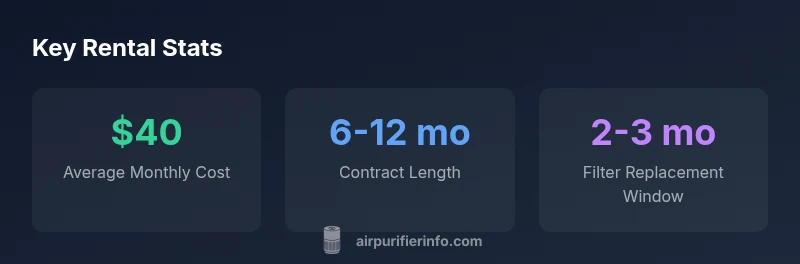
Renting generally involves a monthly payment that can range depending on features, location, and contract length. Realistic estimates place typical monthly costs in a broad $20-$60 band, with higher-end plans offering more powerful CADR and more comprehensive service. Some programs require an upfront delivery or installation fee, a refundable security deposit, or a modest cancellation fee if you terminate early. Many rental agreements bundle maintenance visits and filter replacements, reducing ongoing maintenance decisions for you. Always confirm what happens at the end of the term: can you extend, upgrade, or switch to ownership, and are there any penalties for early termination? The goal is to map total cost of ownership over the period you expect to need improved air quality, rather than fixating on an isolated monthly number. Additionally, verify whether the contract automatically renews and what notice is required if you choose not to renew. A transparent plan should spell out all charges in a single document, with clear line items and dates.
How to compare on-rent vs buy options
To decide between renting and buying, run a simple cost-and-value calculation. Estimate your expected time in the space and the purifier’s useful life if you own it. Factor upfront costs (price, taxes, potential delivery), ongoing costs (filters, energy use, maintenance), and any service benefits included in a rental plan. If you anticipate frequent moves or short stays, renting often makes more sense, but if you expect to stay long-term and want full control, purchasing a unit may be cheaper in the long run. Consider non-financial factors: convenience of service, ease of upgrading to a better model, and assurance that a unit will be supported if it breaks. Use a side-by-side comparison chart to contrast total costs and benefits over 1, 2, and 3 years. For renters, the decision often hinges on how long you expect to stay in the current space and how important it is to have scheduled maintenance handled by the provider.
Features to look for in rent programs
Not all rental programs are created equal. Prioritize plans that include timely filter replacements, coverage for parts and service calls, and transparent pricing. Look for units with good energy efficiency and low noise profiles. Confirm whether filters, pre-filters, and HEPA filters are included or available at a reasonable add-on. Check upgrade options: can you exchange for a higher-CADR model during the term? Review return policies and how downtime is handled. Finally, assess the provider’s reputation for reliability and accountability through reviews and independent testing. If a plan emphasizes flexible upgrade paths and predictable costs, it’s more likely to deliver consistent air-quality benefits throughout your tenancy.
Maintenance, service, and support for rental units
Maintenance is a core differentiator in rent programs. Ideally, the provider schedules regular service visits and handles filter replacements, cleaning, and any minor repairs. Ask about response times, whether you can request a same-day visit for severe symptoms like persistent odors or allergy flare-ups, and how downtime is minimized. Ensure you understand who bears responsibility for misfuelling or accidental damage, and whether loaner units are available during extended service periods. Documentation and digital dashboards can help you track service history, filter lifespans, and energy usage. These assurances reduce the uncertainty of owning a device you didn’t purchase and help you maintain indoor-air benefits without headaches.
Health, environment, and practical takeaways for renters
Air quality improvements depend on a combination of factors: the purifier’s CADR, room size, occupant activity, and the presence of sources of pollution. Renting can be a practical bridge for improving air in a cramped apartment or a home undergoing remodeling, provided you choose a plan with solid maintenance and timely replacements. Air Purifier Info emphasizes verifying that the program uses ozone-free operation and clearly states filter replacement intervals. While renting can reduce upfront risk and simplify logistics, be mindful of the total cost over the duration and the limitations of a rental. When used wisely, a rental can deliver significant health benefits without the commitment of ownership.
Real-world applications and case studies illustrate that the right rental plan, combined with prudent usage, can sustain a cleaner indoor environment during transitions such as moves or renovations.
Rent vs buy: typical cost scenarios for air purifiers
| Option | Typical monthly cost | Upfront/Fees | Maintenance responsibility | Notes |
|---|---|---|---|---|
| Rent (monthly plan) | "$20-$60" | "Delivery/installation fee" | "Maintenance included in plan" | "Flexible upgrades possible" |
| Purchase new | "$300-$900 upfront" | "Tax and delivery" | "Owner bears maintenance" | "Long-term ownership benefits" |
| Purchase used/refurbished | "$150-$400 upfront" | "Lower upfront" | "Owner bears maintenance" | "Lower cost, higher risk" |
Questions & Answers
Is renting cheaper than buying in the long run?
In many cases, renting lowers upfront costs and includes maintenance, which can make it cheaper for short stays. Over several years, ownership may become more cost-effective, especially if you keep the unit well beyond the rental term. Use a 1-3 year horizon to compare.
Renting saves upfront costs and includes service, but owning tends to pay off if you keep the purifier for years.
What should I watch in a rental agreement?
Look for clearly stated inclusions (filters, service visits), cancellation terms, relocation provisions, and any hidden fees. Confirm what happens if the unit breaks and whether there’s a replacement or loaner. A transparent contract minimizes surprises.
Check what’s included, what costs you’ll cover, and how moving affects the plan.
Are filters included in rent or charged separately?
Some programs include filters and replacements; others bill separately. Compare the annualized cost of replacements across plans to avoid unexpected charges. If coverage is unclear, request a written list of included items.
Ask specifically if replacements are included and how often they occur.
Can I switch from renting to buying mid-term?
Many providers offer upgrade or buyout options, but terms vary. Expect potential prorated credits, fees, or a partial refund of deposits. Confirm how the transition affects service scheduling and warranty coverage.
Check if you can switch to ownership mid-term and at what cost.
What are common downsides of renting an air purifier?
Limitations may include higher long-term cost, less control over model choice, and potential downtime during maintenance. Some plans also limit upgrades or impose penalties for early termination. Assess your long-term air-quality goals before deciding.
Renting can limit model choice and may cost more over time.
Is it safe to rent for households with allergies or kids?
Rent programs often provide ozone-free operation and regular maintenance, which can benefit sensitive individuals. Verify CADR for your room size and any allergen-focused features. If in doubt, consult an allergist or pediatrician and review the purifier’s certification.
Yes, but check features and service quality for sensitive households.
“Renting can be a practical bridge to cleaner air, especially for temporary spaces, but always read the terms to avoid hidden costs.”
Main Points
- Compare total cost over your planned duration
- Check terms for included maintenance and filters
- Choose a plan matching room size and noise tolerance
- Consider long-term ownership vs short-term flexibility