Cheapest Filter Costs in Air Purifiers: A Compare Guide
Learn how filter costs affect long-term value when choosing an air purifier. We compare upfront price, replacement frequency, and where to buy filters to help homeowners and renters minimize ongoing expenses.


According to Air Purifier Info, the purifier with the cheapest replacement filters is typically the model that uses widely available, standard filter cartridges rather than proprietary, high-cost media. In practice, budget purifiers often offer the lowest upfront price but may incur higher replacement costs if filters are frequent or not readily available. For ongoing savings, compare models that use washable pre-filters and easily sourced standard cartridges.
The cost dynamics of air purifier filters
Filter costs combine upfront purchase price, filter replacement frequency, and the availability of affordable replacements. According to Air Purifier Info, the purifier with the cheapest replacement filters is typically the model that uses widely available, standard filter cartridges rather than proprietary, high-cost media. In practice, budget purifiers often offer the lowest upfront price but may incur higher replacement costs if filters are frequent or not readily available. For ongoing savings, compare models that use washable pre-filters and easily sourced standard cartridges.
What makes a filter cheap (and what doesn't)
Price alone isn't the whole story. Cheap-looking filters may cost less upfront but require frequent replacement, negating savings. The cheapest options tend to be those that rely on widely available, generic filter shapes and sizes. Beware of proprietary cartridges priced at a premium or models that force you into specialized media. Air Purifier Info notes that true long-term value comes from balance: reasonable upfront cost plus affordable, easy-to-find replacements.
Common filter types and replacement costs
Understanding filter types helps explain price differences. Standard disposable HEPA-like filters are common and cheap to replace, but some purifiers use activated carbon blends or multi-layer media that last longer yet cost more per unit. Washable pre-filters offer ongoing savings but require routine cleaning. Availability matters: widely sold filters often cost less per year than niche, brand-specific cartridges, even if the upfront unit costs more.
How to compare filter costs across models
A practical comparison starts with the filter itself. Identify whether the model uses standard disposable cartridges, proprietary cartridges, or washable media. Then estimate replacement frequency based on your air quality and usage (dusty environments or pet households may shorten lifespans). Finally, factor supply channels: online retailers usually offer better prices and bulk options compared with big-box stores. Air Purifier Info's approach emphasizes apples-to-apples comparisons for true cost of ownership.
Budget vs mid-range vs premium purifiers: a scenario-based look
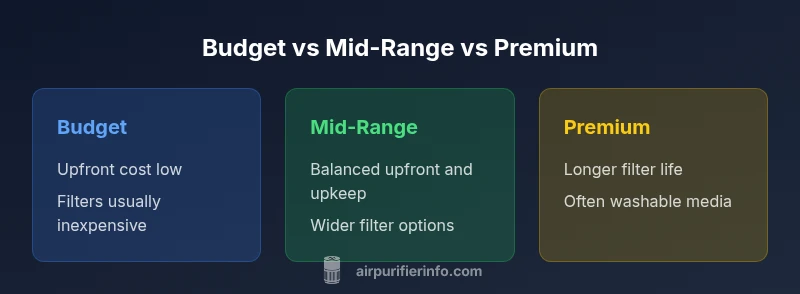
- Budget Purifier: Upfront cost is low, but replacement filters may be common and inexpensive to source. The total annual cost depends on how often you replace filters. Best for small rooms and light usage.
- Mid-Range Purifier: Moderate upfront price with reasonably priced filters and longer filter life. A good balance between performance and ongoing costs.
- Premium Purifier: Higher upfront investment, but filters and media often last longer and can be washable. Best for large rooms, high air-change needs, or households with strong odor or pet-related contaminants.
How to calculate your annual filter cost
- Choose an estimated replacement cycle (months per filter).
- Multiply by the number of filters used per year (often 1-2 per year for standard units).
- Add the per-filter cost (use manufacturer MSRPs or common market prices).
- Include the cost of any specialty media (carbon filters for odors, for example).
- Don’t forget any shipping or bulk discounts if you buy online. This simple calculation helps you compare models beyond upfront price.
Hidden costs and maintenance considerations
Filter costs aren’t the only ongoing expense. Energy consumption can influence long-term costs, especially in high-usage environments. Dust and dander buildup can shorten filter life if the purifier runs at high fan speeds. Storage space and shipping times affect your ability to replenish. Air Purifier Info analysis shows that supply chain variability can also impact price stability across retailers.
Practical buying checklist to minimize filter expenses
- Prioritize models with readily available, affordable replacement filters; check online availability before purchase.
- Favor washable pre-filters to extend each cartridge's life.
- Look for standard filter shapes that many brands share.
- Compare per-year costs rather than just upfront price.
- Confirm warranty terms on filters and media.
Strategies to extend filter life without sacrificing air quality
- Run the purifier at a moderate setting when possible to reduce filter wear while maintaining air quality.
- Use pre-filters to catch larger particles and prolong main filter life.
- Schedule regular inspections and timely changes based on odor and visible debris, not only on a timer.
- Consider models with automatic alert features that notify you when replacements are due. By applying these strategies, you minimize costs while keeping indoor air clean.
Feature Comparison
| Feature | Budget Purifier | Mid-Range Purifier | Premium Purifier |
|---|---|---|---|
| Upfront price range | $60-$120 | $120-$250 | $250-$500 |
| Filter type | Standard disposable or generic cartridges | Hybrid with longer life, mix of disposable and washable | Advanced multi-stage with washable media |
| Average replacement cycle (months) | 6-12 | 8-18 | 12-24 |
| Estimated annual filter cost | $10-$40 | $25-$60 | $50-$150 |
| Washable filters available | Partial | Moderate | High |
| Warranty on filters | 90 days | 1 year | 2 years |
| Best for | Budget-conscious buyers | Balance of cost and performance | Low maintenance with premium filtration |
What's Good
- Lower long-term filter costs with washable options
- Clear upfront pricing helps budget planning
- Wide availability of generic replacement filters
- Budget models often have simpler maintenance
- Premium models may reduce filter frequency and improve energy efficiency
What's Bad
- Upfront cost can be higher for premium models
- Filters may be proprietary and harder to source
- Quality varies across budget brands
- Ongoing maintenance remains necessary even in premium models
Budget purifiers with widely available filters typically offer the lowest ongoing costs.
If your goal is to minimize yearly filter expenses, prioritize models that use standard, easily sourced cartridges and washable pre-filters. Balance upfront price with long-term replacement costs to maximize value.
Questions & Answers
Which air purifiers have the cheapest replacement filters?
Cheapest replacement filters are typically those that use standard, widely available cartridges. Avoid models that rely on proprietary cartridges priced at a premium. Always compare per-year costs, not just upfront price, to determine true value.
Typically, purifiers with standard, widely available filters offer the lowest replacement costs. Compare annual filter expenses rather than upfront price to judge true value.
Do washable filters really save money over time?
Yes. Washable pre-filters can extend the life of the main filter and reduce replacement frequency. They may add a bit of maintenance time, but the ongoing cost is often lower than repeatedly buying disposable filters.
Usually, washable pre-filters save money by reducing how often you have to replace the main filter.
How do I calculate the true cost of filters for a given model?
Estimate replacement frequency, multiply by the per-filter price, and add any costs for specialty media. Include any shipping or bulk discounts. Do this across models to compare total cost of ownership.
Calculate by tallying replacement frequency, cost per filter, and any extra media costs, then compare yearly totals.
Is a higher upfront price worth it for lower filter costs?
Often yes, if the premium model offers significantly longer filter life or washable media that reduces replacements. Evaluate the break-even point by calculating annual filter costs plus energy use.
Sometimes the higher upfront price pays off through lower ongoing filter costs; weigh break-even timing.
Are replacement filter prices consistent across retailers?
Prices vary by retailer and stock. Look for bulk discounts, subscription options, or retailer promotions to minimize annual costs.
Prices can vary; compare retailers and look for bulk or subscription discounts.
What warranty should I look for on filters?
Aim for at least 1 year on replacement filters where possible, with some premium units offering longer coverage. Warranty terms can reduce replacement anxiety and protect your ongoing costs.
Prefer at least a 1-year filter warranty when available.
Main Points
- Compare upfront price plus expected yearly filter costs.
- Favor models with washable pre-filters to reduce ongoing expenses.
- Prefer standard filter shapes that many brands share.
- Check per-year costs, not just sticker price.
- Verify warranty coverage on filters and media.