Renting an Air Purifier: A Practical How-To
Learn how to rent an air purifier, compare rental plans, and choose the right unit to improve indoor air quality for homes and rentals. Practical, step-by-step guidance from Air Purifier Info.


You will learn how to rent an air purifier, compare options, and set up a unit tailored to your space. You'll discover typical rental models, what to check in a contract, and how to avoid common pitfalls. By the end, you can confidently rent an air purifier that fits your budget and air quality goals.
Why renting an air purifier makes sense for many homes
According to Air Purifier Info, renting an air purifier offers flexibility for temporary needs, renters who move frequently, seasonal allergy management, or when you want to test performance before committing to a purchase. This option lets you access high-quality filtration without a long-term commitment, and it can include delivery, setup, and maintenance. For homeowners and renters alike, renting can help you adapt to changing air quality concerns—dust, odors, pet dander, or smoke events—without owning a device outright. In addition, rental programs often include service and support, which can simplify upkeep and filter replacement decisions. When you’re considering a rental, think about how long you’ll need the purifier, the size of the space, and the expected changes in air quality over time.
What rental air purifiers typically cover
Most rental plans include delivery, setup, basic operation guidance, and routine maintenance like filter replacements. Some plans offer flexible term lengths, upgrade options for larger rooms, or add-on smart features that monitor air quality and notify you when a filter needs replacement. It’s common for providers to offer a range of models suited to different room sizes and noise preferences. When evaluating options, compare what is included in the monthly rate, any deposits, and what happens at the end of the term if you want to return or extend the rental.
Tools & Materials
- Identification(Government-issued ID to verify you and your address)
- Payment method(Credit or debit card for deposits and monthly charges)
- Proof of address(Recent utility bill or lease agreement)
- Measuring tape(To estimate the appropriate purifier size for your space (at least 10 ft x 10 ft room))
- Note-taking device(Smartphone or notebook to compare features and write down terms)
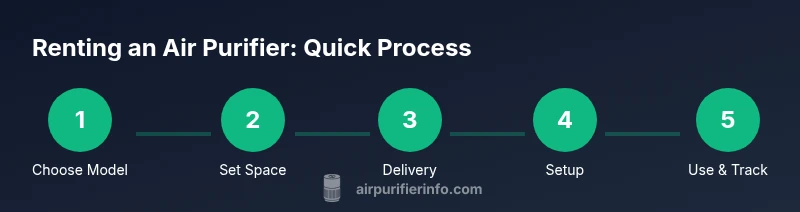
Steps
Estimated time: 30-45 minutes
- 1
Identify your space and needs
Measure the room size and note primary concerns (dust, odors, pets, smoke exposure). This helps you choose a purifier with an appropriate CADR and room coverage. Why: incorrect size can lead to inefficient filtration and higher energy use.
Tip: Have the room dimensions written down and a rough timeline for needing the purifier. - 2
Compare rental models and terms
Review available models for room fit, noise level, and included maintenance. Compare terms such as duration, deposits, replacement filters, and what happens when you terminate the rental early. Why: clear terms prevent surprises at checkout.
Tip: Ask for a side-by-side spec sheet from the provider. - 3
Check maintenance and filter policy
Confirm who handles filter replacements, how often filters are changed, and the cost of replacements if not included. Why: ongoing costs can influence the total value of renting versus buying.
Tip: Request a calendar showing recommended filter change dates. - 4
Arrange delivery, setup, and return
Schedule a delivery window and ensure the unit is correctly positioned away from vents and moisture. The provider should walk you through basic operation and safety. Why: proper placement maximizes effectiveness and safety.
Tip: Ask for written setup instructions and a quick start guide. - 5
Activate and monitor performance
Turn on the purifier, select the appropriate mode, and monitor noise and air quality indicators if available. Why: you’ll confirm the unit meets your expectations and adjust as needed.
Tip: Set a reminder to check the filter status table in the first week. - 6
Maintain and plan renewal or return
Follow the provider’s maintenance schedule and decide in advance whether to renew, upgrade, or return at the end of the term. Why: proactive planning avoids lapses in air quality.
Tip: Mark renewal dates on your calendar a month ahead.
Questions & Answers
What are the main benefits of renting an air purifier?
Renting provides flexibility, service, and the ability to upgrade as needs change without a large upfront investment. It’s useful for temporary living situations or seasonal air quality concerns.
Renting gives you flexible access and service without a big purchase, ideal for short-term needs or trying before buying.
Can I rent for a short period or only long terms?
Many providers offer flexible terms, including short-term rentals, though availability varies by region and model. Check minimum terms and renewal options before signing.
Most rental programs offer flexible terms, but confirm minimum durations before you commit.
Who is responsible for filter replacements in a rental agreement?
Typically the provider covers replacement filters as part of the plan, but some plans charge for replacements beyond standard inclusions. Review the policy in writing.
Usually the rental provider handles replacements, but verify inclusions in your contract.
Will rental units be as effective as buying?
Effectiveness depends on model selection for room size and use. Rentals can match buying performance when you choose the right unit and maintain filters as scheduled.
Rentals can perform as well as buying, as long as you pick the right unit and maintain it.
What should I do if the purifier is noisy?
First, check the mode and fan speed; try a lower setting or relocating the device away from walls. If noise persists, contact the provider for a replacement or service.
If it’s noisy, adjust settings or ask for a replacement under your rental terms.
Watch Video
Main Points
- Define room size and air concerns before choosing a rental.
- Compare terms, deposits, and service inclusions across providers.
- Know who handles filter changes and replacement costs.
- Plan delivery, setup, and end-of-term options in advance.
- Monitor performance and align with your air-quality goals.