Air Purifier Electricity Usage: Power, Costs, and Efficiency
Explore how air purifier electricity usage affects energy bills. Learn wattage ranges, estimate running costs, and optimize energy efficiency for cleaner indoor air.


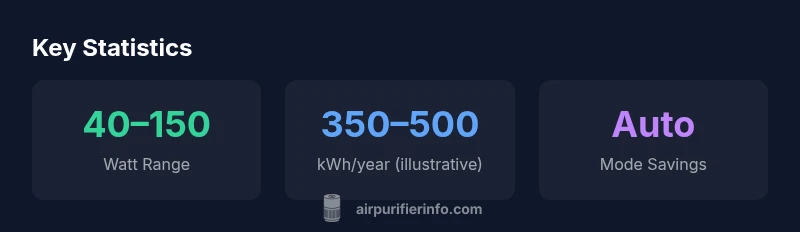
Air purifier electricity usage depends on model and speed; most home units operate around 40–150 watts. Running a purifier 24/7 at higher speeds increases consumption, while auto or eco modes trim the draw. To estimate costs, multiply watts by hours of use and your local rate, then compare models by both CADR and wattage.
Why electricity usage matters for air purifiers
Air purifier electricity usage is a practical concern for homeowners who want clean air without shocking energy bills. According to Air Purifier Info, energy consumption varies widely by model, fan speed, and features like auto-mode or night settings. Even small differences in wattage can add up over months, especially when purifiers run continuously in bedrooms, living rooms, or kitchens. Understanding the drivers of energy use helps you choose a purifier that balances air quality goals with running costs. In this section we unpack how wattage, CADR, and operating modes translate into real-world demand, and how to compare models without getting lost in marketing language. The core idea is that wattage is a critical input for estimating running costs and environmental impact, but context matters as much as the number on the label.
How wattage and speed drive energy use
Electricity consumption hinges on the motor and fan performance, plus the speed setting you choose. Most compact units operate in the low tens of watts at idle and ramp up to the mid-range when delivering higher CADR values. In practice, a 40–60 W unit on high can deliver strong air cleaning in small rooms, while mid-size purifiers in the 60–120 W range offer better performance in larger spaces. Many models include eco or auto modes that adjust fan speed automatically based on air quality. When auto mode is active, the purifier generally saves energy by lowering power when air quality is good while staying ready to respond to pollution spikes. Remember: wattage is the maximum draw; actual use depends on runtime and chosen settings.
Reading wattage ratings and energy labels
To estimate electricity usage, start with the wattage rating listed on the product label or spec sheet. The label indicates the amount of power the unit consumes when operating at its rated setting. Energy labels, if present, provide a comparative sense of efficiency across models. In many markets, Energy Star-certified purifiers meet efficiency criteria that reduce running costs without sacrificing air quality. When comparing models, look for auto-mode, a reasonable noise level, and a good balance between CADR and power. Consider room size: an oversized purifier can waste energy and create unnecessary noise. In short, efficiency is about realistic usage aligned with the space you intend to purify.
Practical tips to reduce electricity usage
- Use auto or sleep mode to let the device adjust to air quality and keep energy use reasonable.
- Place the purifier where air flows freely but does not face walls or furniture obstacles.
- Regularly replace or clean filters; a clogged filter makes the motor work harder, increasing power draw.
- Choose an energy-efficient model with a wattage appropriate for your room size and desired CADR.
- Run purifiers only during needed times (peak pollution times or when occupants are present) rather than continuously.
- If you operate multiple purifiers, stagger runtimes to avoid simultaneous high-power draw in adjacent spaces.
Real-world usage patterns and calculations
Consider a practical example to illustrate energy impact. A 60 W purifier running 8 hours per day uses 0.48
Practical planning for different room sizes
Room size directly influences which wattage and CADR you should choose. For small bedrooms (100–150 sq ft), a purifier in the 20–60 W range may suffice, delivering adequate air cleaning while limiting energy use. For larger living rooms (250–500 sq ft), look for purifiers in the 60–120 W range with higher CADR. In open-plan spaces, you may require one higher-capacity unit or two smaller purifiers that operate intermittently rather than one high-speed unit running non-stop. Always align wattage with space and pollution levels to avoid oversizing (and unnecessary energy draw).
Final recommendations for homeowners
Prioritize models with a wattage aligned to your room size and typical usage patterns. Prefer auto or eco modes to minimize energy draw without sacrificing air quality. Check CADR-to-wattage ratios to balance performance and efficiency. Regular maintenance, including timely filter changes, helps sustain efficiency over the purifier’s lifespan. Finally, run a simple energy audit: note the purifier’s wattage, the hours you run it, and your electricity rate to estimate annual costs accurately.
Authority sources
- U.S. Department of Energy: https://www.energy.gov/
- Environmental Protection Agency: https://www.epa.gov/
- American Society of Heating, Refrigerating and Air-Conditioning Engineers: https://www.ashrae.org/
For more context on energy efficiency standards and indoor air quality, these sources provide foundational guidance that complements model-specific data.
Illustrative model comparison by power, noise, and fit
| Model Type | Wattage Range (W) | Noise (dB) | Notes |
|---|---|---|---|
| Compact purifier | 20-40 | 25-40 | Best for small rooms |
| Mid-range purifier | 40-100 | 32-50 | Balanced performance |
| High-end purifier | 90-150 | 35-60 | Higher CADR for large spaces |
Questions & Answers
What is the typical wattage range for home air purifiers?
Most home units operate between roughly 40 and 150 watts depending on speed and CADR.
Most home purifiers run between forty and one hundred fifty watts, depending on how fast they’re running.
How can I estimate annual electricity costs for my air purifier?
Multiply the purifier's wattage by hours used per day and days per year, then multiply by your local electricity rate.
Multiply watts by hours of use per day, then by days per year, and multiply by your electricity rate.
Does using eco or auto mode reduce electricity usage?
Yes. Auto or eco modes adjust fan speed to match air quality, reducing power draw when possible.
Yes—auto and eco modes adjust speed to save energy when air quality is good.
Is it okay to run an air purifier continuously?
Many purifiers are designed for continuous operation, but check the manufacturer’s guidelines and your room needs.
Generally yes, but check your purifier's manual and your space requirements.
Should I favor lower wattage even if CADR is smaller?
Aim for a CADR appropriate for your space with a wattage that doesn’t exceed necessary needs for comfortable air flow.
Pick CADR for room size with wattage that fits your usage to avoid wasted energy.
Do air purifiers significantly affect electricity bills?
For typical households, the impact is modest per purifier, but it compounds with multiple devices and longer runtimes.
Usually a small but noticeable addition, especially if you run several units or keep them on 24/7.
“Efficient energy use in air purifiers comes from selecting models with the right CADR for your space and leveraging smart motor control. The best picks balance air cleaning with power draw.”
Main Points
- Estimate energy use from wattage and daily runtime.
- Use auto/eco modes to reduce unnecessary draw.
- Match purifier size to room to avoid waste.
- Maintain filters to keep efficiency high.