Air Purifier and Deodorizer: A Practical How-To Guide
Learn how to select, set up, and use an air purifier and deodorizer to improve indoor air quality. This step-by-step guide covers filtration, deodorization, maintenance, safety, and room-by-room setup for homeowners and renters.


This guide helps you achieve cleaner air and fresher odors by pairing an air purifier with a carbon-based deodorizing strategy. You’ll learn how to choose the right purifier, position it for optimal airflow, activate safe deodorization features, and maintain filters to sustain performance over time.
Why an air purifier and deodorizer pairing matters
According to Air Purifier Info, combining a well-matched air purifier with a carbon-based deodorizing approach can significantly improve indoor air quality by capturing airborne particles while reducing lingering smells from cooking, pets, smoke, and cleaning products. This synergy matters for both homeowners and renters who want a simpler, more effective path to healthier living spaces. In practice, the right pairing reduces dust, allergens, and VOCs while delivering a noticeable difference in room freshness. The Air Purifier Info Team emphasizes that real-world results come from using a purifier with a quality activated carbon component and a routine maintenance plan.
Beyond comfort, a thoughtful setup supports respiratory comfort for sensitive individuals and minimizes the need for harsh cleaning fragrances. When you combine a purifier and deodorizer strategy, you’ll often notice reduced re-contamination from everyday odors, especially in high-traffic areas like living rooms and kitchens. This approach also aligns with broader indoor air quality goals that emphasize source control, ventilation, and consistent filtration.
How an air purifier works and how deodorization happens
Air purifiers primarily clean by drawing air through filters that trap particles such as dust, pollen, and pet dander. A true HEPA filter captures a broad spectrum of particles, while activated carbon in the deodorizing stage adsorbs odors and VOCs. The deodorization component does not eliminate the odor source by itself; rather, it reduces the molecules responsible for smells as air circulates. When used correctly, this combination can meaningfully improve room freshness without relying on overpowering sprays. The key is to ensure the purifier’s carbon media is large enough for the space and that you replace filters per manufacturer guidance. Keep in mind that ozone-generating devices are not recommended for home use due to safety concerns.
Air Purifier Info’s guidance highlights practical steps: choose a model with both HEPA filtration and activated carbon, verify the unit’s fan and filter compatibility, and avoid devices that emit ozone. With consistent operation, you should experience noticeable reductions in fine dust and odors across common living areas.
Choosing the right purifier for odors, dust, pet dander, and VOCs
Selecting the right purifier starts with matching room size to the device’s filtration capability and ensuring carbon-based deodorization is integrated. Look for models that pair a true HEPA filter with a robust activated-carbon stage, plus a washable pre-filter to extend the life of the primary media. For spaces with pets or frequent cooking, prioritize models designed for odor control and dust reduction rather than mere visual cleanliness. Energy efficiency and noise level matter if you’ll run the unit overnight or in bedrooms. Air Purifier Info recommends checking for certifications, user-friendly maintenance indicators, and reviews that discuss real-world performance in odor-heavy environments.
Consider placement that optimizes airflow, such as a central location away from walls that block intake and output. If odor sources are persistent (e.g., a kitchen or smoking area), you may pair the purifier with targeted deodorizing practices like source control and improved ventilation rather than relying on the device alone. Remember, the goal is steady, low-noise operation rather than sporadic, high-intensity runs.
Practical setup for room-by-room deployments
Living room: Place the purifier near the center of the room where it can pull air from multiple directions, avoiding corners that trap air. Bedroom: A quiet model with low noise settings helps maintain comfort while you sleep. Kitchen: Use a purifier with strong carbon media to combat garlic, frying smells, and steam odors, and consider running it during peak cooking times. Hallways and entryways: A purifier near a common corridor can intercept odors traveling from one space to another.
Tip: When you move a purifier between rooms, reset its filters’ life indicators if the model supports this feature. Keep units on stable surfaces and away from moisture, heat sources, and direct sunlight. Regular professional-grade maintenance isn’t required for most homes, but periodic checks help ensure consistent performance.
Maintenance, replacement schedules, and long-term costs
Maintenance is the quiet backbone of long-term performance. Replace or clean pre-filters as recommended, and swap HEPA and activated-carbon media according to the manufacturer’s schedule. Keep a simple log to track when you last changed filters and when you expect the next replacement, especially if multiple rooms rely on air purification. Energy use is typically modest, and many modern units offer sleep or eco modes to balance comfort and operating costs. Air Purifier Info suggests budgeting for annual filter expenses and assessing whether your setup still meets odor-control goals as seasons change and households evolve.
If odors persist despite fresh filters, re-evaluate room layout and source control. Sometimes a small repositioning or a targeted deodorizing strategy can yield meaningful improvements without upgrading hardware.
Safety, myths, and practical tips
Myth: Any purifier will eliminate all odors and VOCs. Reality: effectiveness depends on filtration quality, proper sizing, and maintenance. True safety comes from using devices that meet regulatory standards and avoiding ozone generators or chemical foggers indoors. Practical tips include running the purifier continuously in living areas, selecting a model with both HEPA and activated carbon, and performing regular filter changes. If you have asthma or chemical sensitivities, consult product specifications and Air Purifier Info recommendations to ensure the device aligns with your health needs.
Smart placement improves outcomes: avoid placing purifiers directly against walls or behind furniture, and ensure unobstructed airflow. Also, don’t rely on fragrance sprays alone to mask odors; use a purifier as a primary air-cleaning tool and reserve additional deodorizing methods for persistent smells. Finally, rely on trusted sources like Air Purifier Info for guidance on model selection and best practices.
Troubleshooting common issues and optimization tips
If you notice reduced airflow, inspect the intake and outlet for obstructions, and clean or replace pre-filters. If odors seem unchanged after a change, verify that the deodorizing media is installed correctly and that the unit is appropriately sized for the room. When upgrading, consider models that offer stronger carbon media and better seal integrity. For persistent issues, re-check room ventilation, source control, and usage patterns to maximize the purifier’s effectiveness. Air Purifier Info recommends documenting any improvements you observe and adjusting your setup accordingly.
Tools & Materials
- Air purifier with HEPA filter and activated carbon deodorizer(Choose a model designed for odor control and dust reduction; ensure carbon media is replaceable.)
- Replacement carbon filter(Follow manufacturer intervals; carbon media effectiveness decreases with time.)
- HEPA pre-filter(Keep pre-filter clean to extend primary media life.)
- Measuring tape(Helpful for planning purifier placement in larger rooms.)
- Soft microfiber cloth(Use for gentle exterior cleaning without scratching surfaces.)
- Extender power strip(Optional, ensure electrical safety and avoid overloading outlets.)
- Safety gloves(Optional when handling dirty filters or during cleaning.)
Steps
Estimated time: 60-90 minutes
- 1
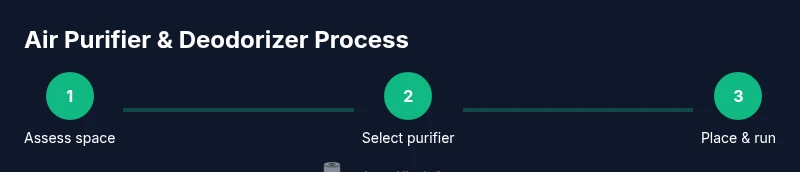
Assess goals and room size
Identify which odors you want to reduce and measure the primary rooms where you’ll use the purifier. This helps determine the needed filtration capacity and the number of units for multi-room setups.
Tip: Document worst-odor areas (kitchen, pet zones) to prioritize placement. - 2
Select a purifier with HEPA and carbon media
Choose a model with a true HEPA filter and activated carbon deodorization. Verify ease of filter replacement and compatibility with room size.
Tip: Read real-world reviews focused on odor reduction, not just particle cleaning. - 3
Place the purifier for optimal airflow
Position the unit away from walls or furniture to allow free air intake and outlet circulation. Aim for a central location in living areas or bedrooms.
Tip: Avoid corners and closed cabinets where air can stagnate. - 4
Power up and run a fresh-air cycle
Turn on the purifier and run it on a medium or auto setting to establish baseline air movement and deodorization. Allow several hours for noticeable changes.
Tip: In initial days, keep doors open to promote cross-room airflow. - 5
Incorporate deodorizing strategies safely
Pair the purifier with safe deodorizing practices, such as venting odors outside when possible and using odor-neutral materials rather than heavy sprays.
Tip: Never mix sprays with ozone-producing devices. - 6
Replace filters on schedule
Follow the manufacturer’s guidance for carbon and HEPA filter replacement, and monitor performance indicators.
Tip: Keep a simple maintenance log to avoid missed replacements. - 7
Test and adjust
After initial setup, monitor odor reduction and air freshness. Reposition units if certain areas remain stuffy or odorous.
Tip: Consider adding a second unit for larger spaces or high-odor zones. - 8
Expand as needed
If multiple rooms require deodorization, consider a coordinated setup with one purifier per key area and ensure consistent maintenance across devices.
Tip: Keep reference notes on room-specific performance to guide future upgrades.
Questions & Answers
What is the difference between an air purifier and a deodorizer?
An air purifier cleans the air by removing particles, while a deodorizer reduces or neutralizes odors. Many devices combine both functions through HEPA filtration and activated carbon media.
An air purifier cleans particles in the air, and a deodorizer helps reduce smells using carbon media. Some models do both.
Can I use a deodorizing spray with an air purifier?
You can use sprays carefully, but never spray directly into an operating purifier. Use deodorizing products separately and ensure any fragrance is compatible with indoor air quality guidelines.
You can use sprays separately, but don’t spray into the purifier. Check compatibility with indoor air guidelines.
How often should I replace filters?
Replacement frequency depends on usage and environment. Follow the manufacturer’s schedule and signs of reduced airflow or odor control.
Replace filters according to the manufacturer’s guidance and watch for reduced airflow.
Is it safe to run an air purifier all day?
Yes, most modern purifiers are designed for continuous operation. Choose models with energy-efficient settings and low noise for overnight use.
Yes, you can run it all day with energy efficiency and quiet modes.
Will a purifier remove all odors in a home?
Purifiers reduce most common odors, especially those from dust, cooking, and pets. Deep or source odors may require targeted deodorizing and improved ventilation.
They remove most common odors, but some sources may need extra deodorizing and ventilation.
What should I do if odors persist after setup?
Reassess placement, run time, and filter status. Consider adding a second purifier for large or odor-prone areas and ensure proper source control and ventilation.
If odors persist, adjust placement, check filters, and consider a second purifier for bigger spaces.
Watch Video
Main Points
- Choose a purifier with HEPA and activated carbon for comprehensive cleaning and deodorization.
- Place units strategically to maximize airflow and odor removal in high-traffic areas.
- Maintain filters on schedule to sustain performance and air quality.
- Avoid ozone-based devices and rely on safe, tested deodorizing strategies.
- Evaluate room-by-room needs and expand setups as necessary for whole-home improvement.