Air Purifier for Incense Smoke: A Practical Guide
Learn how to choose and use an air purifier for incense smoke to reduce particles and odors in your home. This step-by-step guide covers filters, placement, CADR, testing, and maintenance for better indoor air quality.


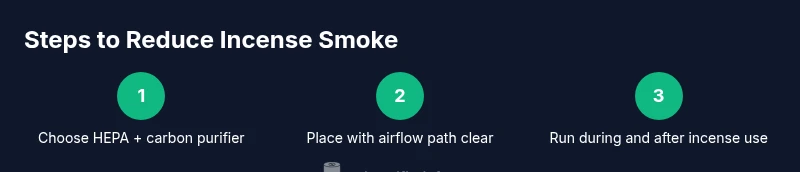
An air purifier with true HEPA and activated carbon is best for incense smoke. Choose a model with a CADR appropriate for your room, place it away from walls, and run it after burning incense to speed particle and odor removal.
Why an air purifier for incense smoke matters
Incense releases a mixture of fine particles and volatile organic compounds (VOCs) into indoor air. For homeowners and renters, lingering smoke can irritate the eyes, throat, and lungs, especially in small or poorly ventilated spaces. According to Air Purifier Info, investing in an air purifier with specific filtration helps reduce both particle pollution and odors associated with incense. A true HEPA filter captures microscopic particulates, while an activated carbon layer traps VOCs and smoke smells, making the air inside your home feel cleaner and more comfortable.
Beyond comfort, proper purifier selection supports long-term indoor air quality, which matters for households with allergy or asthma concerns. The Air Purifier Info team found that pairing a HEPA stage with carbon adsorption significantly improves odor control compared to models with a single filter. In addition, ensure the purifier is appropriately sized for your room. A unit that is too small will struggle to keep up with incense smoke, while an oversized unit can move air efficiently but may be louder and waste energy. Finally, place the purifier so it can pull air away from the incense source without blocking vents or doors. The goal is steady airflow that sweeps airborne particles toward the filter rather than letting them linger in corners.
How air purifiers address incense-related pollutants
Incense smoke contains both particulate matter and VOCs that linger after the flame is out. A purifier with a true HEPA filter captures a broad range of fine particles, including the tiny aerosols produced by incense. The activated carbon layer adsorbs odors and many VOCs, reducing the characteristic incense scent that can persist in a room. When a purifier runs, it creates a directed flow of air that draws cigarette-smoke-like aerosols and smoky odors toward the filter. For sensitive occupants, this pairing of filtration stages can meaningfully lower irritants. Air Purifier Info analysis shows that models combining HEPA and carbon filtration outperform those with only a single stage when it comes to both particle removal and odor control. Keep in mind that ozone-free certification is important to avoid introducing new pollutants.
Key features to look for
To effectively tackle incense smoke, prioritize units that combine a true HEPA filter with an activated carbon or zeolite stage. Look for a purifier rated for real-room performance with clear CADR data that aligns with your room size, not just a marketing number. Quiet operation is a plus, but choose a model with a boost/high setting for incense sessions that creates rapid odor reduction. A real-time filter-change indicator helps you maintain performance, while an energy-efficient design reduces ongoing costs. For homes with pets or allergies, consider models that include a pre-filter or pet-specific filtration options. Finally, verify the purifier is easy to service and uses readily available replacement filters.
How to size and place your purifier
Begin by measuring the room (length × width × height) to estimate volume and choose a purifier whose advertised capacity matches your space. Position the unit so airflow can move freely; avoid placing it directly against walls, furniture, or drapes that block intake or exhaust. If possible, keep the purifier in the path of the most occupied area, or near the incense source but not directly in the smoke plume. Elevate the purifier slightly if it sits on a rug or soft surface to reduce intake obstruction. When burning incense, run the purifier continuously for the duration of the session and for a period afterward to clear residual particles and odors. If room layout allows, you can use two smaller purifiers on opposite sides of the room for balanced airflow.
Running and maintenance tips for incense smoke
During incense sessions, set the purifier to a high or turbo mode to accelerate cleanup, then reduce to a quieter setting when air is clearer. After you’re done burning incense, keep the purifier running for a bit longer to ensure particles settle and odors dissipate. Replace filters according to the manufacturer’s schedule and log maintenance so you don’t miss changes in performance. Keep the area around the purifier clean—dust buildup can reduce efficiency. If you notice diminished odor removal, check for clogged filters or airflow obstructions and replace components as needed. Air Purifier Info recommends choosing models with easy-to-read indicator lights for filter life and a simple replacement process to keep improvements consistent.
Real-world setup scenarios
In small apartments, a single compact purifier on a central table can capture most incense-related pollutants if placed near the main living area and not blocked by furniture. In larger living spaces, consider a purifier on each side of a seating area or a single higher-capacity model with a wider inlet. For homes with pets or multiple odor sources, a dual-PUR system (HEPA plus carbon) in strategic locations tends to deliver faster, fuller purification. Always ensure safe incense practices: burn in a well-ventilated area, never leave burning incense unattended, and pair purifier use with open windows during and after incense to maximize air exchange when weather allows.
Tools & Materials
- Air purifier with true HEPA filter(Prefer models with activated carbon or other odor-adsorbing media)
- Measuring tape or ruler(Used to determine room dimensions for proper purifier sizing)
- Power outlet and surge protection(Ensure the purifier can run continuously without overloading circuit)
- Notebook or digital device(Record odor changes, placement tests, and filter life)
- VOC test strips (optional)(For advanced testing of VOC levels in curious households)
Steps
Estimated time: Estimated total time: 60-90 minutes
- 1
Assess room size and needs
Measure your space to determine the purifier size you need. Larger rooms require units with higher filtration capacity, while smaller rooms may suffice with compact models. Decide if you want portable flexibility or a more permanent setup.
Tip: Use a simple room diagram and note corners where air tends to stagnate. - 2
Research filters and CADR
Look for true HEPA filtration combined with an activated carbon stage to address both particles and odors. Compare CADR figures relative to your room size and check that claims match independent testing where available.
Tip: Prioritize ozone-free labels to avoid introducing additional pollutants. - 3
Plan purifier placement
Place the purifier where it can pull air from the incense source without being immediately blocked by furniture or walls. A central, open location often works best for even airflow and rapid pollutant removal.
Tip: Keep at least a small clearance around the intake and outlet to maximize efficiency. - 4
Unbox and assemble
Unbox the unit, install any required filters, and verify nothing is damaged. Reset any power or filter-life indicators according to the manual.
Tip: Handle filters gently to avoid tearing and ensure a proper seal when reassembling. - 5
Run during incense sessions
Turn the purifier on before you light incense and keep it running throughout the session. Maintain a higher setting during the peak of burning and reduce afterward as air quality improves.
Tip: If possible, orient the purifier to optimize cross-room airflow for faster cleanup. - 6
Post-burn purification
Continue running the purifier for a period after incense use to clear lingering particles and odors. This helps ensure a fresher environment before resuming regular activities.
Tip: Note how long odors linger in the space to gauge whether placement needs adjustment. - 7
Maintenance and replacement
Follow the manufacturer’s schedule for filter replacement and clean the unit’s exterior as needed. A clogged filter reduces airflow and effectiveness, so keep to the recommended intervals.
Tip: Set a reminder for filter changes to maintain peak performance.
Questions & Answers
What features matter most for incense smoke?
For incense smoke, prioritize a true HEPA filter and an activated carbon stage to address both particles and odors. Also check for ozone-free certification and a clear CADR chart that matches your room size.
Look for HEPA plus carbon filtration, and make sure the purifier is labeled ozone-free and appropriate for your room size.
Can incense smoke be fully removed by an air purifier?
Purifiers can significantly reduce particles and odors, but complete elimination depends on ventilation and room layout. Use the purifier in combination with good ventilation for the best results.
A purifier can greatly reduce smoke and smells, but full elimination also relies on ventilation.
How do I choose CADR for my room?
Choose a model whose tested performance aligns with your room size and layout. Manufacturers provide charts; prioritize models with real-world testing data and avoid oversized claims.
Pick a purifier whose CADR data matches your room size and check real-world test results.
Is it safe to leave incense burning while the purifier runs?
Always supervise incense and practice safe burning. Run the purifier to assist cleanup, but never leave a burning incense unattended and ensure adequate ventilation.
Never leave burning incense unattended; run the purifier for cleanup and keep a window open if possible.
How often should I replace filters?
Follow the manufacturer’s recommended schedule based on usage and air quality. Higher usage and odors will shorten filter life; plan for proactive replacements.
Replace filters as the maker recommends; more odor means you’ll need them sooner.
Do purifiers create ozone?
Most modern purifiers are designed to be ozone-free. Check for explicit ozone-free labeling and avoid units that emit ozone as a byproduct.
Choose ozone-free models to avoid adding pollutants to your air.
Watch Video
Main Points
- Choose true HEPA plus activated carbon for incense smoke.
- Size and placement matter for effective purification.
- Run the purifier during and after incense use for best results.
- Follow filter replacement schedules to maintain performance.