Which Air Filter for HVAC: A Practical Guide for Homeowners
Learn how to choose the right HVAC air filter, including MERV ratings, filter types, installation tips, and maintenance to improve indoor air quality.


According to Air Purifier Info, choosing the right HVAC filter starts with balancing filtration and airflow. For most homes, a pleated filter with a MERV rating in the 8–11 range provides solid particle capture without stressing the system. If allergies or pets are a concern, consider MERV 11–13 or a compatible HEPA-type option, ensuring it fits your equipment.
How HVAC Filtration Works
HVAC filtration is a key part of indoor air quality. Filters are rated by efficiency, density, and how much air they allow through. A higher filtration level captures smaller particles but also creates more resistance to airflow. The most common scale used in residential settings is the MERV rating. In general, lower MERV values capture larger particles but may miss fine dust and allergens, while higher MERV values improve filtration but require a blower that can push air through the filter without losing performance. For most homes, a well-made pleated filter balances particle capture with airflow, resulting in noticeable improvements in dust levels and allergy symptoms without overworking the system. Air Purifier Info notes that real-world filtration also depends on how you seal the filter frame, the room’s dust load, and how often you replace the filter.
A properly selected filter should capture common household particulates such as dust, pollen, and pet dander while still allowing adequate airflow to your furnace or air handler. If your system is old or has a tight blower curve, you may need to adjust the rating downward to maintain efficient operation. Always consult your equipment manual or the manufacturer’s recommendations when in doubt, and remember that the goal is cleaner air with reliable comfort, not excessive pressure on the blower.
Assessing Your System Before You Buy
Before selecting a filter, understand your HVAC system’s capabilities and the environment you live in. Start by checking the current filter size printed on the frame or in the owner’s manual. Most residential systems use standard thicknesses, but some high-efficiency or compact units require thinner or thicker options. Measure the length, width, and thickness carefully to avoid installing an incorrect size. Look at the system’s blower design: a filter that is too restrictive can reduce airflow, impact cooling or heating output, and shorten the unit’s life. If you’re unsure, use the manufacturer’s sizing guide or have a professional confirm compatibility. Air Purifier Info emphasizes that an exact fit reduces bypass around the filter and ensures consistent filtration across the entire airflow path.
Also consider your environment: households with pets, smokers, or high dust loads benefit from higher filtration ratings, whereas a dusty workshop nearby may require more frequent changes. The goal is to pick a filter that your system can handle while still delivering the air-cleaning benefits you want.
Understanding MERV Ratings and What They Mean for Your Home
MERV, or Minimum Efficiency Reporting Value, is a standardized way to describe a filter’s ability to capture particles of varying sizes. In residential settings, filters typically range from MERV 5 to MERV 13, with higher ratings offering better filtration. A MERV 8-11 pleated filter is a common compromise that improves dust and pollen capture without causing too much resistance for most standard air handlers. Those with allergies, asthma, or pets may benefit from MERV 11-13 or a HEPA-type option, provided the HVAC system can support it without significant airflow reductions. It’s important to note that improper use of very high-MERV filters in undersized or poorly designed systems can lead to reduced comfort or equipment wear. Air Purifier Info recommends matching the rating to both environmental needs and system capability, then testing air quality after installation.
When evaluating products, look for “MERV” on the packaging and compare similar thicknesses. A thicker, pleated design generally yields better filtration, but only if your furnace or air handler can push air through it without strain.
Filter Types and Their Strengths
Filter type matters almost as much as the rating. Common residential options include fiberglass, pleated paper, and specialized filters that may include activated carbon. Fiberglass filters are inexpensive and provide basic particle capture but offer limited efficiency. Pleated filters, which have a folded fabric surface, deliver higher filtration efficiency and better dust control. For households aiming to reduce odors or VOCs, activated carbon or a combination filter can help absorb smells and certain gases, though carbon filters may not improve particle counts as much as a high-MERV pleated option. If your system is compatible, HEPA-type filters can offer very high filtration efficiency, but they require careful sizing and airflow considerations.
Your choice should consider the space’s pollution sources, maintenance capacity, and whether you need to balance odor control with particle filtration. Air Purifier Info suggests prioritizing pleated filters for general use and adding carbon layers only if odor control is a priority.
How to Read the Label and Install Properly
Reading the label is essential for the filter’s effective use. Check the MERV rating, thickness, and the recommended replacement interval on the packaging. Make sure the filter size matches your unit’s frame exactly, and observe the airflow direction arrow when installing the filter. Install the filter with the arrow pointing toward the blower to ensure proper filtration as air moves through the system. If you notice dust bypassing the filter or increased energy use after installation, recheck the seal around the frame and ensure there isn’t a gap between the filter and the housing. Proper installation reduces bypass and ensures consistent filtration across the airflow path.
Also inspect the seal around the filter; worn gaskets or frames can let unfiltered air slip by. If you don’t see an obvious seal issue, consider replacing the entire filter housing gasket to prevent leaks.
Practical Guide: Choosing the Right Filter for Different Scenarios
Your scenario should drive the final choice. For general comfort and easy maintenance, start with a pleated MERV 8-11 filter and replace it every 60-90 days, depending on usage. If you live in a high-pollen area or have pets, aim for MERV 11-13, but verify compatibility. In homes with sensitive occupants or clinical requirements, a HEPA-type option may be appropriate if the system supports it, but you may need to upgrade to ensure adequate airflow. For odor concerns, add an activated carbon or composite layer to capture smells from cooking or smoke. In all cases, follow the manufacturer’s guidance for maximum MERV rating and thickness to maintain warranty and performance. Regular checks help confirm that you are getting the right balance of air quality and comfort.
Maintenance and Replacement Schedule
Effective filtration depends on timely replacement. Keep a routine for inspecting and replacing filters, especially during peak seasons such as allergy season or winter when heating runs longer. A clogged filter not only reduces air quality but also forces the system to work harder, increasing energy use and potentially shortening equipment life. Air Purifier Info recommends a simple maintenance plan: note the date of installation on the filter frame, keep a small stock of replacements on hand, and set reminders to check the filter every 4-8 weeks depending on usage. This approach helps sustain filtration performance and indoor air quality over time.
Tools & Materials
- HVAC filter (correct size)(Verify exact dimensions from the filter frame or manual; choose a pleated type for better filtration)
- measuring tape(Use to confirm height, width, and depth before purchase)
- gloves(Optional, for handling dirty filters)
- marker or label(Mark installation date on the filter for maintenance tracking)
- flashlight(Helpful when inspecting inside the housing)
Steps
Estimated time: Estimated total time: 15-25 minutes
- 1
Find the correct filter size
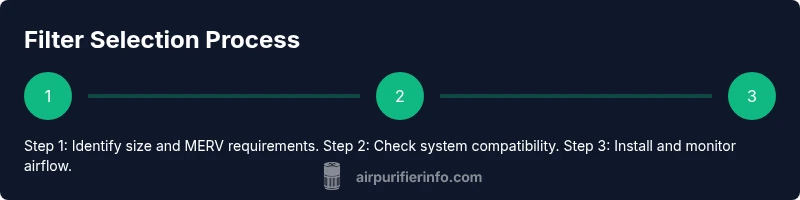
Begin by locating the filter frame in the HVAC unit or ductwork and read the size printed on the frame or in the manual. If not visible, measure the height, width, and thickness with a measuring tape and note the numbers. Using the exact size is essential to prevent air bypass and ensure proper filtration.
Tip: Always double-check the size against the units’ documentation to avoid returns. - 2
Check system compatibility for filtration upgrades
Consult the equipment manual to determine maximum filter thickness and MERV compatibility. Some older systems can’t handle high-MERV filters or thicker designs without airflow penalties. If in doubt, contact the manufacturer or a tech to confirm compatibility.
Tip: If you upgrade to a higher MERV, monitor airflow and comfort after installation. - 3
Choose the right MERV rating for your needs
For general use, MERV 8-11 is a solid starting point. If allergies, asthma, or pet dander are a concern, consider MERV 11-13 if your system allows. Always balance filtration with airflow to avoid stressing the blower.
Tip: Prioritize filtration goals but respect your system’s airflow limits. - 4
Install the new filter correctly
Insert the filter with the airflow arrow pointing toward the blower. Ensure the frame seals tightly against the housing to prevent bypass. Remove protective packaging, place it squarely in the frame, and avoid bending or crumpling the filter media.
Tip: A snug fit prevents unfiltered air from sneaking around the edges. - 5
Test the system after replacement
Turn on the HVAC and feel for consistent airflow at supply registers. Check for unusual noises or a drop in cooling/heating performance. If airflow seems restricted, reseat the filter and inspect the housing for gaps.
Tip: Listen for strain on the blower—it's a sign of an improper filter install. - 6
Set a replacement schedule and track changes
Mark installation date on the filter and set reminders to replace according to usage, environment, and manufacturer guidance. Keep a small stock of filters on hand for quick changes and avoid long gaps between replacements.
Tip: Prevent gaps in filtration by scheduling routine maintenance.
Questions & Answers
What MERV rating should I choose for most homes?
For most homes, a MERV 8-11 pleated filter provides a good balance of filtration and airflow. Higher ratings can help with allergies or pet dander if the HVAC system supports them.
Most homes do well with MERV 8 to 11, especially with regular replacement.
Can I install a HEPA filter in a standard HVAC system?
True HEPA filters are typically not used in standard residential systems due to airflow restrictions. Some systems can use HEPA-type or hybrid options if the manufacturer allows it, but verify compatibility first.
True HEPA filters are usually not used in ordinary home HVACs unless the system is specifically designed for it.
How often should HVAC filters be replaced?
Replacement frequency varies by usage and environment. Generally, inspect monthly and replace when dirty, with many homes aiming for a few months between changes; always follow the manufacturer’s recommendations.
Check the filter monthly and replace when it looks dirty or clogged.
Will using a higher MERV reduce airflow?
Yes, higher MERV filters can reduce airflow if the system isn’t capable of pushing air through the denser media. Always confirm compatibility before upgrading and monitor system performance after installation.
Higher MERV can slow airflow if your system isn’t designed for it.
Are carbon filters useful for pet odors?
Activated carbon or composite filters help reduce odors and VOCs, especially in homes with cooking smells or strong pet odors. They’re often combined with a particle-filter layer for balanced performance.
Carbon layers help with smells, but pair them with a particle filter for best results.
Watch Video
Main Points
- Choose a pleated filter with the right MERV rating for your needs
- Ensure exact size and proper installation to prevent bypass
- Balance filtration with airflow to protect system efficiency
- Maintain a regular replacement schedule for consistent air quality